Dividend Payers and Growers Outperform over the Long-Term

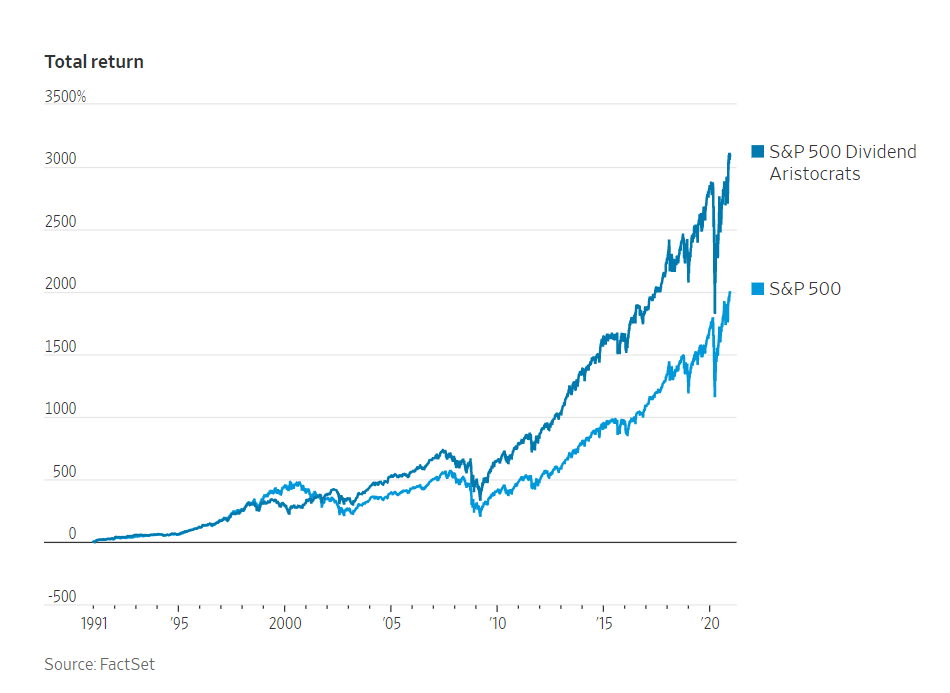
Dividend-paying stocks beat non-dividend payers in terms of total return over many years. Among the stocks that pay dividends, it is even better to go with stocks that not only pay dividends but also increase them year after year consistently. Slow and steady rise in dividends compounds the return especially when a stocks is owned for years or decades. I written many articles in the past on the importance of dividends for success in equity investing. Below are some of those posts:

That said, a recent article in The Wall Street Journal noted that dividend stocks may have their moment of glory again. From the article:

Yet for something that theoretically shouldn’t matter, dividend-paying stocks have done swimmingly. The key seems to be focusing on those with high but sustainable payouts. Slicing large U.S. companies into quintiles by dividend yield found that the second-highest-yielding group beat the market most consistently each year over many decades. Measured from 1928 through 2019, a basket of dividend payers in that quintile saw a $1 investment turn into $25,395, according to Dartmouth College professor Kenneth French. A basket of nonpayers would have been worth just $2,139.

That result is all the more remarkable because dividends were a relatively small part of investors’ returns during the market’s most-rewarding decades. In the 1990s and 2010s they produced 16% and 17% of the S&P 500’s return, according to data from Morningstar and Hartford Funds. But they more than made up for it during less-exciting periods like the 1940s and 1970s, when they made up 67% and 73% of the return, respectively.

Part of the answer for why dividends mattered is that reinvesting them during those bleak times paid off—easier said than done when investors get discouraged. But another is what sort of company pays them in the first place. A dividend payer is more likely to be a value stock. In June, the average price-to-book ratio of Dividend Aristocrats such as AbbVie, ABBV -2.01% 3M MMM -0.54% and Colgate-Palmolive, CL -0.58% with at least a quarter century of rising payouts, was less than half that of the S&P Growth Index, according to ProShares. Value is out of fashion now, like it was in the 1990s and other bullish periods, but cheap stocks shine when the party ends. The same might not be true for companies that mostly reward shareholders through buybacks since they are much quicker to slash them just as stocks plunge.
Source: Dividends Will Have Their Day Again, WSJ

The importance of dividends cannot be understated as evidenced by the stats mentioned in the article above. The following chart shows the nice growth of the S&P 500 Dividend Aristocrats Index in the past 10 years:

Click to enlarge
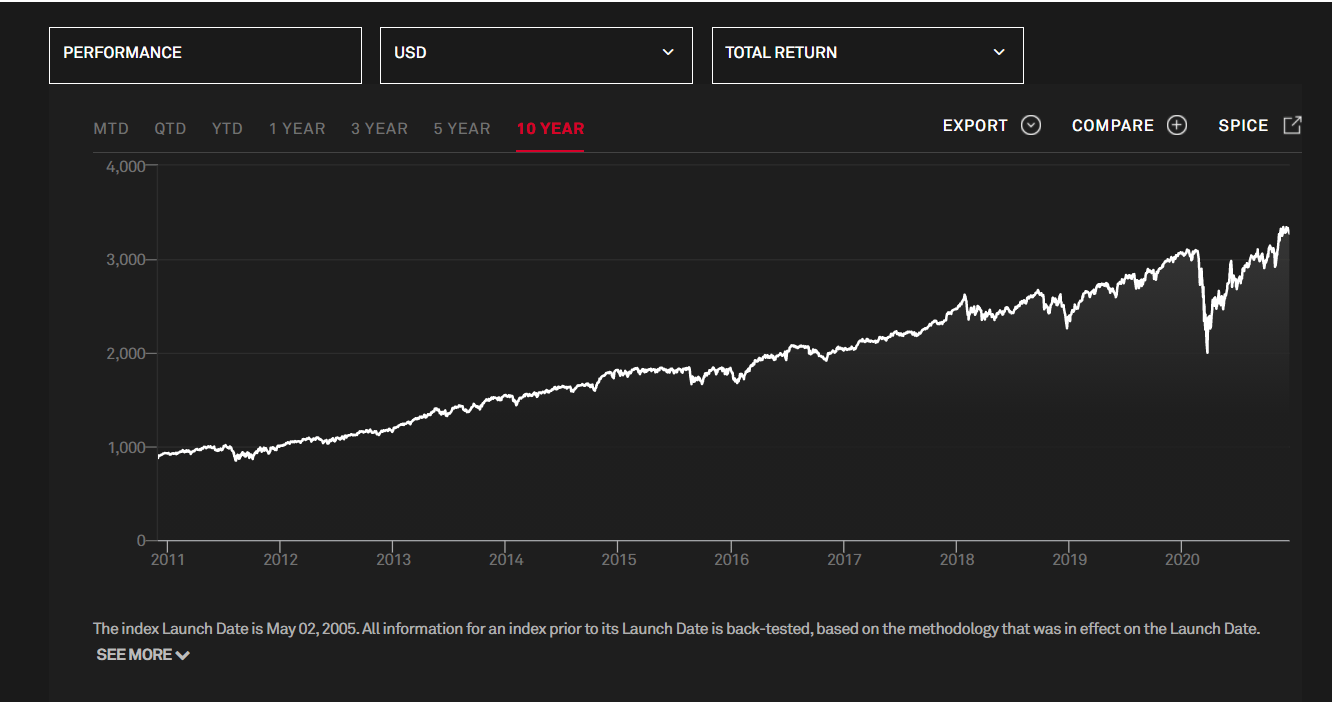
Source: S&P Global

Ten constituents of the S&P 500 Dividend Aristocrats Index are listed below:

  1. Colgate-Palmolive Co (CL)
  2. Johnson & Johnson (JNJ)
  3. Chevron Corp (CVX)
  4. Emerson Electric Co (EMR)
  5. Raytheon Technologies Corporation (RTX)
  6. General Dynamics Corp (GD)
  7. Caterpillar Inc (CAT)
  8. AT&T Inc (T)
  9. T. Rowe Price Group Inc (TROW)
  10. Abbott Laboratories(ABT)

Disclosure: No Positions
On The Three Global Green Energy Majors

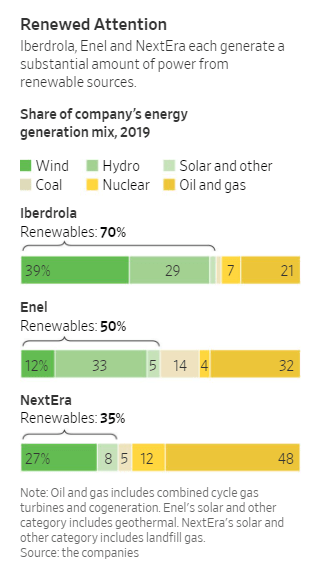
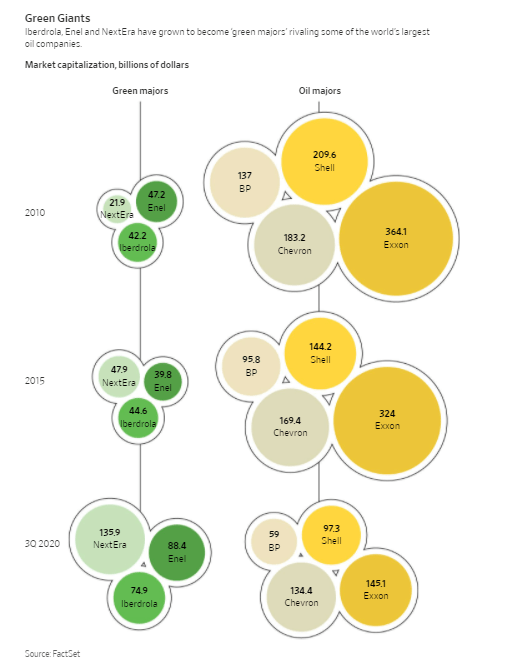
Renewable energy companies are growing fast in the past few years while the oil companies are struggling. The pandemic dealt drove demand for oil to unheard of levels dealing another blow to the oil firms. The Wall Street Journal published an article over the weekend discussing the rise of the “green energy majors” and how they are competing against the established oil majors. Below is a short excerpt from the piece:

For now, NextEra, Enel SpA and Iberdrola SA are Wall Street darlings, after Spain’s Iberdrola and Italy’s Enel became global builders of green energy projects, while NextEra became America’s largest generator of wind and solar power.

Each of the companies has seen its share price soar in recent months as investors bet on their ability to lead the transition to a lower-carbon future with massive investments in renewable energy, battery storage and improvements to the electric grid.

That transition is expected to accelerate in the U.S. under President-elect Joe Biden, who has promised to focus on climate change, and within the European Union and China, where ambitious carbon-reduction efforts are under way.

Enel and Iberdrola have outlined plans to substantially expand their portfolios of renewable-energy projects over the next decade with about $170 billion in collective investments. NextEra, which hasn’t disclosed a long-term spending plan, expects to have invested $60 billion in renewable energy projects between 2019 and 2022.

Still, analysts caution that increased competition within the renewables industry could reduce profit margins for the most established players.

Click to enlarge

Source: The New Green Energy Giants Challenging Exxon and BP, WSJ

Related Stocks:

  • Enel SpA (ENLAY)
  • NextEra Energy Inc (NEE)
  • Iberdrola SA (IBDRY)

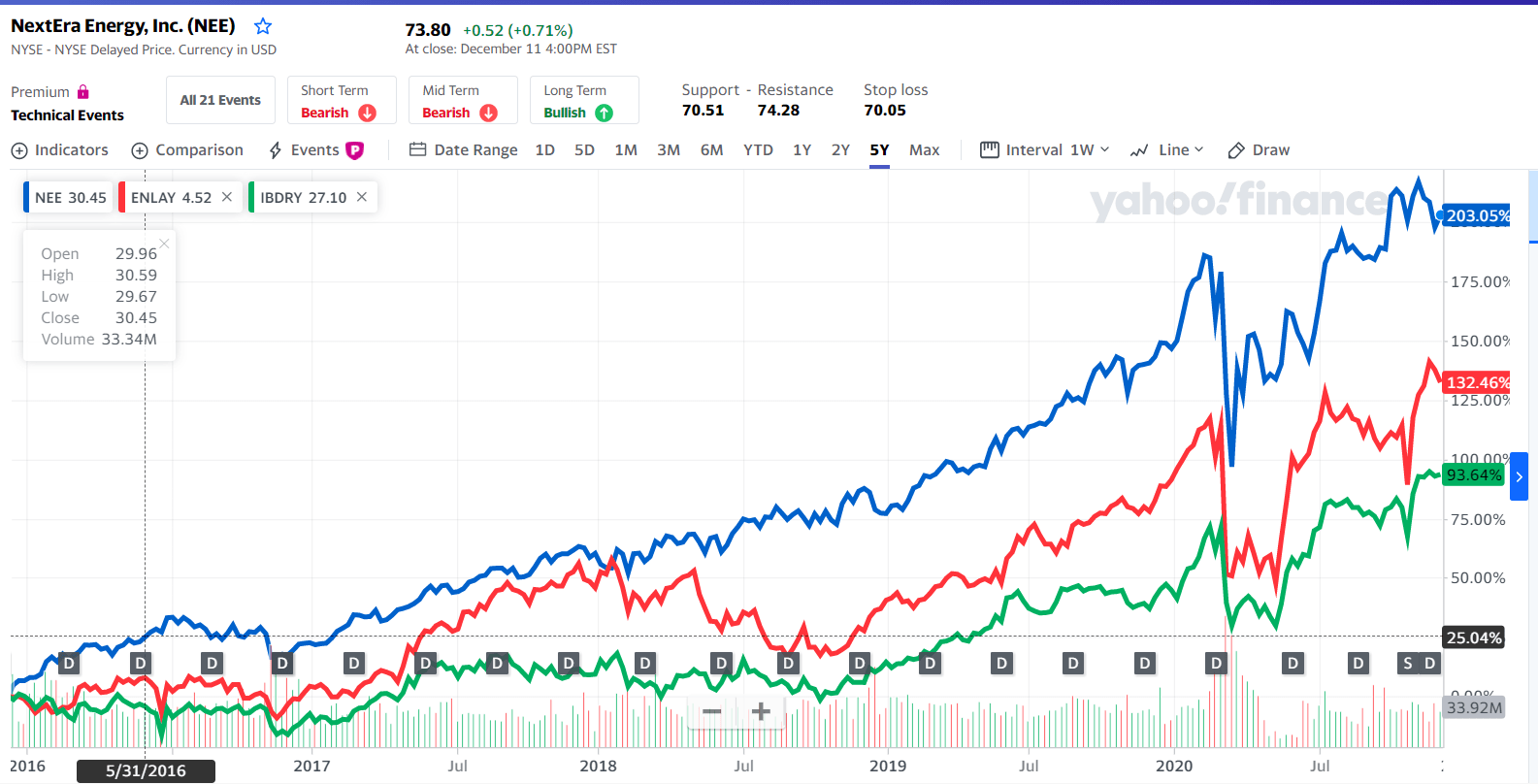
The 5-year return of the above stocks are shown in the chart below:

Source: Yahoo Finance

Disclosure: Long NEE

Obesity Rates in Europe by Country: Chart

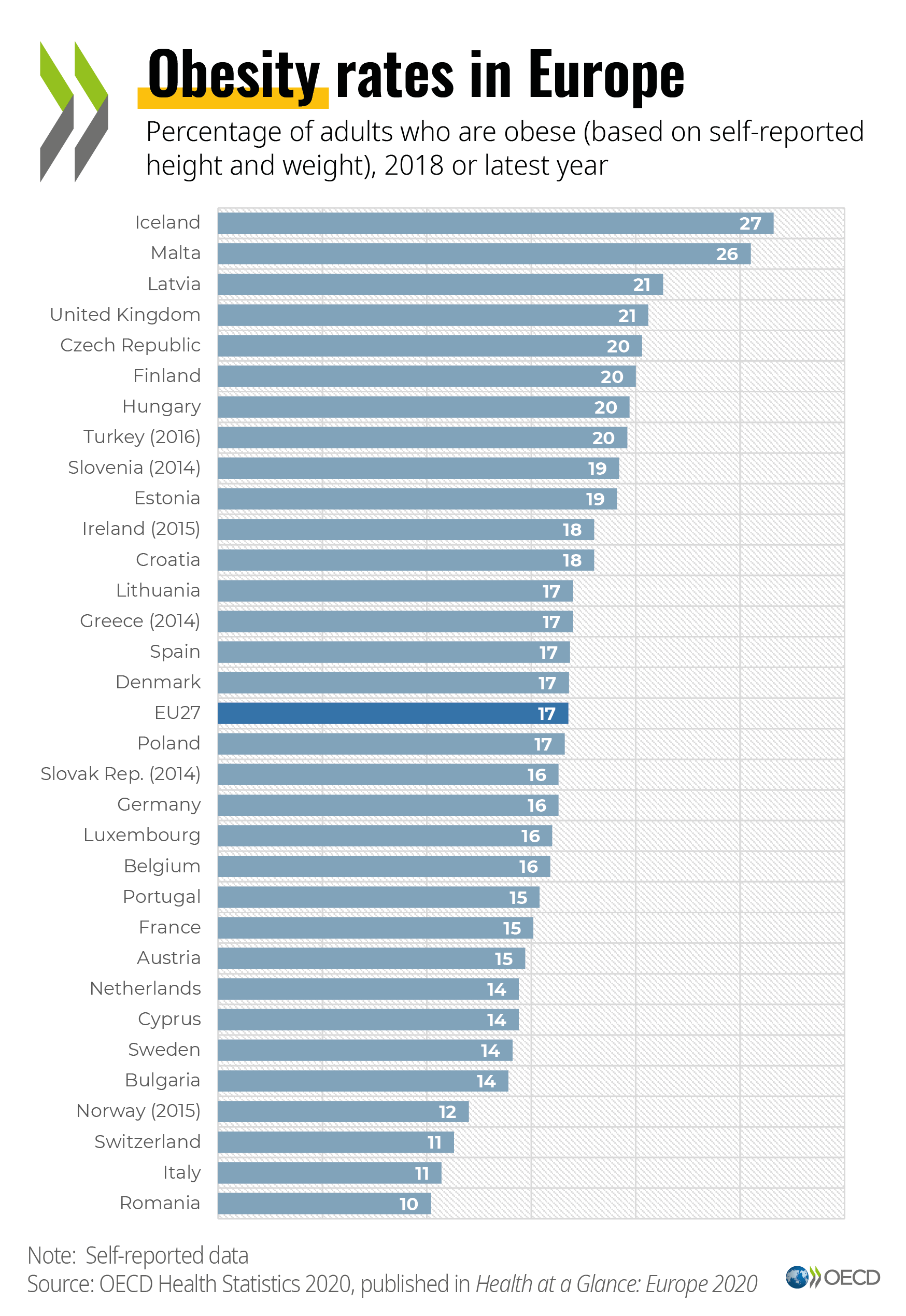
Obesity is a big health issue in many countries around the world. In the developed world, the US takes the top rank for the most obese population. According to the latest obesity data published by the OECD, Mexico has the highest obesity rates or overweight population in the world followed by Chile and the US. In Europe, Romania is the least obese country followed by Italy and Switzerland. The country with the highest obesity rate is surprisingly Iceland. The UK ranks fourth in the ranking.

The following chart from OECD shows the obesity rates in Europe:

Click to enlarge

Source: OECD

Some of the pharmaceutical firms in the cure for obesity include:

  • AstraZeneca PLC (AZN)
  • Novo Nordisk A/S (NVO)
  • Sanofi (SNY)
  • Fresenius Medical Care AG & Co (FMS)

Disclosure: No Positions

The World’s Top 25 Arms Producers in 2019

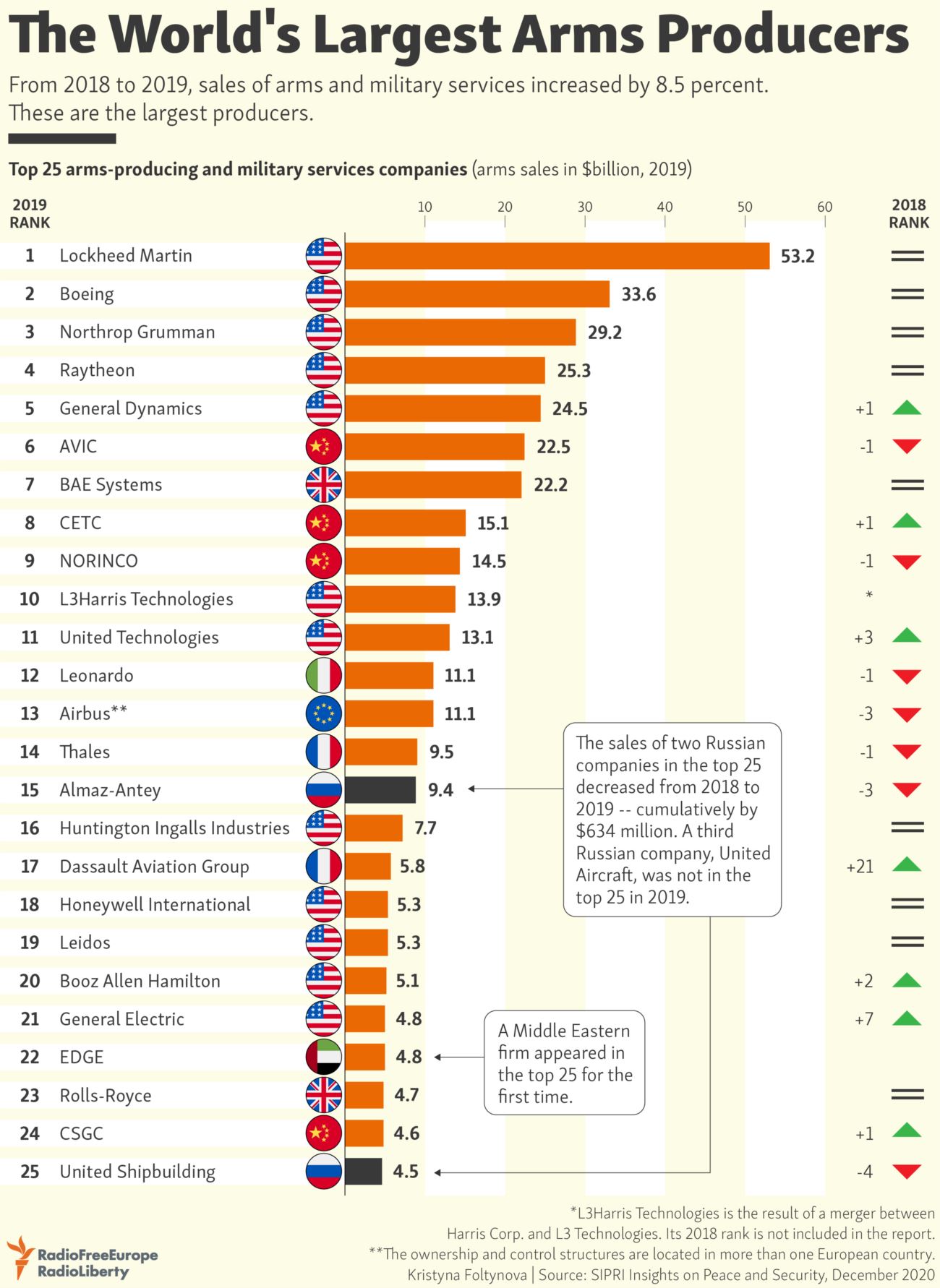
The global arms industry is one of the world largest industries in the world. The industry comprises of weapons manufacturers and military service companies. Stockholm International Peace Research Institute (SIPRI) published their latest report on arms producers earlier this week. According to the study the US accounted for the largest arms sales in 2019. China overtook Russia to become the 2nd largest seller of arms. US arms giant Lockheed Martin (LMT) recorded the largest revenue growth at 11 percent or $5.1 billion in absolute figures.

Below is an excerpt from the report:

New data from SIPRI’s Arms Industry Database shows that arms sales by the world’s 25 largest arms-producing and military services companies (arms companies) totalled US$361 billion in 2019. This represents an 8.5 per cent increase in real terms over the arms sales of the top 25 arms companies in 2018.

US companies still dominate, Middle East represented in top 25 for the first time

In 2019 the top five arms companies were all based in the United States: Lockheed Martin, Boeing, Northrop Grumman, Raytheon and General Dynamics. These five together registered $166 billion in annual arms salesIn total, 12 US companies appear in the top 25 for 2019, accounting for 61 per cent of the combined arms sales of the top 25.

For the first time, a Middle Eastern firm appears in the top 25 ranking. EDGE, based in the United Arab Emirates (UAE), was created in 2019 from the merger of more than 25 smaller companies. It ranks at number 22 and accounted for 1.3 per cent of total arms sales of the top 25.

‘EDGE is a good illustration of how the combination of high national demand for military products and services with a desire to become less dependent on foreign suppliers is driving the growth of arms companies in the Middle East,’ said Pieter Wezeman, Senior Researcher with the SIPRI Arms and Military Expenditure Programme.

Another newcomer in the top 25 in 2019 was L3Harris Technologies (ranked 10th). It was created through the merger of two US companies that were both in the top 25 in 2018: Harris Corporation and L3 Technologies.

Chinese arms companies’ sales increase, Russian companies’ sales fall

The top 25 also includes four Chinese companies. Three are in the top 10: Aviation Industry Corporation of China (AVIC; ranked 6th), China Electronics Technology Group Corporation (CETC; ranked 8th) and China North Industries Group Corporation (NORINCO; ranked 9th). The combined revenue of the four Chinese companies in the top 25—which also include China South Industries Group Corporation (CSGC; ranked 24th)—grew by 4.8 per cent between 2018 and 2019.

Reflecting on the rise in the arms sales of Chinese companies, SIPRI Senior Researcher Nan Tian said: ‘Chinese arms companies are benefiting from military modernization programmes for the People’s Liberation Army.’

The revenues of the two Russian companies in the top 25—Almaz-Antey and United Shipbuilding—both decreased between 2018 and 2019, by a combined total of $634 million. A third Russian company, United Aircraft, lost $1.3 billion in sales and dropped out of the top 25 in 2019.

Alexandra Kuimova, Researcher at SIPRI, said: ‘Domestic competition and reduced government spending on fleet modernization were two of the main challenges for United Shipbuilding in 2019.’

Source:  Global arms industry: Sales by the top 25 companies up 8.5 per cent; Big players active in Global South. SIPRI

The following infographic shows the top 25 arms producers in 2019 identified in the SIPRI report:

Click to enlarge


Source: RFE/RL Infographics

Some of the listed firms in the above graphic include:

  • Lockheed Martin Corporation (LMT)
  • Boeing Co (BA)
  • Northrop Grumman Corporation (NOC)
  • General Dynamics Corporation (GD)
  • L3Harris Technologies, Inc. (LHX)

In 2019, Raytheon and United Technologies merged to create Raytheon Technologies Corporation (RTX). Similarly Harris Technologies, Inc and L3 Technologies merged to become L3Harris Technologies Inc.

Related Lists:

Disclosure: No positions

The Complete List of French ADRs Subject to the Financial Transactional Tax

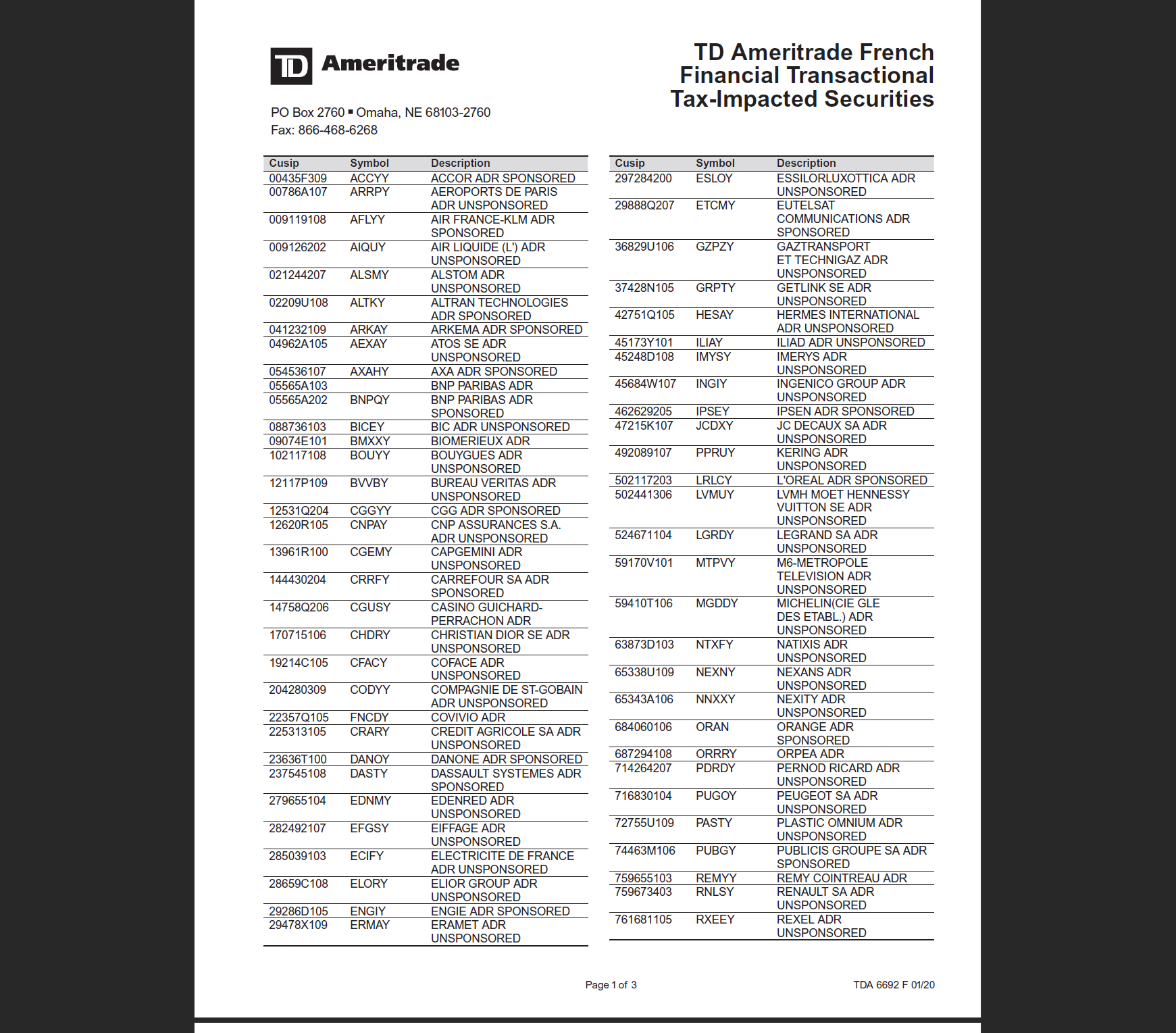
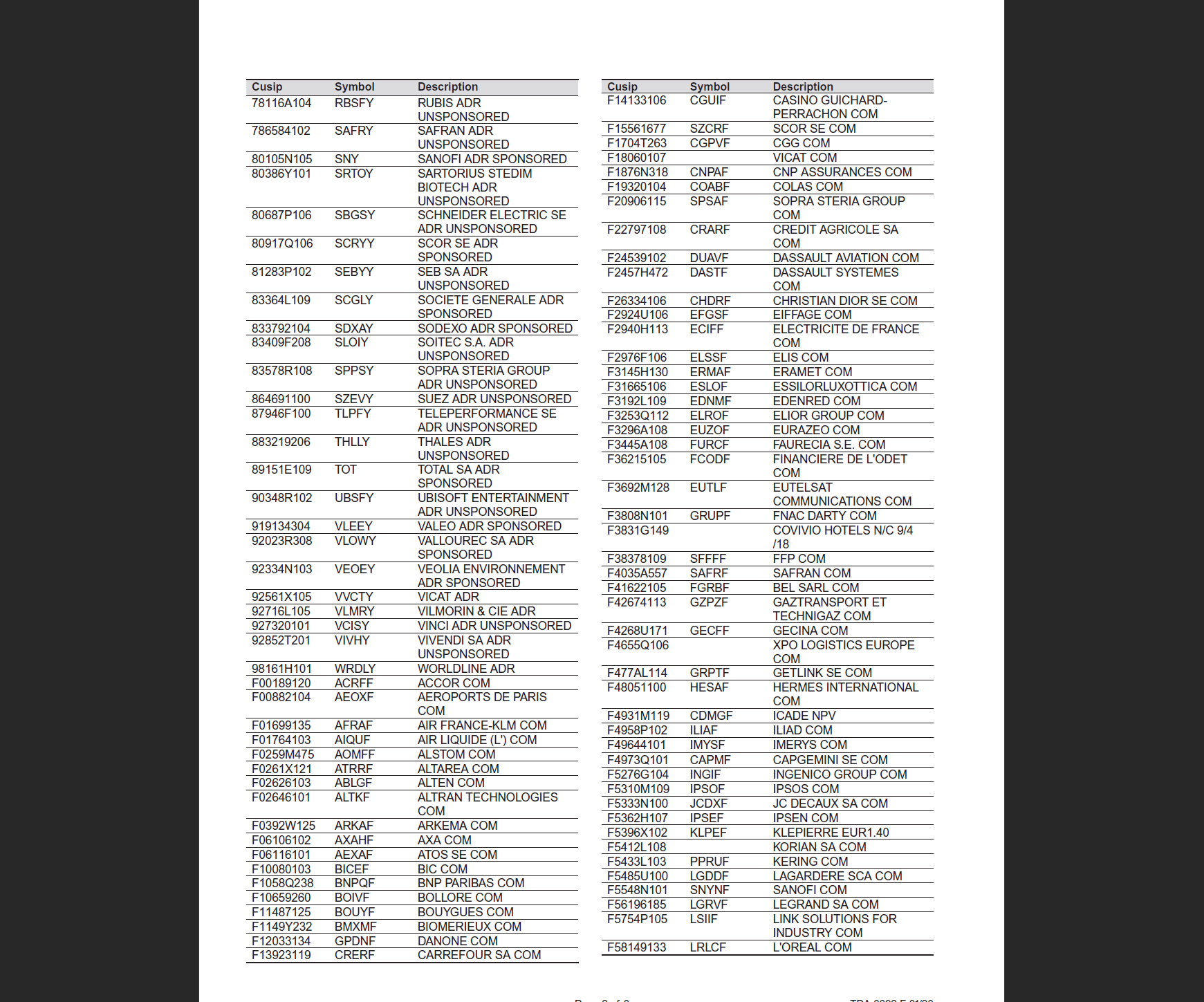
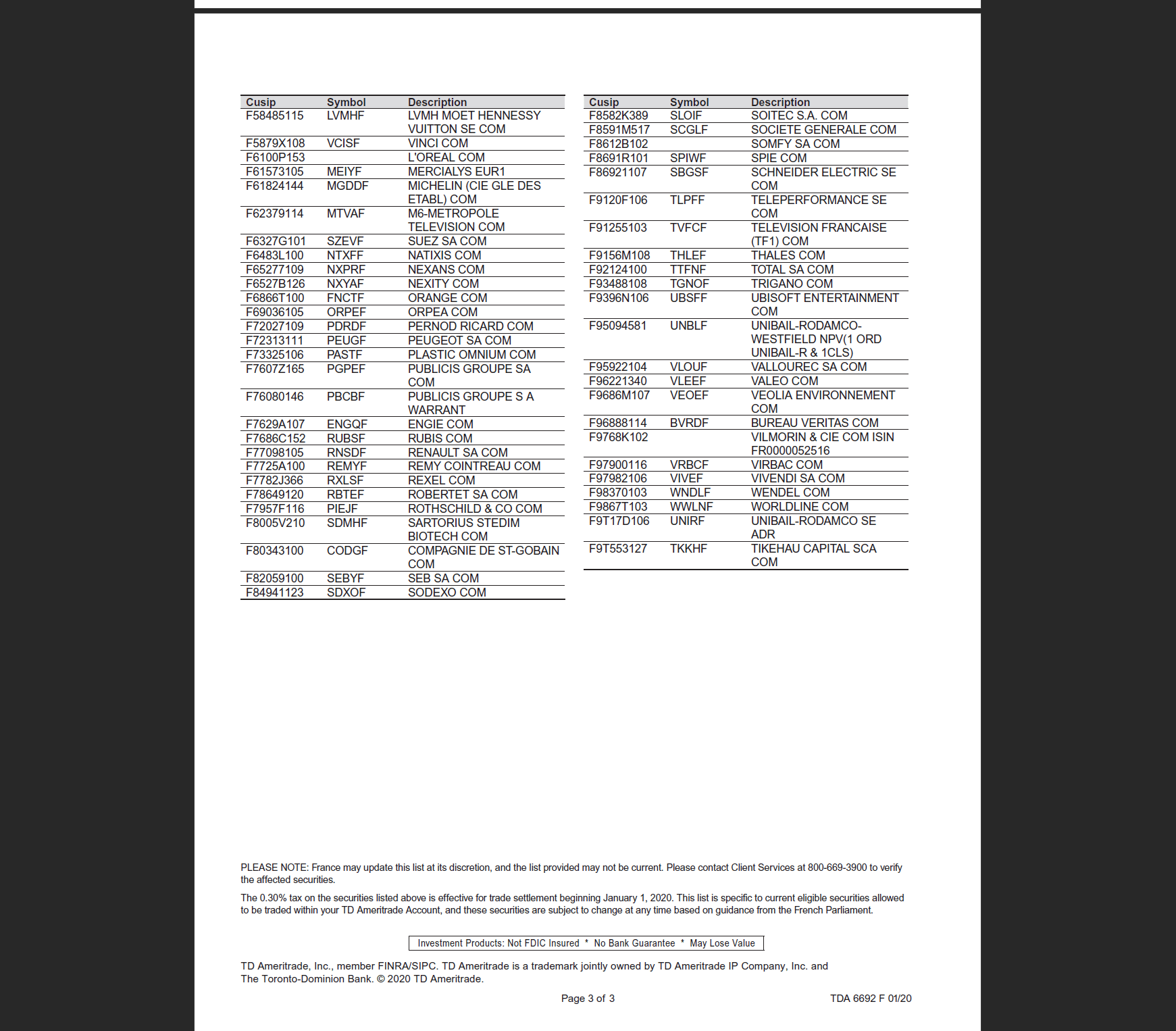
France was one of the first few countries that introduced a transaction tax for buying and selling of stocks. When it was launched in 2012, the French Financial Transaction Tax was 0.20% on all equity purchases of French firms with market capitalization of over over 1.0 billion Euros. In 2017 this rate was increased to 0.30%. This additional tax on top of high dividend withholding taxes make investing in French stocks unattractive for US investors. However France is still home to some world-class firms and potential investment opportunities can still be found despite the high costs of investing there. Back in 2012 I posted the list of French ADRs affected by this tax.

The following is an updated list of French ADRs subject to the Financial Transaction Tax. Before investing in French stocks investors can review this list as part of the due diligence:

Click to enlarge

Source: TD Ameritrade

Download List:

The Complete List of French ADRs can be found here.