The Best and Worst International Airlines: Chart

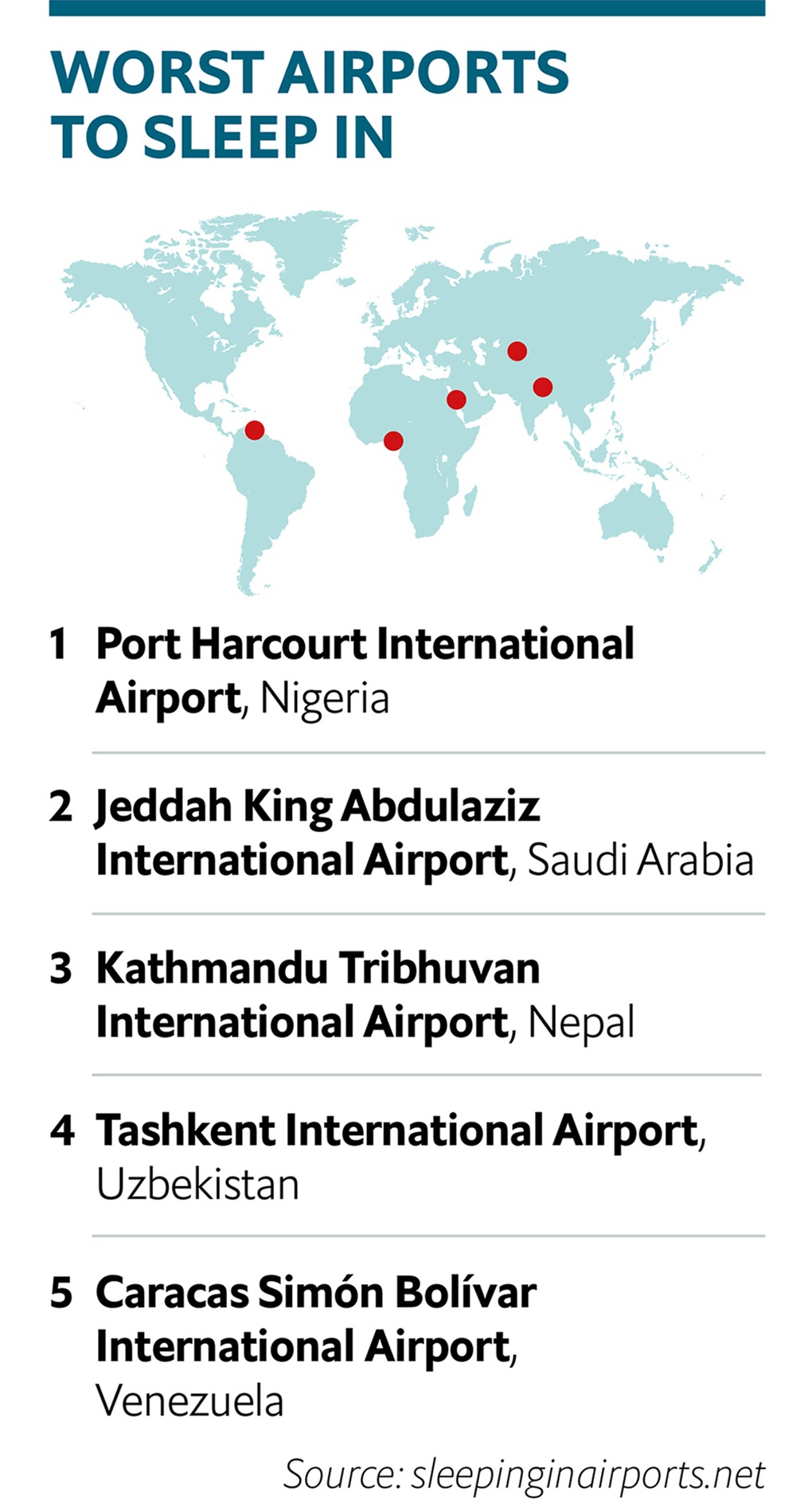
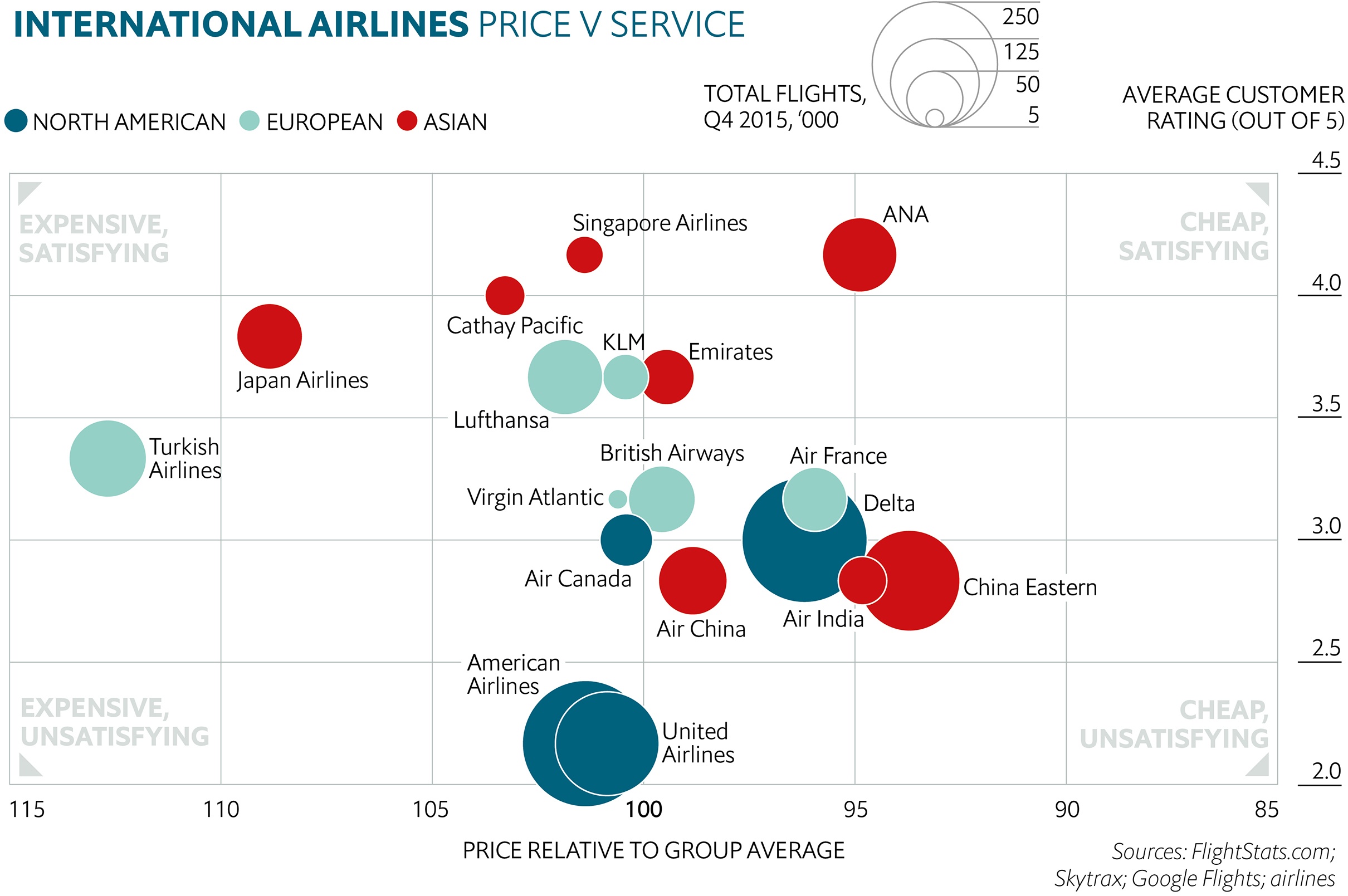
The Economist’s 1843 magazine published an article ranking international airlines. According to the report, the best airlines based on user rankings are Singapore Airline(SINGY) and All Nippon Airlines.

The chart below shows the best and worst airlines:

Click to enlarge
Source: Come Fly with Me, 1843, The Economist Group

Among the US airlines. Delta(DAL) earned better ratings. But American Airlines(AAL) and United Continental Airlines(UAL) received the worst scores. This is not surprising since most US airlines are not known for customer service.Other than first-class passengers they usually treat all other passengers like cattle or sheep.

Related:

Disclosure: No positions

Algorithms Are Susceptible To Massaging By Their Creators

The Wall Street Journal published an article by Jo Craven Mcginty back in October titled “Algorithms Aren’t Biased, But the People Who Write Them May Be“. The author discussed a book called “Weapons of Math Destruction” published by Dr.Cathy O’Neil and how algorithms are used in many different industries.

An excerpt from the piece:

The algorithms are what Dr. O’Neil calls “weapons of math destruction.” WMDs, she says, share three characteristics: They are biased. They are opaque. And they are scalable.

In one striking example, she describes a Consumer Reports analysis of more than 2 billion car insurance price quotes issued over two years that revealed how well someone drove had little to do with how much they paid for insurance.

In Florida, for example, drivers with a clean driving record but poor credit paid $1,552 on average more than drivers with excellent credit and a drunken driving conviction.

To decide how much to charge, insurers scored drivers using elements found in their credit reports to rate how likely they were to file a claim or shop around for cheaper insurance. Spending characteristics carried more weight than driving records. Insurers didn’t have to reveal scores to the customers whom they rated or even divulge the practice. And in the last decade, use of the algorithms has become pervasive.

Biased? Check. Opaque? Check. Scalable? Check.

Consumer Reports noted that only three states—California, Hawaii and Massachusetts—prohibit insurers from setting rates based on credit scores. In those states, premiums are established largely on driving records and the number of miles driven.

Source: Algorithms Aren’t Biased, But the People Who Write Them May Be, WSJ

Algorithms play a critical role in most US industries. However most of us are woefully unaware of how they affect our lives. Even highly educated Americans are stumped by the power of algorithms, There are many reasons for this situation a few of which we will discuss below:

  • Algorithms are developed by humans. So there can be human errors or they can be massaged to produce the desired outcome.
  • An algorithm is  a”Black Box” for most people other than the companies/people that created them. This is because most of these are proprietary and are closely guarded by the companies that own them. So the inner workings of an algorithm are a mystery to everyone.
  • Sometimes the writers of these mathematical tools depend on external data sources to crunch the numbers. If those sources have erroneous data obviously the algorithm produces inaccurate outputs.

The entire journal article is worth a read. Readers may also want to read Dr.Cathy O’Neil’s book for additional insight into the world of algorithms.

The Vanguard 2016 Index Chart (Australia Edition): Invest for the Long-Term

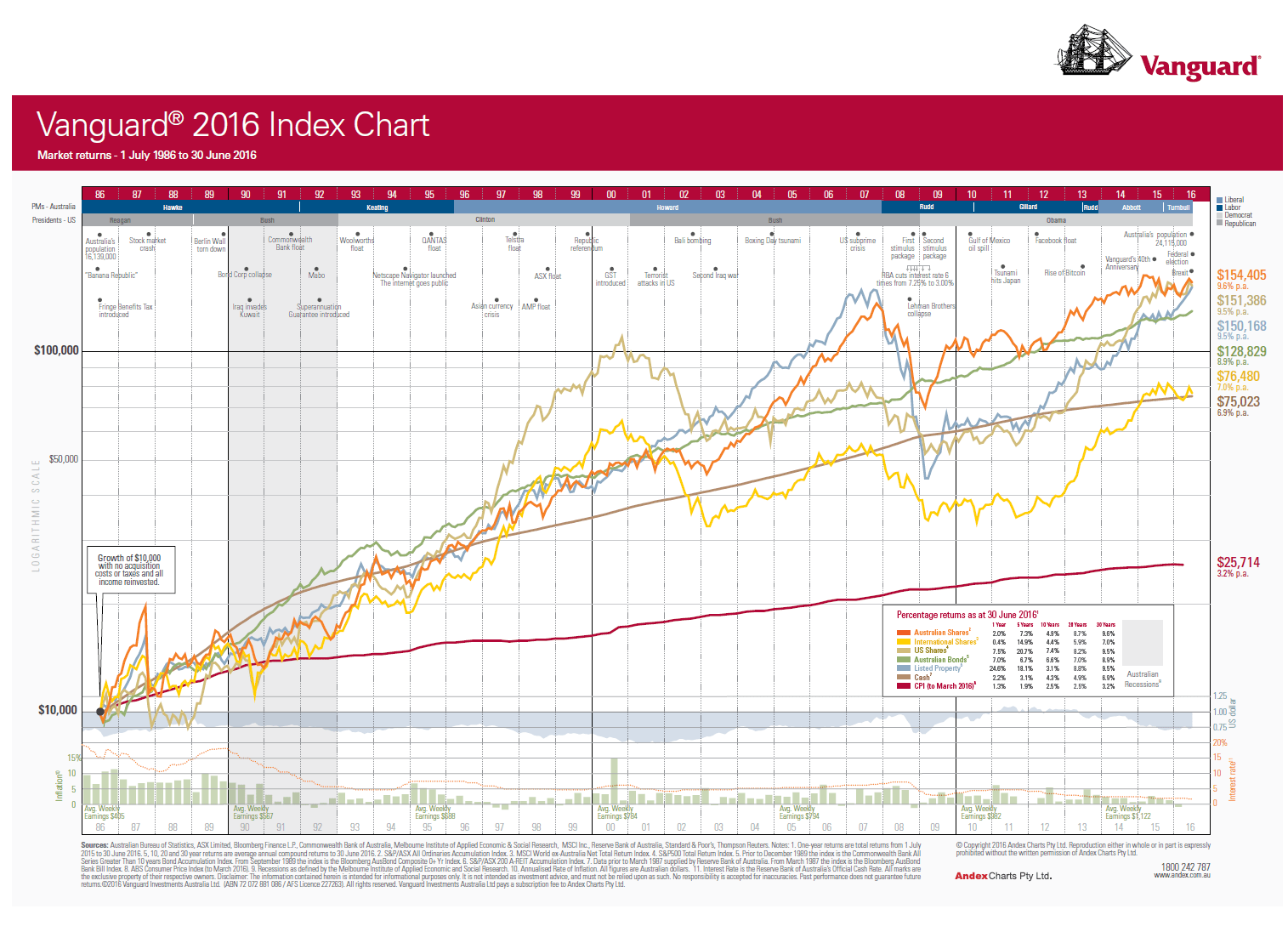
Yesterday we looked at the importance of long-term investing using the UK edition of The Vanguard 2016 Index Chart. The Australian edition of The Vanguard 2016 Index Chart below shows how long-term investing produces the most returns with equity investing:

Click to enlarge

A A$10,000 investment in 1986 would have produced an annual return of 9.6% beating all other asset classes shown.

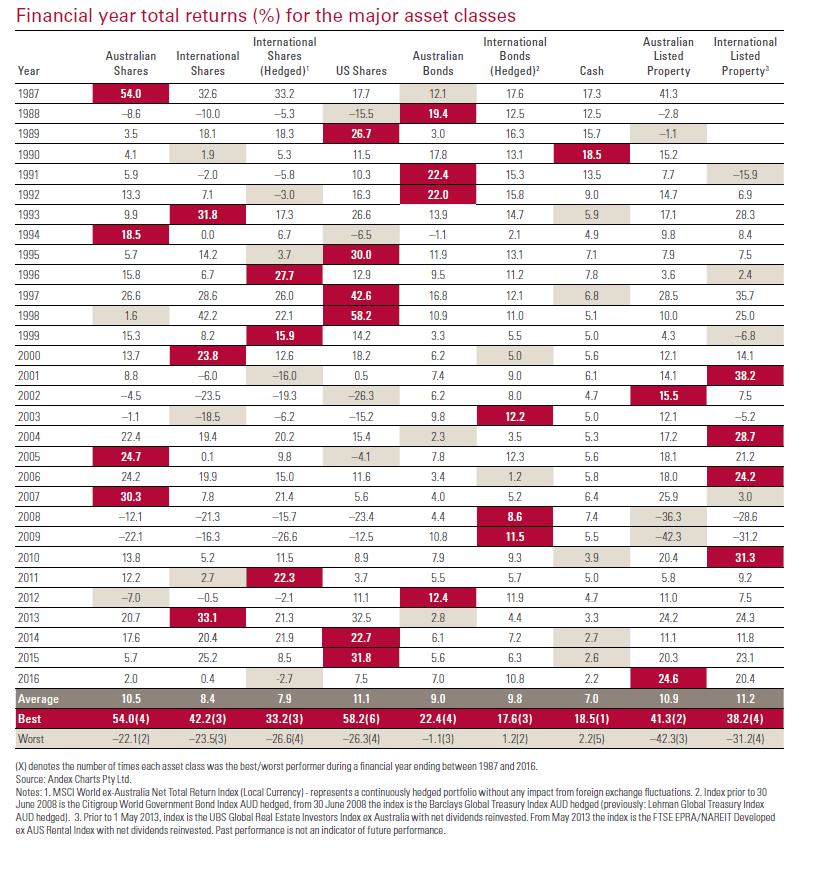
The financial year total returns for the asset types shown in the above chart:

Source: The bigger picture – The Vanguard 2016 Index Chart, Vanguard Australia

Download: The bigger picture – The Vanguard 2016 Index Chart (Australian Edition in pdf)

Related ETFs:

  • SPDR S&P 500 ETF (SPY)
  • Vanguard Dividend Appreciation ETF (VIG)
  • iShares MSCI Emerging Markets ETF (EEM)
  • Vanguard MSCI Emerging Markets ETF (VWO)
  • iShares MSCI Australia ETF (EWA)

Disclosure: No Positions

The Major Beer Companies And Their Brands: Infographics

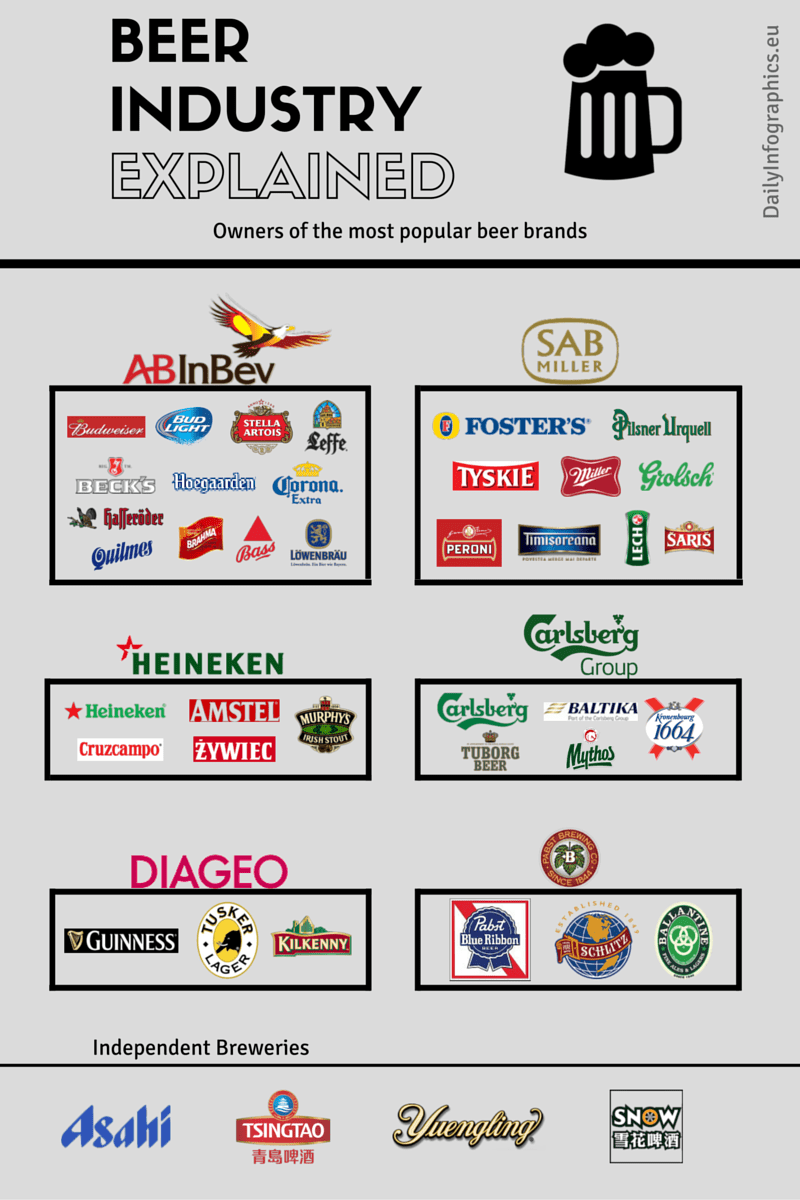
The major global beer makers and the brands owned by them are shown in the graphics below:

Click to enlarge

Source: Daily Infographics

Some of the firms listed above are Ambev(ABEV), SABMiller(SBMRY), Carlsberg A/S (CABGY), Heineken NV (HEINY) and Diageo plc (DEO).

Related Posts:

Disclosure: No Positions

The Longest East-West High-Speed Rail Line Opened In China

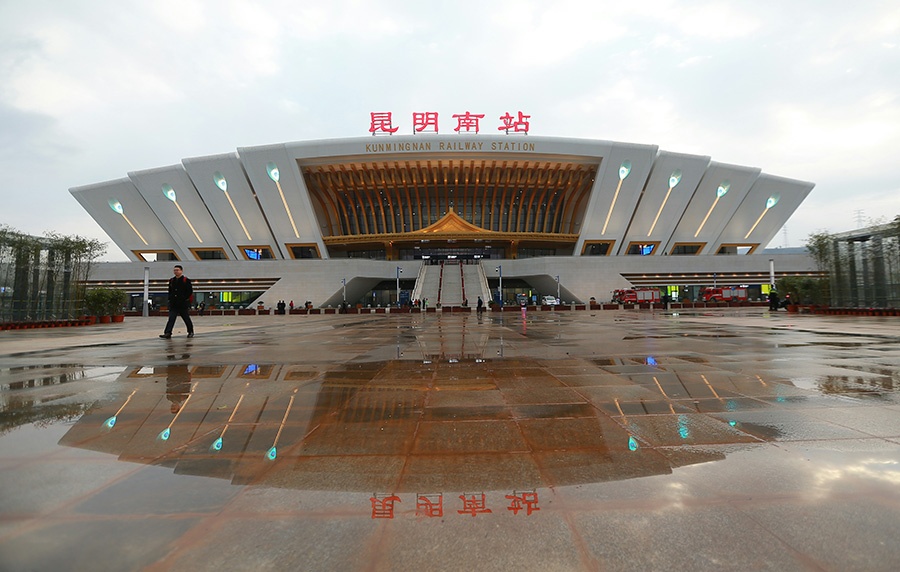
China opened a major high-speed rail line linking Shanghai in the east with Kunming, the capital of Yunnan province in the SouthWest. The line is 2,264-kms in length and passes through five provinces – Zhejiang, Jiangxi, Hunan, Guizhou and Yunnan. It cuts the travel time between the cities from 34 to just 11 hours according to China Daily.


The number of tunnels on this line is staggering:

Source: Shanghai-Kunming high-speed rail in full operation, China Daily

The train can reach a  maximum speed of 330 kms per hour.Currently China has 20,000 kms of high-speed lines and plans to more than double that to 45,000 kms by 2030.

Source: China connects east & west with longest bullet train line, RT

In the US, the high-speed train Acela Express is the fastest train and travels at a maximum speed of 240 kms per hour. It connect Boston with Washington, DC , a distance of 734 kms. The US years behind China in high-speed train network. As one reader commented online “The US has lots of bullets. But no trains.” If the national priority is even slightly changed from bullets to trains, the country’s full economic potential will be unleashed.