On The Monopoly and Oligopoly Madness In Most US Industries

The US is considered as the most competitive market in the world. However in reality most of the major industries are a form of monopoly or oligopoly. When industries are dominated by one company or a handful of companies customer suffer as prices inevitably increase due to pricing shower and lack of competition. But investors and management in these firms benefit as profits rise.

I written about the scourge of  monopolies and oligopolies in the airline, railroad, cable tv, ratings industries before. Other industries such as auto manufacturing, bus transportation, passenger rail transportation, food, healthcare, entertainment, media, etc. are also plagued by this phenomenon. But somehow this setup is accepted by the state and the public. And then the same public wonders why customer service is awful in most companies, why wages are stagnant, why the rich get richer and the poor get poorer, why bills keep going up and up every year, why politics is corrupted by big money, etc.

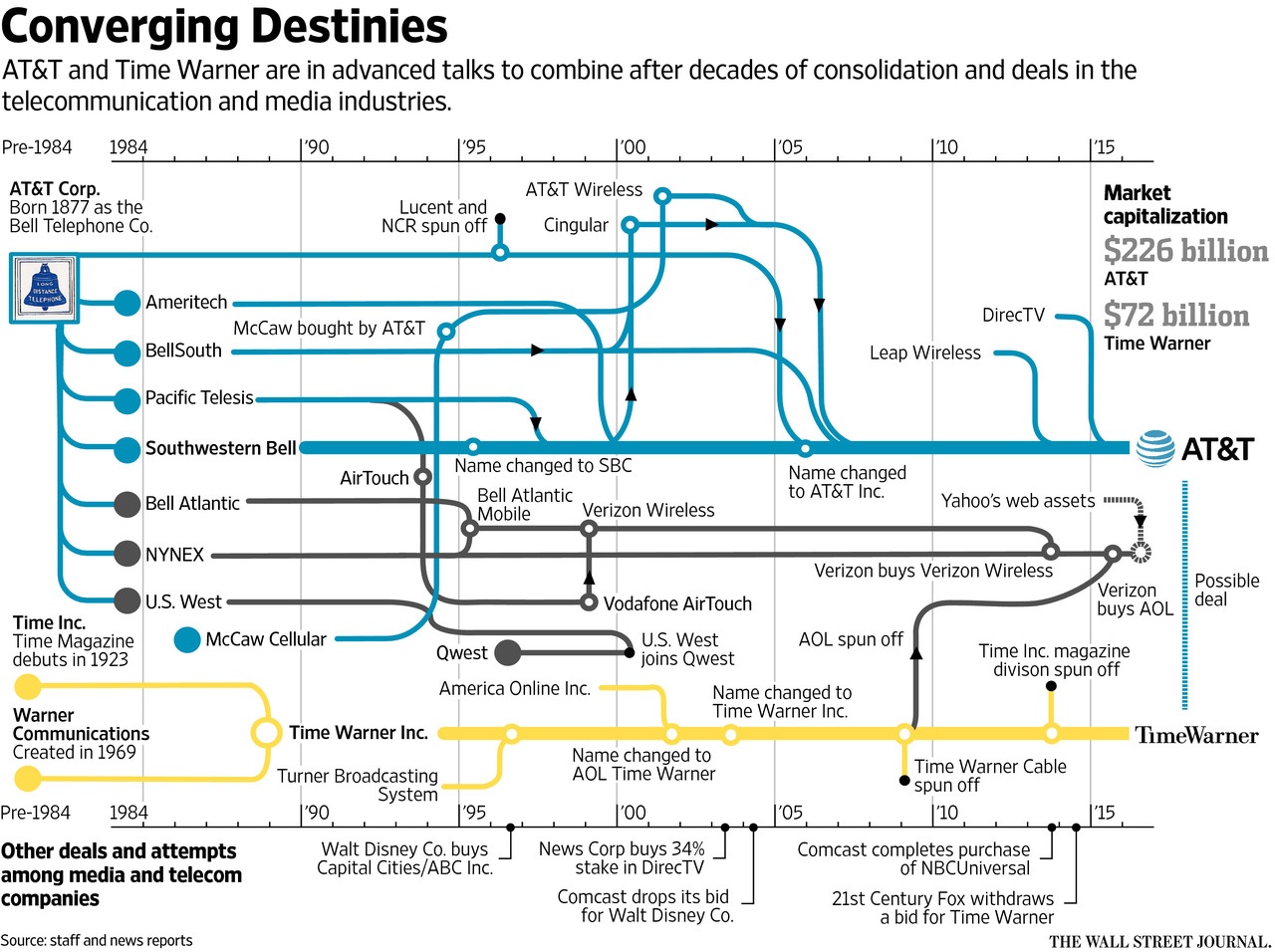
Yesterday news broke that the telecom giant AT&T(T) is going to acquire cable TV giant Time Warner(TWX). If this deal goes thru it will be another nail in the coffin for competition. Already most cable companies including Comcast(CMCSA) are notorious for price gouging and bad customer service. This merger, if approved by regulators, would further hurt American consumers.

The following chart shows the evolution of AT&T and Time Warner:

Click to enlarge
att-and-time-warner-combination-chart


Source: AT&T Is in Advanced Talks to Acquire Time Warner, WSJ, Oct 21, 2016

Disclosure: No Positions
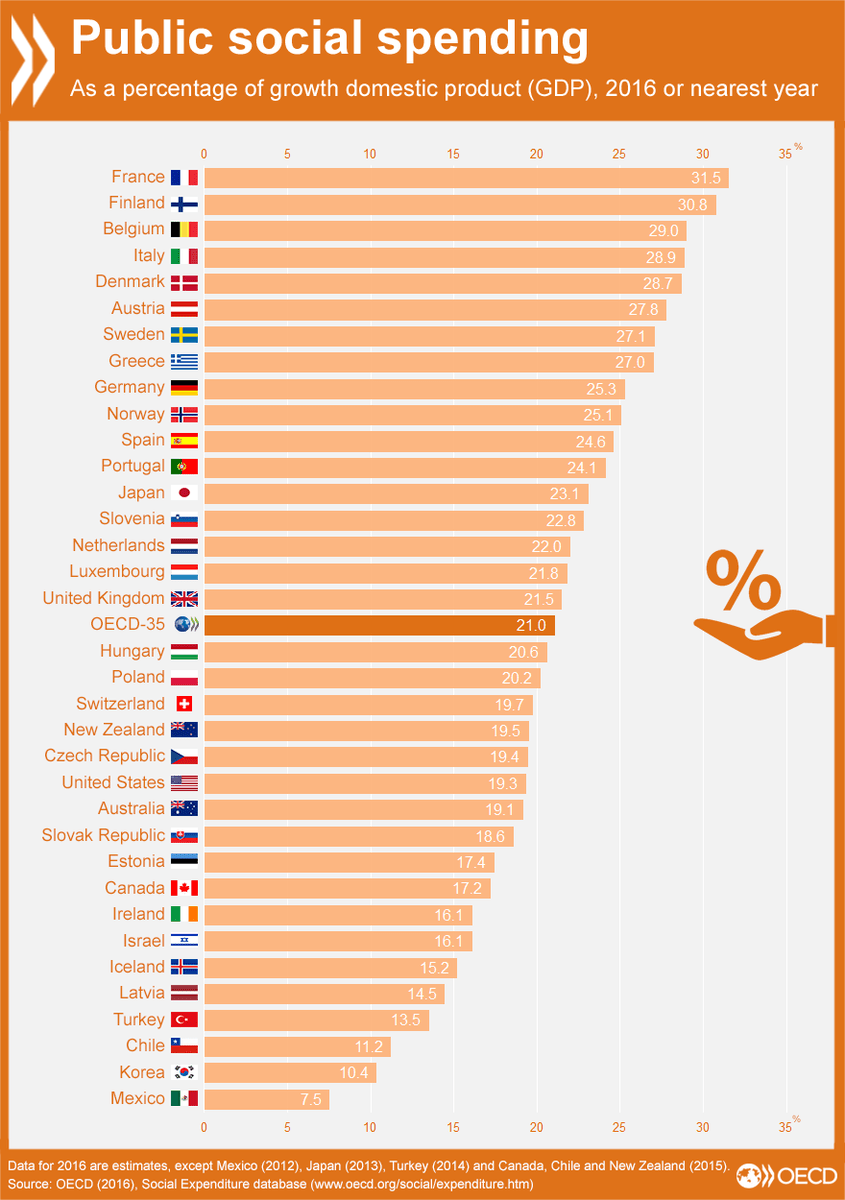
Public Social Spending as a Percentage of GDP Across OECD Countries

Social spending includes various benefits offered by a country to its residents such as healthcare, pensions, social security,  food stamps, relocation money provided to refugees, funding for community activities for illegals, etc. This expenditure varies widely across OECD member countries.

Click to enlarge

social-spending-across-oecd-countries

Source: OECD

France tops the list with social spending amounting to over 31% of the GDP and Mexico spends the least at 7.5%. The US spends slightly less than the OECD average of 21%.

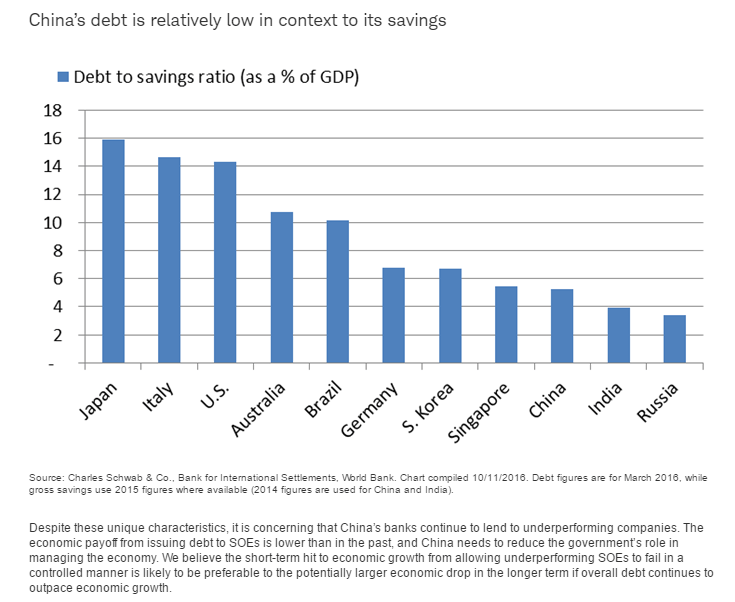
Debt to Savings Ratio As a Percentage of GDP of Select Countries

China is creditor country while the US is the largest debtor country in the world. China has also one of the low debt to savings ratio in the world as shown in the chart below:

Click to enlarge

debt-to-savings-ratio-of-select-countries

Source: 5 Big Risks Posed by China (And Why They Shouldn’t Crash Global Markets in 2017) by Michelle Gibley, Charles Schwab

China’s debt to savings ratio(as a % of GDP) is especially low when compared to developed countries.

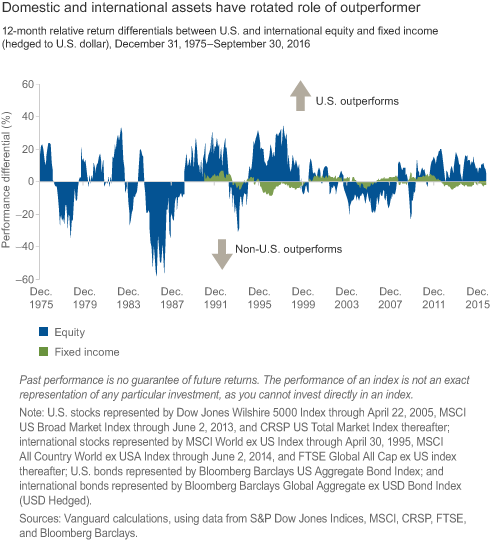
Why International Diversification Is Necessary

US stocks have performed well in the past few years relative to other developed and emerging stocks. Emerging market stocks have been especially poor performers for many years until now.

While the S&P 500 is up by about 7% so far this year, emerging markets such as Brazil, Russia have soared by 42% and 30% respectively. Among the developed European markets, most are under-performing the US with the exception of UK where the FTSE 100 has gone up by over 12% year-to-date.

In general, though US outperform foreign stocks it does not mean one should ignore foreign stocks. US stocks outperform in some years while foreign stocks in some others. Nether US or international stocks continuously remain the top performer year over year.

The following chart proves the above concept:

Click to enlarge

internatonal-vs-us-stocks-performance-differential

Source: Vanguard Blog for Advisors

So the key takeaway is that investors should diversify internationally and not just focus on US stocks alone.

Related ETFs:

  • Vanguard Dividend Appreciation ETF (VIG)
  • SPDR S&P Dividend ETF (SDY)
  • SPDR S&P 500 ETF (SPY)
  • iShares MSCI Emerging Markets ETF (EEM)
  • Vanguard MSCI Emerging Markets ETF (VWO)

Disclosure: No Positions

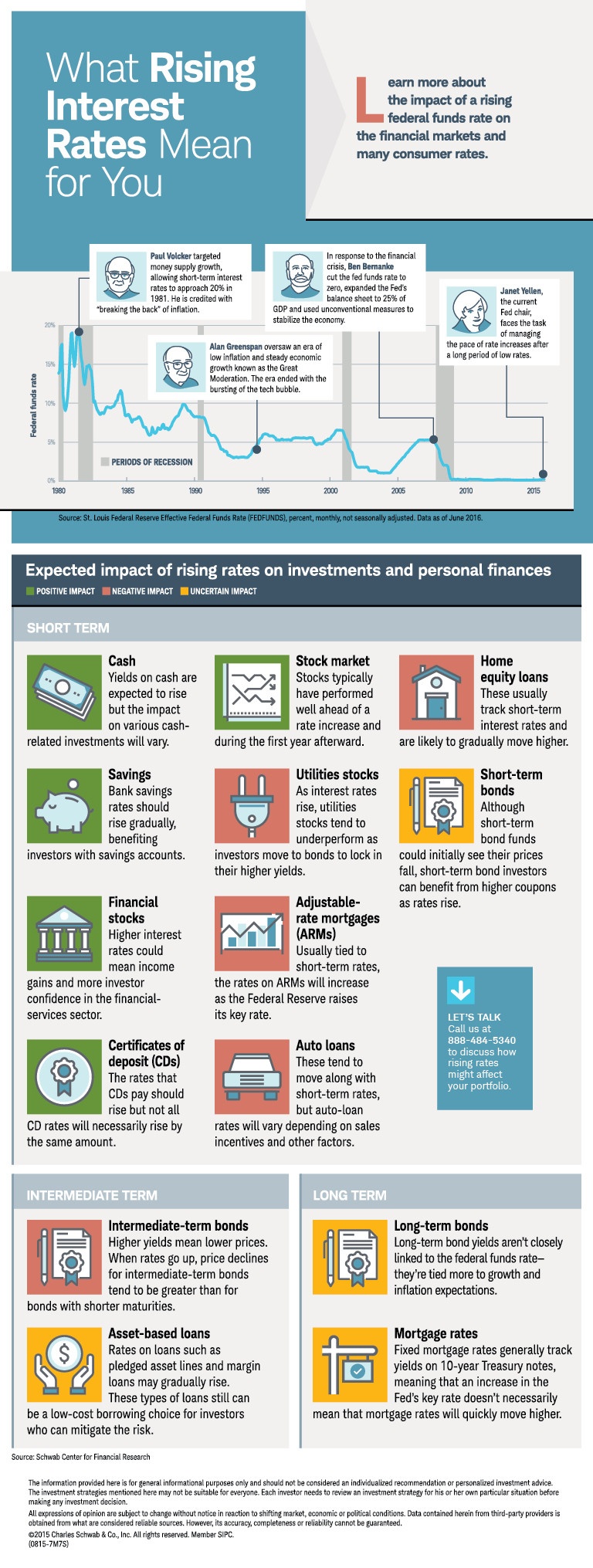
Infographics: What Rising Interest Rates Mean for You

One of the main themes that is dominating business news nowadays is interest rates. More specifically the question on everyone’s mind is when will the Federal Reserve increase the fed funds rate from the ultra-low rates now. The talking heads, pundits, fed watchers and other experts debate this  issue on a daily basis in the media, ordinary investors need to understand how rising rates will affect their everyday life. For instance, what is the impact higher rate on mortgage, auto-loans, credit-card debt, etc.

The following neat infographic from Charles Schwab explains the answers:

Click to enlarge

infographis-impacts-of-rising-interest-rates

Source: What Rising Interest Rates Mean for You, Charles Schwab