The Best 20 US Regional Banks For Creating Value

The banking industry in the US is one of the highly regulated and competitive industries. Thousands of banks operate in the country with some as small as one or branches. In addition, a few banks operate as online only banks. Of these banks, investors have quite a few options to invest in some of the publicly-listed banks. There are over 50 banks listed on the NYSE and the NASDAQ is home to over 325 banks.

With so many bank stocks listed, which ones are the best in terms of value creation for shareholders?

One way to identify such stocks is to perform due diligence on your own using various metrics and some subjective factors. Another option is to consider list of banks that were analyzed and ranked as the best banks for creating value by the Bank Director magazine. The magazine recently published its annual list of the Top Banks in various categories. The winners for creating value were based on many factors which are detailed in the below excerpt:

To identify the best bank for creating shareholder value, Bank Director examined and ranked each institution based on its ability to consistently generate a high level of profitability, through average return on assets and return on equity from December 2014 to December 2019, as well as the standard deviation of both metrics. We also looked at growth in ROE, ROA and pre-tax pre-provision (PTPP) income over the same time frame. And we factored in dividend growth and average trade volume to understand the liquidity of each bank’s stock. These factors were ranked to produce an overall score. The category rewards growth but places a greater emphasis on consistency.

Source: Best Bank for Creating Value, Bank Director

Abilene, Texas-based First Financial Bankshares (FFIN) is the winner among the 20 banks selected in this category. The bank has been consistently growing earnings for the past 34 years. From the article:

“It’s a different breed of bank than most players out there,” says Hovde Group analyst Brett Rabatin, citing First Financial’s culture, conservative lending strategy, fortress balance sheet and successful M&A track record. Another factor is its strategy to compete with a handful of banks in its small-town markets; the bank prefers to skirt around metropolitan areas. First Financial is also a true relationship lender, Rabatin adds. “A lot of banks like to say, ‘we’re relationship lenders,’ [but] this is one of the few banks where it shows up. It shows up in their loan yield, it shows up in the profitability.”

The Top 20 Banks for creating value are shown in the table below:

RankBank NameTickerScoreROA (Avg.) - YE 2014 – YE 2019Avg. Trade Volume - SEPT. 2020
1First Financial BanksharesFFIN7.921.79%511,782
2Southside BancsharesSBSI81.17%123,885
3Glacier BancorpGBCI8.881.42%661,117
4Lakeland Financial Corp.LKFN8.921.44%132,968
5Bank OZKOZK9.252.05%970,818
6Meta Financial GroupCASH9.291.08%240,842
7Independent Bank Corp.IBCP9.921.17%125,709
8Stock Yards BancorpSYBT10.081.54%88,751
9The First BancorpFNLC10.291.17%15,787
10Prosperity BancsharesPB10.381.34%494,390
11Community Bank SystemCBU10.461.37%263,598
12Auburn National Bancorp.AUBN10.631.03%10,584
13City Holding Co.CHCO10.831.53%74,314
13Southern Missouri BancorpSMBC10.830.96%14,695
15Greene County BancorpGCBC11.421.20%3,900
16Horizon BancorpHBNC11.631.05%152,587
17Eagle Bancorp MontanaEBMT11.710.87%30,150
18WSFS Financial Corp.WSFS11.921.21%270,004
19Hingham Institution for SavingsHIFS13.131.33%3,581
20First CapitalFCAP14.041.07%7,810

A few observations:

  • Consistent growth is the key factor shared among the above banks. One way this can be measured is reviewing their dividend payment history.
  • For example, Montana-based Glacier Bank(GBCI) has paid dividends for 143 consecutive quarters and has increased dividend 46 times. In recent years, the company has also paid out a special dividend. The last special dividend was $0.15 per share paid out in January of this year.
  • All the above banks have decent dividend yields with room to increase.
  • Long-term returns of stocks are also excellent. For instance, a $10,000 investment in Prosperity Bancshares (PB) five years ago would have grown to over $17,200 as of June 25, 2021 according to S&P. The same amount in First Financial Bankshares, Inc(FFIN) would have grown to over $33,300.
  • With the economy recovery projected to be strong this year, banks are bound to generate higher profits and these regional banks offer excellent choices for an investor looking to profit from the growth potential.

Disclosure: Long GBCI
Top Glove ADR to be Terminated

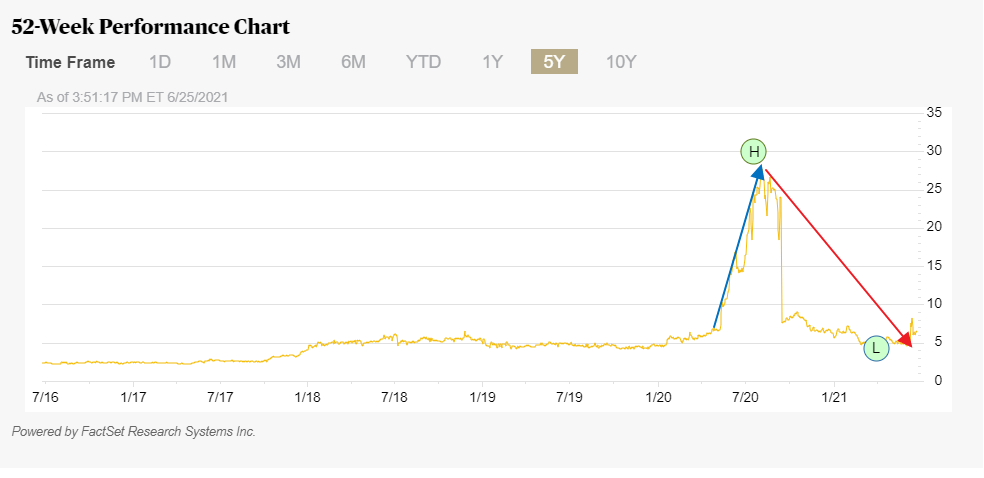
The depository of Top Glove Corporation(TGLVY) ADR has announced that the ADR would be terminated effective August 29, 2021. Malaysia-based Top Glove is the manufacturer of rubber products such as gloves, face masks, etc. and became popular during the pandemic last year when the demand for PPE products soared. The relatively unknown ADR at the time took like a rocket and then fell dramatically when a vaccine was invented for Covid-19.

Click to enlarge

Source: BNY Mellon

ADR holders have until Aug 22, 2022 to surrender their ADRs for cancellation and receive the underlying ordinary shares or cash.

Below is an excerpt from the termination notice:

As owners and beneficial owners of the above ADRs, you are hereby notified that The Bank of New York Mellon, as depositary (the “Depositary”), will terminate the Deposit Agreement, dated December 27,2005, among TOP GLOVE CORPORATION BHD (“TOP GLOVE CORPORATION”), the Depositary, and Owners and Holders of ADRs, the (“Deposit Agreement”).

As a result, the existing ADR facility will be terminated effective at 5:00 PM (Eastern Time) on Thursday August 19, 2021. Under the terms of the Deposit Agreement, you have until at least Monday August 22, 2022 to surrender your TOP GLOVE CORPORATION ADRs for delivery of the underlying shares. If you surrender ADRs for delivery of the underlying shares, you must pay a cable fee of $17.50, a cancellation fee of up to $0.05 per ADRs surrendered and any applicable U.S. or local taxes or governmental charges. Payment should be made payable to The Bank of New York Mellon.

Subsequent to Monday August 22, 2022 under the terms of the Deposit Agreement, the Depositary may attempt to sell the underlying shares. If the Depositary has sold such shares, you must surrender your ADRs to obtain payment of the sale proceeds, net of the expenses of sale, any applicable U.S. or local taxes or government charges and a cancellation fee of up to $0.05 per ADRs.

Source: BNY Mellon

Disclosure: No Positions


The Top Automotive Aftermarket Companies of 2020

I have written many times before that the best way to profit from the automotive industry is not invest in the car manufacturers themselves but in the part suppliers. Aftermarket parts companies flourish during boom and bust cycles of the economy. Currently the chip supply issue is severely affecting the new auto sales market. In addition, prices of used autos have sored as well. Consumers are holding their autos much longer than usual with the average age exceeding twelve years.

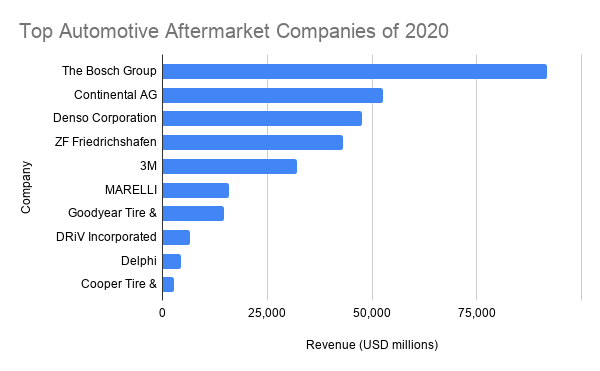
The loosening of new car supply is projected to take many months. Hence the demand for auto parts should continue to remain strong for the foreseeable future. Investors looking to benefit from this situation can consider adding some of the top auto parts makers. The following chart shows the Top Auto Aftermarket Companies in 2020:

Click to enlarge

Source: Bizvibe

Three of the top five firms – The Bosch Group, Continental AG(CTTAY) and ZF Friedrichshafen AG -listed above from Germany. Goodyear Tire & Rubber Company(GT), DRiV Incorporated (Tenneco), BorgWarner(BWA) and Cooper Tire & Rubber Company(CTB) are some of the best American auto parts makers.

Disclosure: Long CTTAY

Related:

Ten Facts About The UK Automotive Industry

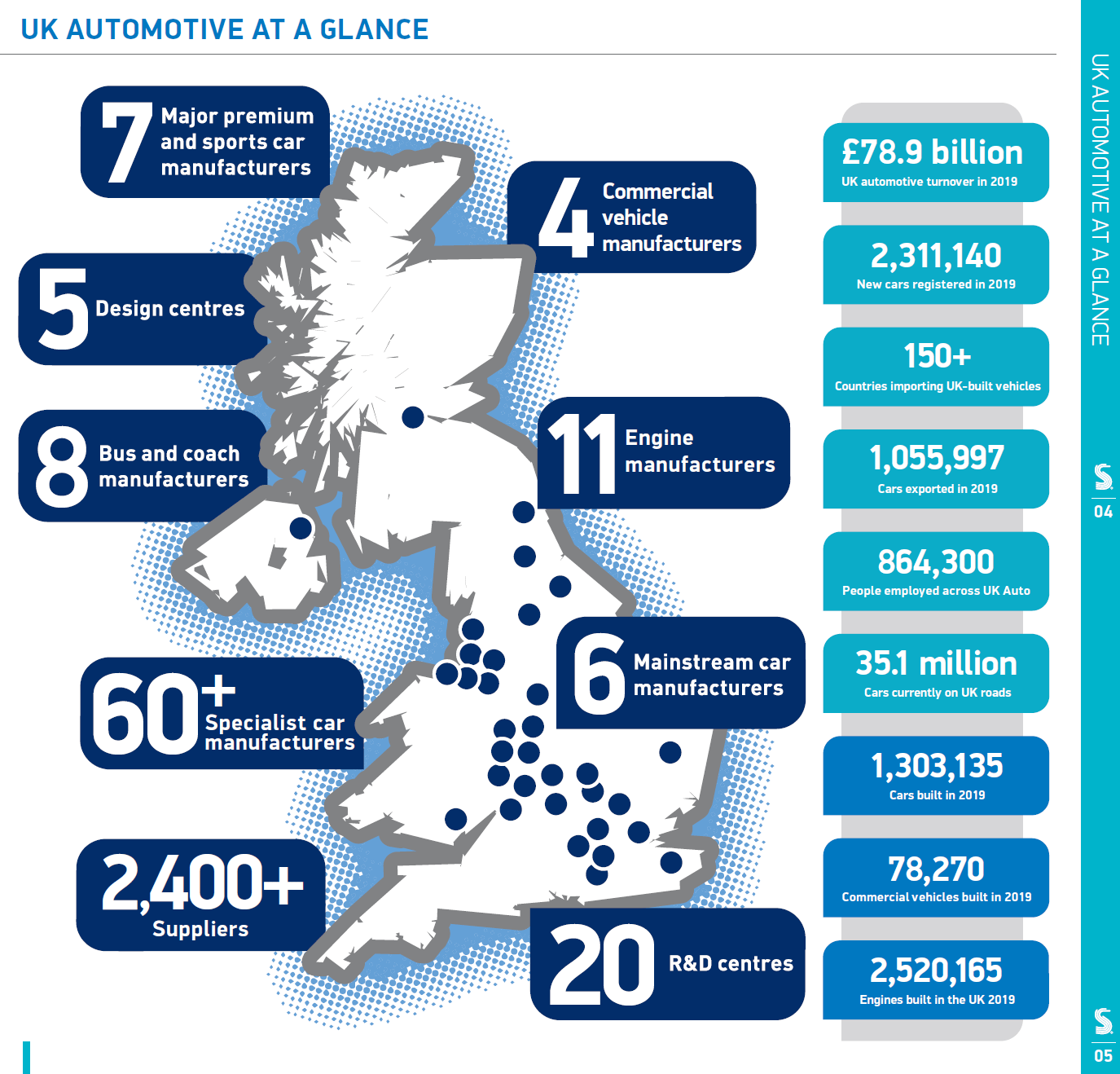
The automotive industry is one of the largest industries in the UK providing jobs to hundreds of thousands of workers and involving billions of pounds in economic activity. At the end o 2019, there were 7 major luxury and sports car manufacturers in the country. Some of the top British brands include Aston Martin, Bentley, Land Rover and Jaguar (part of India’s Tata Motors), Lotus, McLaren and Mini and Rolls Royce(owned by Germany’s BMW Group). From the size perspective, the UK auto industry is small relative to the US auto industry. But still there are over 800 companies operating in the country.

Click to enlarge


Source: The Society of Motor Manufacturers and Traders (SMMT)

The following are ten interesting facts about the auto industry in the UK:

  1. In 2019, auto products exports accounted for 13% of total UK’s goods exports.
  2. The top five models by production are Jaguar Land Rover, Nissan, Mini, Toyota and Honda.
  3. A total of 1.30 million cars were produced out of which 81% were exported.
  4. The top export markets are the EU, USA, China, Canada and Japan.
  5. The UK auto industry output is small when compared to other countries. UK ranked 16th well behind countries like Canada, India, South Korea, Germany, etc.
  6. The UK is also home to more than 2,400 auto parts suppliers.
  7. Commercial vehicles such as buses, trucks and vans are also manufactured in the UK though their numbers are smaller relative to autos.
  8. The sector generated about £100.0 billon in trade in 2019.
  9. On a given day, over 1,100 trucks from the EU deliver components to auto plants in the country.
  10. The top color chosen by British consumer is gray followed by black, white, blue and red.

Source: Motor Industry Facts 2020, SMMT

Referenced Companies:

  • Tata Motors Limited (TTM)
  • BMW (BMWYY)
  •  Toyota Motor Corp (TM)
  • Honda Motor Co Ltd (HMC)

Disclosure: No positions

Five Risks of the MSCI Emerging Markets Index

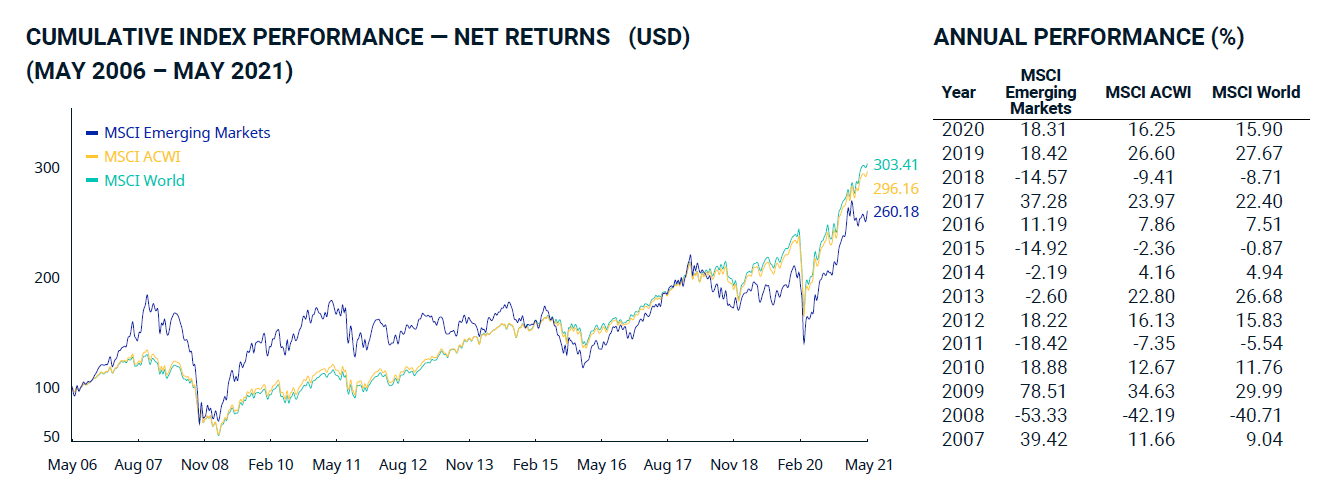
The MSCI Emerging Markets Index is one of the most popular indices for tracking the performance of emerging markets. Many ETFs and mutual funds are benchmarking against this index. The index is comprised of 1,424 companies across 24 emerging markets. The performance of the index relative to the MSCI World and MSCI ACWI indices over from May,2006  thru May, 2021 in US dollar terms is shown in the chart below:

Click to enlarge

Source: MSCI

Despite the popularity of The MSCI Emerging Markets Index there are many risks and disadvantages of using this as the benchmark for emerging markets. The following are five concentration risks that investors need to be aware of when investing in a fund that is based on this index:

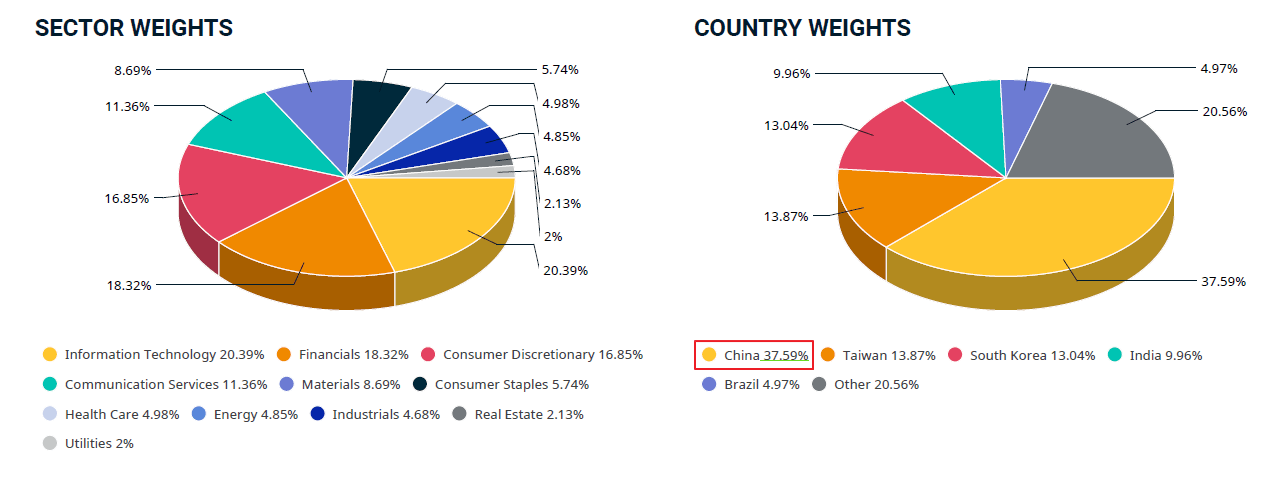
  1. From a country weights perspective, just China accounts for about 38% of the index.
  2. In addition, five countries – China, Taiwan, South Korea, India and Brazil – account for about 80% the index leaving just 20% for all the remaining countries.
  3. The top five holdings amount to more than one-fourth of the index composition.
  4. Moreover stocks from China, Taiwan and South Korea make up almost two-thirds of the index.
  5. Just four firms – Taiwan Semiconductor Manufacturing Co.(TSM), Tencent(TCEHY), Alibaba Group(BABA) and Samsung Electronics – account for 20% of the index. Or to put it another way, tech dominates the index. Any correction or major decline in this sector will have a higher impact on the performance of the index.

Related ETFs:

  • iShares MSCI Emerging Markets ETF (EEM)
  • Vanguard MSCI Emerging Markets ETF (VWO)

Disclosure: No Positions