Top Ten Creditors to the USA

Recently the Department of the Treasury/Federal Reserve Board updated the Major Foreign Holders of Treasury Securities data. The following are the top ten creditors to the USA as of March, 2009:

[TABLE=150]

Not surprisingly China is still the largest holder of US debt. The Chinese hold $767 B in March this year compared to $727 at the end of 2008. Contrary to media reports that the Chinese are dumping US debt and not buying any new treasury securities, China has not only been holding US debt but increased it slightly in 2009. In March 2008, they held $490B. China accounts for about 1/4th of the total $3.2T debt owed to foreign countries.

Japan is the second largest creditor to US following China with a total of $686B. Japan has always been a buyer of large amount of US debt.

The number three in the list is not a single country. For some unknown reason the Treasury and the Federal Reserve group the Caribbean islands that are basically off-share tax havens into one category. This group includes the Bahamas, Bermuda, Cayman Islands, Netherlands Antilles,Panama and British Virgin Islands. These islands channel huge amount of wealth into the US due to their tax shelter status. They are ahead of many countries such as the UK, Russia, etc with a total of $213B.

The fourth top creditor is again another group of countries together called as the Oil Exporters. This includes Ecuador, Venezuela, Indonesia, Bahrain, Iran, Iraq, Kuwait, Oman, Qatar,Saudi Arabia, the United Arab Emirates, Algeria, Gabon, Libya, and Nigeria. This group holds $192B. Middle east countries like Saudi Arabia, Qatar, Kuwait, UAE, etc. receive huge amounts of US dollars when we purchase their crude oil and then they turn around and reinvest them in the US in the form of treasuries and other vehicles. This process is called the petro-dollar recycling in which the US dollar just gets recycled and returns back to the US.

Russia has been a heavy buyer of treasuries since last year. From just $42B in March 2008, Russia currently holds a total of $138B in US debt.

Other notable countries that are big creditors to US include Singapore, Taiwan, Luxembourg and Hong Kong. Malaysia holds the smallest amount of treasuries with just $10B. Canada, a close trading partner of US has bought securities worth $11B only. On a year-over-year basis, the total US debt held by foreign countries has risen from $2.5T last March to $3.2 T this year.

Canada’s Financial System: Why Is It Stable In This Crisis?

The IMF Country Report for Canada published today offers some unique perspectives on the reasons for the stability of Canada’s financial system since the credit crunch began. There have no been no failures of financial institutions, no large scale bailout of banks and the financial system did not undergo severe systemic pressures like it did in the US and UK. In this post lets review some of the key points from this report.

1. Sound Supervision and Regulation: Regulators follow some of the best practices with respect to supervision of institutions including the new Basel principles for banking supervision. As a result writedowns by Canadian banks have been much smaller when compared to major-peer countries as shown in the chart below.

canada-bank-writedowns-2008.JPG

2. Strict Capital Requirements: Canadian banks’ Tier 1 Capital Ratio exceeds 7% which is higher than the 4% that required by the Basel Accord.

As of February, 2009 the Tier Ratios of the six large banks are as follows:

canada-banks-tier-ratio.JPG

3. Leverage ratio: This is limited to just 5% of total capital or up to 20% maximum. US banks on the other hand are allowed up to 33% based on their strength and sophistication.

4. Conservative lending policies: Canadian banks like their customers exhibit low risk tolerance and have very conservative lending policies. Also their domestic retail market is profitable and stable unlike in the US.

5.Conservative Residential Mortgage Markets: In the US, 25% of all mortgages are non-prime and 60% of mortgages are securitized. In Canada these numbers are just 5% and 25% respectively. In addition most of the mortgages in Canada have Loan-To-Value (LTV) ratios of below 80%.

6. Periodic Regulatory Reviews: Since the financial sector is ever-changing with innovations and globalization, the federal authorities in Canada review the financial regulations every 5 years. It is not clear if a similar process exists in the US.

7. Cooperation among regulatory agencies: Officials of the various government agencies such as the Office of the Superintendent of Financial Institutions (OSFI), Finance
Canada, Bank of Canada (BoC), Canada Deposit Insurance Corporation (CDIC), and the Financial Consumer Agency of Canada meet regularly as part of the Financial Institutions Supervisory Committee (FISC) to discuss and exchange regulatory information.In the US, agencies such as the Office of Thrift Supervision (OTS), FDIC, Federal Reserve, etc. usually operate independently of one another. Inter-agency cooperation is non-existent for the most part.

8. Proactive response to financial strains: Federal authorities are proactive when it comes to dealing with financial strains to the system. The 2009 budget contains many provisions to support stability in the financial system.

As a result of the above reasons, all the top five Canadian banks have become strong and powerful among the banks in North America.

canada-banks-market-cap-arril-1-2009.JPG

For example, the above table shows that Royal Bank of Canada (RY) had a market cap larger than Bank of America (BAC) on April 1, 2009. And all five banks were well ahead of Citibank (C). Citibank used to have a market above $200B only a few years ago. Now if not for the government bailout, the bank would failed. Some experts like Mark Patterson have said that many large US financial giants are technically insolvent.

Overall despite being very close to US in terms of financial and economic linkages, Canadian banks have so far shown remarkable resilience during this crisis.

Source: Canada: 2009 Article IV Consultation—Staff Report; Staff Statement; and Public Information Notice on the Executive Board Discussion, May 2009, IMF

Disclosure: Long all five Canadian Banks listed in the US markets

Knowledge is Power: Will China’s Economy Recover? Edition

1.Colin Grassie, CEO, Deutsche Bank, Asia- Pacific tells The Asset that his one fervent wish for Asia in the next 10 years is for Asian savings to be more effectively recycled into domestic capital Asia: The Future – Interview with Colin Grassie

2.Chief non-Japan Asia Economist for Credit Suisse Dong Tao explains why China’s economy will recover faster than other countries. China’s Economy Will Recover Quickly

3. Bad idea? TARP-related funds for 401(k)sExpanding the bailout

4.The full force of the global recession has hit Turkey with falls in exports leading to job cuts. Bankers say an IMF deal would help but the government is reluctant. Writer Metin Demirsar- Who’s afraid of the IMF?

5.he West is pinning its hopes on China to revive the global economy. Beijing is orchestrating its efforts to combat the crisis as meticulously as it once planned the country’s spectacular economic ascent.How Beijing is Battling the Global Crisis

6.COCA-Cola Amatil, the local bottler of the soft drink, forecasts higher profit after a hot summer boosted demand.Coca-Cola Amatil tips profit to rise

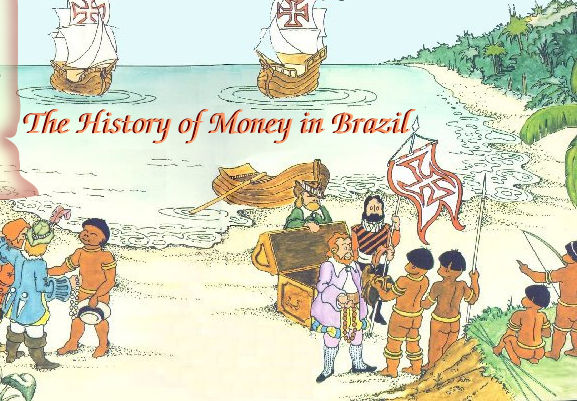
7.Museum of Money– The Museum was created by the Central Bank with the primary objective of preserving the nation’s heritage on the progress of means of payment, based on the principle that money is an important form of a people’s cultural expression, and an essencial element in economic history.

Money of Brazil

Source: Banco Central Do Brasil

Knowledge is Power: World Trade To Fall Edition

1.With world trade volumes likely to shrink by as much as 13 percent in 2009 from 2008 levels, the OECD is urging governments to avoid protectionist measures and keep markets open in order to allow economies to benefit from the recovery when it comes.World trade set to fall 13 percent, OECD urges governments to avoid protectionism

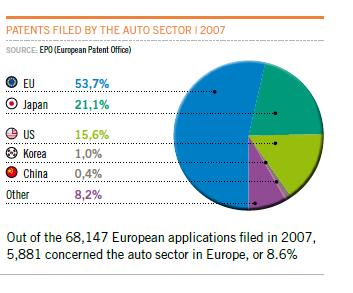
2. Brussels, 19 May 2009 – The European Automobile Manufacturers’ Association ACEA has published, today, the European Automobile Industry Report 09/10 and the accompanying leaflet Automobile & Society – State of Affairs, Priorities for the Future. European Automobile Industry Report 09/10

car-eu-patents.JPG

3. Vontobel Asset Management argues Asian equities and most commodities are way overpriced.Skip Asian equities and give me the Scotch

4.Chancellor Angela Merkel’s government has set aside 115 billion euros to help tottering German companies. But with some of the country’s largest firms lining up for aid, Berlin is struggling to decide who qualifies for help.List of German Companies Needing Help Grows Longer

5.Hot on the heels of rising oil prices, the Canadian dollar continued its ascent… Canadian dollar hits 7-month high

Banco de Chile Announces Stock Dividend

At a special shareholders meeting on March 29th,2009 a stock dividend of 3.2325% was approved. Banco De Chile ADR (BCH) shareholders will receive 3.2325 additional shares for each 100 shares held. Fractional shares will be paid in cash.

According to Depositary, JPMorgan Chase Bank, N.A. the effective dates are as follows:

ADR record date: May 29, 2009
ADR payment date: June 11, 2009

Banco De Chile ADR (BCH) currently has a dividend yield of 5.91% and has a market cap of 5.4B. In March of this year, Fitch Affirmed its ratings outlook as stable.

Another Chilean bank that trades in the NYSE is Banco Santander-Chile (SAN).