The Latest External Debt Position of European Countries

The credit rating agency Standard & Poors downgraded Greece’s credit rating today.Last week Fitch downgraded Greece’s rating. Both the agencies cut the credit rating due to the country’s huge debts. The public debt of Greece stands at $442B and its public deficit is about 13% of GDP.

In Debt Fears rattle Europe the Journal notes that the Euro tumbled to $1.4505 yesterday. Austria nationalized Hypo bank on ECB’ s orders and there are new fears that another Austrian lender may be in trouble as well. Hypo bank is the sixth largest bank in Austria and ran into trouble due to hidden losses from its exposure to Eastern Europe.

The European countries with huge budget deficits are Portugal, Ireland, Italy, Greece and Spain which are now dubbed as “PIIGS” by traders.

The External Debt of Greece stands at $552B at the end of Q2,2009 as the table shows below. The external debt rose a massive 481.87 % in 2008 due to wasteful spending by Greek politicians.Most of the money went to fund social spending and high wages paid to public workers many of whom were hired by politicians to show their gratitude for electing them.This is why Greece continues to be the poorest country in Europe and its credit rating
was downgraded.

Gross External Debt Position (in US$ millions)

[TABLE=255]

Source: The World Bank

Portugal, Ireland, Italy and Spain also have high external debt levels. Italy’s external debt increased by over 10% from the start of the year thru 2Q,2009.
Ten German Stocks with High Dividend Yields

The German economy is the largest in Europe and the country is home to many of the world’s top companies such as BMW, Siemens, Volkswagen, etc. German companies also hold the leadership position in the chemical industry.

In order to identify the high dividend-paying German stocks I used the iShares DivDAX ETF (EXSB) which tracks the DivDAX index. This index tracks the 15 stocks with the highest dividends out of the 30 largest and most liquid German companies by market capitalization.

The Top 10 Holdings in the iShares DivDAX ETF are listed below together with current dividend yield:

1. BASF (OTC: BASFY)
Current Dividend Yield: 4.12%

2. Bayer (OTC: BAYRY)
Current Dividend Yield: 2.38%

3. Deutsche Telecom (DT)
Current Dividend Yield: 6.99%

4. Allianz AG
Delisted from NYSE

5. RWE AG (OTC: RWEOY)
Current Dividend Yield: 6.16%

6. E.ON AG (OTC: EONGY)
Current Dividend Yield: 4.98%

7. Siemens AG (SI)
Current Dividend Yield: 2.67%

8. Muench Rueckvers (OTC: MURGY)
Current Dividend Yield: 4.66%

9. Deutsche Post AG (OTC: DPSTF)
Current Dividend Yield: No Regular Dividends

10. Deustche Boerse (OTC: DBOEY)
Current Dividend Yield: 3.70%

To download the ETF factsheet, click here.

High Economic Growth Does Not Guarantee Strong Investment Returns

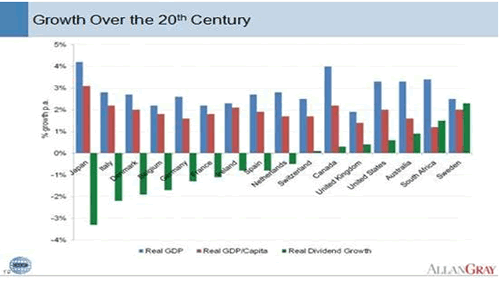
Is there a strong correlation between high economic growth and strong investment returns?. A recent study of economic growth in 14 industrialized countries by Orbis, the global asset management partner of investment management firm Allan Gray of South Africa, proves that there is very little correlation between growth in real dividends per share over the 20th century and economic growth.

Chart – Real Dividend Growth Per Share and Economic Growth

Real-GDp-Dividend-Growth-Correaltion

Via Equinox.co.za

Many investors mistakenly believe that high-growth countries will deliver high investment returns. The study used real dividend growth per share instead of earnings since earnings are impacted by accounting changes over the years. Dividend growth is a good indicator of returns delivered to shareholders.

From the chart above, we can infer that Japan had an annual real GDP growth of 4.2% in the 20th century. But it had a negative dividend growth rate of 3.3% per year during the period. Italy, Belgium, France, Germany, Spain, the Netherlands, Switzerland and Ireland also had positive GDP growth but negative real dividend growth.

Even when the real GDP and dividend growth rates were going in the same direction, the differences between the two rates were too high.Canada, USA, the UK and Australia had this scenario.

Overall it is not the high-level economic or industry conditions that affect a company’s performance. Rather it is the competition and individual performance that determines a company’s financial success.

The above theory holds true when we look at the high growth economies of India, Brazil and China. Very people invest in the companies domiciled in these countries for their dividend growth. Similarly in the US, during the dot com era people invested for the overall GDP growth and a company’s earning growth rather the real dividend growth.

Should You Invest in the Land of Komodo Dragons?

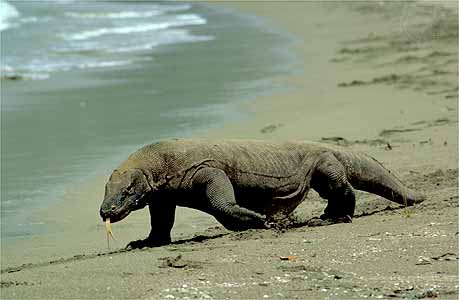
Komodo dragons are the world’s heaviest living lizards.They can grow to an average
length of 10 feet and weigh about 200 lbs. Komodos are found primarily in the Lesser Sunda Islands of Rinca, Komodo, Flores and the smaller islands of Gili, Montang and Padar in Indonesia.

komodo.jpg

The country of Indonesia has a population of about 229 million with the majority of them following Islam. During colonial times, the nutmeg plant attracted Europeans – especially the Dutch – to Indonesia who ruled the country until its Independence. In modern times, Indonesia is a large natural resources exporting country with the major commodities being crude oil, natural gas, tin, copper and gold. Indonesia’s major trading partners are China, Japan, Singapore and the U.S.

In a  special report titled Chindonesia published in July, CLSA Asia Pacific Markets stated some of the reasons that make Indonesia an attractive investment destination. The important points from this report are listed below:

  • Indonesia is a marginal supplier of natural resources to China and India, two of the world’s fastest growing economies
  • The country has a youth population and about 22 million more people are projected to join the workforce in the next decade
  • The GDP per-capita growth in recent years has been strong
  • Indonesia is the world’s largest exporter of palm oil  and will profit greatly when the demand for palm oil from China and India doubles by 2014
  • Indonesia is the largest exporter of thermal-coal exporter and China is the world’s largest importer of this type of coal
  • The country largely avoided the global financial crisis

For US investors, the Market Vectors Indonesia Index ETF (IDX) offers a simple and easy to invest in Indonesia. The fund was launched on January 15th this year and has an asset base of about $181M, which is good for a frontier market fund. The expense ratio is 1.08%.

Another way to invest in Indonesia is via the closed-end equity fund, The Indonesia Fund (IF).

To answer my title question, yes one must allocate a small portion of their portfolio to Indonesia. As a frontier market it has many risks including political risks, currency exchange risks, etc. But since the country has many commodities that the world needs and is one of the large economies in the world investors may not go wrong by gaining some exposure to this market.

The World’s Best Internet Banks

The Global Finance magazine has published the World’s Best Internet Banks Part II in the December issue. These winners were selected based on factors such as the ability in offering traditional products online, earning the trust of online customers, achieve cost savings thru the use of online channel, customer satisfaction, etc.

The Best Internet Banks in the Global and Regional Categories are:
Global Winner – Citibank (C)
Best Consumer Internet Bank – HBC (HBC)

Regional Winners – Best Consumer Internet Banks:
North America – Wells Fargo (WFC)
Europe – GarantiBank
Asia – Citi
Latin America – Banco Santander (STD)
Central and Eastern Europe – Swedbank (OTC: SWDBY)
Middle East & Africa – HSBC

Source: Global Finance

 “Citi was named the overall global winner and the winner among corporate/institutional banks globally and took home seven regional and sub-category honors. The bank’s CitiDirect service garnered particular praise for its rich features, which include customizable reporting applications, a four-tiered security process, cash-flow planning and forecasting capabilities and an end-to-end trade solution on one secure platform that is available 24 hours a day from anywhere in the world. It also facilitates aggregation and visibility at the local, regional and global levels.

HSBC was selected as the world’s best consumer Internet bank and won six global sub-categories and three regional awards. Its HSBC Premier service provides access to clients in more than 40 countries. Account balances in different countries are consolidated into a convenient one-page view for customers. Customers can also transfer funds between their HSBC accounts anywhere in the world in multiple currencies in near real-time at no cost, according to Menon. He called HSBC Premier a “first-in-market, unique online banking service.””

The report also lists the best internet banks by country. For more details go here.