The Top 10 Greek Banks by Assets

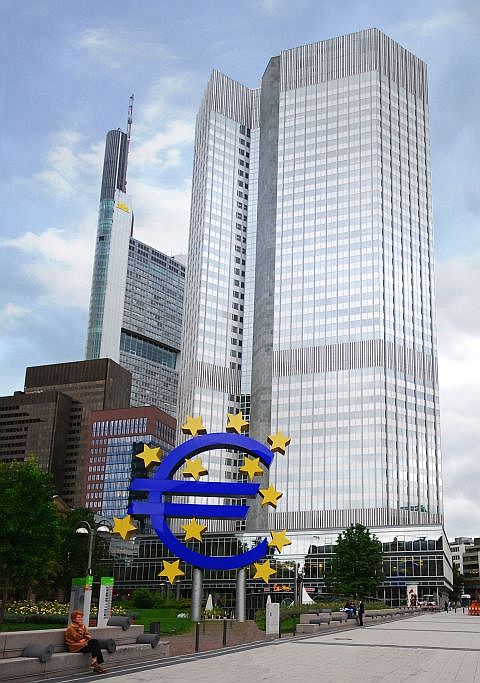
The Top 10 banks in Greece based on assets held is listed below. The $141 billion bailout package put together by European Union and the International Monetary Fund should help Greece from bankruptcy. Germany is expected to contribute $28b to this bailout fund and the plan has been approved the German parliament.

One of the main areas that will get the attention of Greek regulators and politicians is the country’s banking system since a sound banking system is the backbone of any economy. Hence investors are currently interested in evaluating the Greek bank stocks as they may rebound sharply from current levels.

The Top 10 Greek Banks by Assets Held:

[TABLE=494]

Source: Highlights of the Greek banking sector 2008-2009, Deloitte

National Bank of Greece (NBG) closed at $2.67 on Friday. The 52-week high is $8.37.On April 30th, S&P maintained its”Sell” recommendation of NBG. Alpha Bank (OTC: ALBKY) ended at $1.80. However this year Greek banks are projected to have improved deposit margins. Other banks that trade as Unsponsored ADRs include Agricultural Bank of Greece S.A. (OTC: ABGEY), EFG Eurobank Ergasias S.A. (OTC: EGFEY), Marfin Popular Bank Public Co. Ltd. (OTC: MYPSY) and TT Hellenic Postbank (OTC: TTHPY).
The Top Malaysian Companies by Market Cap

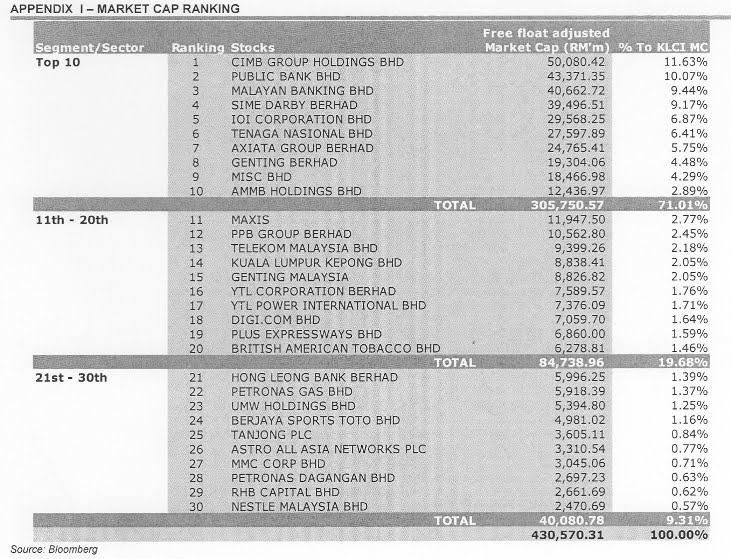
The 30 largest Malaysian companies based on market cap in the domestic currency Malaysian Ringgit is shown below:

Click to enlarge

Top-Malaysian-Companies-by-Market Cap

Source: Malaysia Finance Blog

The top three companies are from the banking sector – CIMB Group, Public Bank and Malayan Banking(OTC: MLYBY). Only a handful of Malaysian companies trade on the OTC markets in the U.S. The country-specific ETF is the iShares MSCI Malaysia Index Fund (EWM).

European Blue Chips Offer Excellent Investment Opportunities

The current sovereign-debt crisis in Europe offers excellent opportunities for investors with a long-term horizon. The Greek debt crisis is way overblown. Greece has been the poorest country in Western Europe for many years and continues to remain so. The Greek economy is very small compared to other countries. To put this in perspective, the German economy is 50% larger than the combined economies of PIIGS.

In an editorial yesterday, the Journal noted:

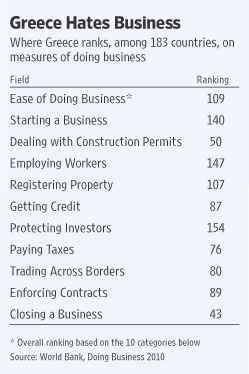
“At 109, Greece ranks below such models of transparency and free enterprise as Egypt (106), Zambia (90), Rwanda (67) and Kazakhstan (63). A country has to work hard to do this poorly.”

greek-economy.gif

Hence investors must look beyond the Greek issue and focus on some of the blue chip companies in Europe. Fears of financial contagion spreading across Europe is exaggerated as well. The export-oriented German economy continues to expand and benefits further from the weaker Euro. In addition, the Eurozone does not include the Scandinavian countries and Switzerland which are not affected significantly by this crisis. A third of the top 100 brands in the world are European and many companies are strongly benefiting from the weaker Euro against the US dollar.

The article Value Play In Europe’s Blue Chips in yesterday’s journal discussed about the current buying opportunities in European firms especially the ones with operations in many markets.

From the article:

“The credit-default swap market now sees some companies as better credits than their governments. The spread on Telefónica five-year CDS is around 1.42 percentage points, versus 2.20 for Spain. Vodafone‘s is 0.76 percentage point, against 0.87 point for the U.K.

Meanwhile, euro weakness should boost exporters and companies with large overseas operations, helping offset domestic weakness. Those with most of their costs in Europe but revenues abroad, including EADS, Porsche and Rolls-Royce, could benefit.

Of course, large-cap stocks are vulnerable to any immediate selloff. But the combination of strong cash balances and the potential insulation to earnings from a weak euro, could help to underpin chunky dividend yields on offer in some cases.

Telefónica yields 8.5%; France Télécom, 8.8%, and Vodafone, 5.5%. As a comparison, the yield on 10-year Spanish paper is currently 4.2%; French, 3.2%, and British, 3.8%.

True, dividend yields are hardly set in stone and could be vulnerable to tax grabs. But the urgent need to foster growth and protect jobs should cause even the most desperate governments to think twice before squeezing their biggest companies too hard.”

In order to identify blue chip European companies that are geographically diversified I used the S&P Global 100 Index. This index includes companies that are global in nature and derive a substantial portion of their operating income, assets and employees from many countries. The average market cap of companies in this index is $64B.

The table below lists Europe’s blue chip firms in the S&P Global 100 together with their current dividend yields:

[TABLE=493]

Among the banks, Standard Chartered(OTC: SCBFF) and HSBC(HBC) have large presence in fast-growing Asian countries. Many of the utilities such Germany-based E.ON (OTC: EONGY),UK-based National Grid(NGG) , etc. offer high dividend yields. It must be noted that one of reasons for high yields is that their share prices have fallen significantly in recent months. Companies in the consumer goods sector with strong global exposure include Nestle (OTC: NSRGY), Philips Electronics(PHG) and Unilever(UN).  Overall all the companies in this list are world-class European giants and can be added to a portfolio at attractive entry points.

To download the complete list of the S&P Global 100 Index constituents in excel format, click here.

Related Articles:
Shopping Europe When It’s Down (WSJ)

List of German ADRs trading in the US organized exchanges

List of Greek ADRs