The Formula One is the world’s most prestigious race car championship in the world. Wikipedia notes the following about Formula One:
Formula One, also known as Formula 1 or F1 and referred to officially as the FIA Formula One World Championship,[2] is the highest class of single seater auto racing sanctioned by the Fédération Internationale de l’Automobile (FIA). The “formula” in the name refers to a set of rules with which all participants’ cars must comply.[3] The F1 season consists of a series of races, known as Grands Prix (translated to English as “Big Prizes”[4]), held on purpose-built circuits and public roads. The results of each race are combined to determine two annual World Championships, one for the drivers and one for the constructors, with racing drivers, constructor teams, track officials, organizers, and circuits required to be holders of valid Super Licences, the highest class of racing licence issued by the FIA.[5]
Formula One cars are considered to be the fastest circuit-racing cars in the world, owing to very high cornering speeds achieved through the generation of large amounts of aerodynamic downforce. Formula One cars race at high speeds – up to 360 km/h (220 mph) – with engines the performance of which is limited to a maximum of 18,000 revolutions per minute (rpms). The cars are capable of lateral acceleration in excess of 5 g in corners. The performance of the cars is very dependent on electronics – although traction control and other driving aids have been banned since 2008 – and on aerodynamics, suspension and tyres. The formula has had much evolution and change through the history of the sport. Europe, where all the Formula One racing teams are based, is the sport’s traditional basis and where about half of each year’s races occur. However, the sport’s scope has expanded significantly during recent years and an increasing number of Grands Prix are held on other continents.
Formula One had a total global television audience of 527 million people during the course of the 2010 FIA Formula One World Championship.[6] The Formula One Group is the legal holder of the commercial rights.[7] With annual spending totalling billions of US dollars, Formula One’s economic effect is significant, and its financial and political battles are widely reported. Its high profile and popularity make it a merchandising environment, which results in great investments from sponsors and budgets in the hundreds of millions for the constructors.
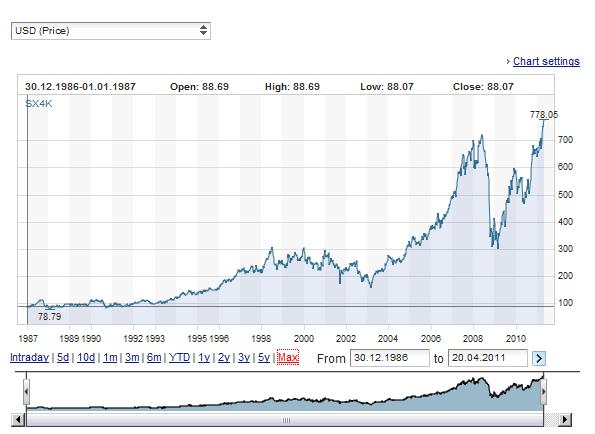
The STOXX Global Grand Prix Index tracks the performance of the major players in the Formula 1 industry. The index covers auto engine manufacturers, tire suppliers, oil and fuel suppliers in the Formula 1 as well as title sponsors.
The twelve components of the STOXX Global Grand Prix Index are listed below:
1.Altria Group Inc.(MO)
Personal & Household Goods
Country: USA
2.AT&T Inc.(T)
Telecommunications
Country: USA
3.DAIMLER
Automobiles & Parts
Country: Germany
4.Exxon Mobil Corp.(XOM)
Oil & Gas
Country: USA
5.FIATÂ Â Â (FIATY)
Automobiles & Parts
Country: Italy
6.Petronas Gas BHD
Oil & Gas
Country: Malaysia
7.PIRELLI & Co.
Automobiles & Parts
Country: Italy
8.RENAULT
Automobiles & Parts
Country: France
9.ROYAL DUTCH SHELL A (RDS.A)
Oil & Gas
Country: UK
10.TOTAL (TOT)
Oil & Gas
Country: France
11.VODAFONE (VOD)
Telecommunications
Country: UK
12.WILLIAMS GRAND PRIX
Travel & Leisure
Country: UK
Disclosure: No positions