Knowledge is Power Special: Hammurabi’s Code, Circus of Innovation, Trading Places Edition

  1. Socialism in America — Crooked Timber
  2. Rio: Brazil’s silicon beach | World news | The Observer
  3. Stumbling and Mumbling: Who benefits from benefits?
  4. The great corporate cash-hoarding crisis | Al Jazeera America
  5. America dumbs down: a rising tide of anti-intellectual thinking
  6. Uwe E. Reinhardt – Economix Blog – NYTimes.com
  7. China’s latest scandal is counterfeit condoms – Los Angeles Times
  8. Can businessmen make good politicians? | Business Line
  9. Brutal competition batters supermarkets the world over, The Guardian
  10. US Health Care System Cartel… Until Death Us Do Part | Common Dreams 
  11. Elizabeth Warren on factors ailing the middle class | Juggling Dynamite
  12. America’s Middle Class: From Boom to Bust – News – Politics – Voice of Russia – US Edition
  13. Ruth Whippman: How Corporate America Is Turning Into a Cult and Why It’s Harming the American Employee
  14. Uwe E. Reinhardt: Americans Are Shocked, Just Shocked, Over Hospital Bills – NYTimes.com
  15. Comparing Health Systems – UK NHS Performance | The Nuffield Trust
  16. A public option for banking | Al Jazeera America
  17. America’s Long and Productive History of Class Warfare – Justin Fox – Harvard Business Review
  18. The Fallacy of Financial Education | The Baseline Scenario
  19. 401ks Are Not Broken, You Are | The Big Picture
  20. Why Are Wages Sticky? | Uneasy Money
  21. Silicon Valley’s circus of innovation – Venkatesh Rao – Aeon
  22. America’s Workers: Stressed Out, Overwhelmed, Totally Exhausted – Rebecca J. Rosen – The Atlantic
  23. BBC News – American Dream breeds shame and blame for job seekers
  24. Our health spending problem is all about prices – These 15 charts show our health care prices are totally insane – Vox
  25. America’s greatest export is its debt – The Week
  26. How have these corporations colonised our public life? | George Monbiot | Comment is free | The Guardian
  27. The Price Of Human Life, According To GM | Common Dreams
  28. Millions see no benefit from soaring stock prices 
  29. Field of Schemes | sports stadium news and analysis
  30. Low-cost airlines have come a long way. But who will win the battle? – Telegraph
  31. ‘Worldly life is frightening:’ Famous Siberian hermit prefers taiga to civilization — RT News
  32. Articles: Psychopaths-in-Chief
  33. Waste vs. Value in American Health Care – NYTimes.com
  34. Best Care at Lower Cost: The Path to Continuously Learning Health Care in America – Institute of Medicine
  35. Special Delivery: The Postal Service Story : All Songs Considered : NPR
  36. Why don’t Chinese spend more money? – The Curious Capitalist – TIME.com
  37. How the Maker of TurboTax Fought Free, Simple Tax Filing – ProPublica
  38. Uwe E. Reinhardt: Hammurabi’s Code and U.S. Health Care – NYTimes.com
  39. As Immigrants Move In, Americans Move Up | Daniel Griswold | Cato Institute: Free Trade Bulletin
  40. The era of the textbook cartel and $300 textbooks is ending | AEIdeas
  41. The Quiet Collapse of the Italian Economy | Euro Crisis in the Press
  42. Why Italy will not make it | Euro Crisis in the Press
  43. Why Canada’s inland shipping industry is making a major comeback | Financial Post
  44. The real story of US coal: inside the world’s biggest coalmine | Environment | The Guardian
  45. Business-Managed Culture – Business Values – Share Holding – Shares vs Public Ownership
  46. The Overwhelming Case against Capital Gains Taxation | International Liberty
  47. Too many choices, high costs and bureaucracy: British expats grade American healthcare system ‘a pain in the arse’ | Money | The Guardian
  48. Investment Riches Built on Subprime Auto Loans to Poor – NYTimes.com
  49. How Many Americans Have A Passport? | TheExpeditioner Travel Site
  50. Federal Spending: Where Does the Money Go
  51. America’s Incredible Shrinking Stock Market | Canadian Investment Review
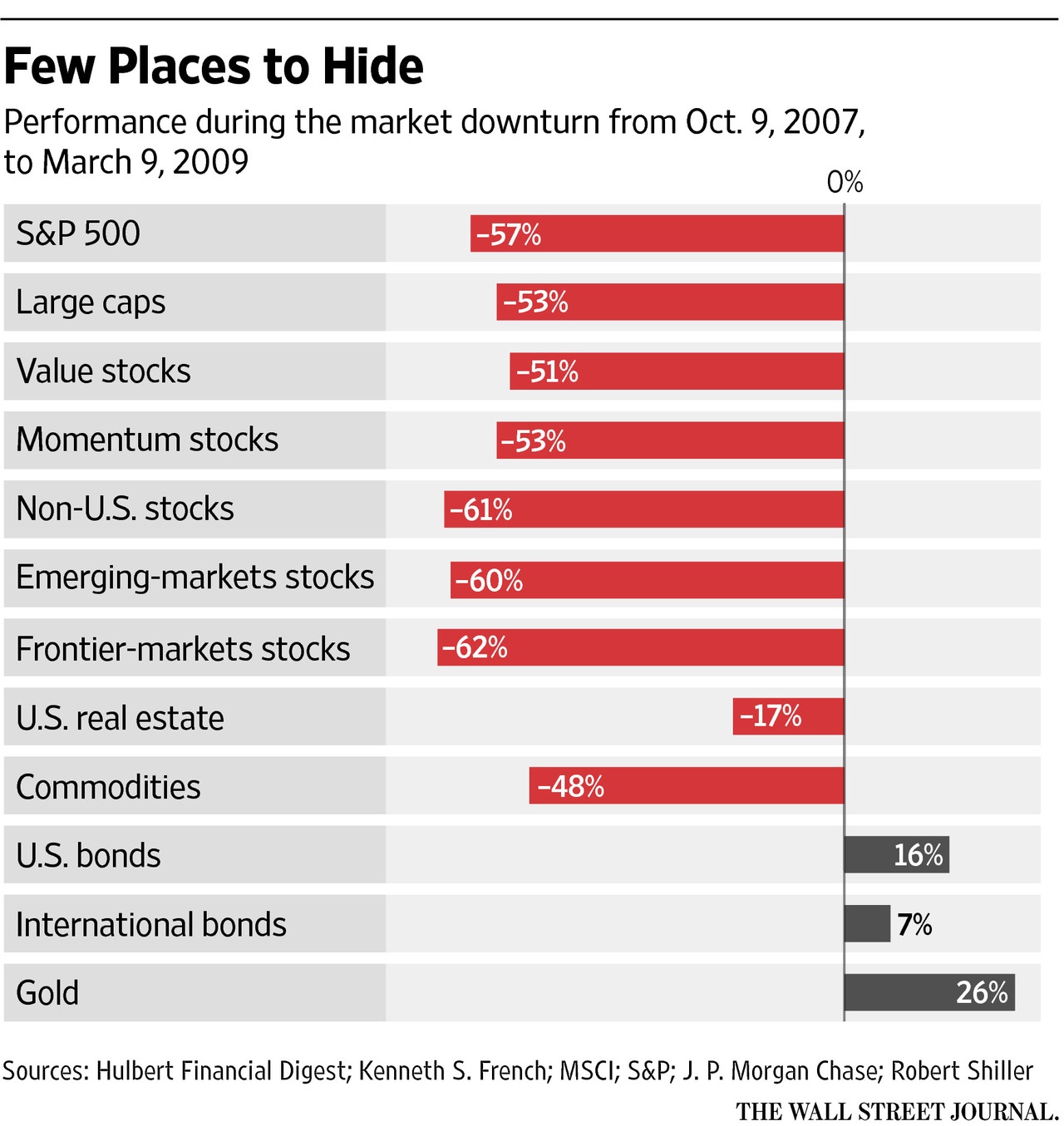
  52. Investment Strategies for Volatile Markets – Fidelity
  53. Don’t Even Think About Trading Places in Markets – Bloomberg View

Sears Tower, Chicago

Sears Tower, Chicago

How Champagne is Made

Here is a cool infographic on how champagne is made:

Click to enlarge

How Champagne is Made

According to the legend, champagne was invented on August 4, 1693 by a Benedictine monk Dom Perignon who at the time served as cellar master of the Abbey of Hautvillers. “Come quickly! I’m drinking the stars!” he exclaimed when tasting wine that he was unable to rid of bubbles, and thus the legendary beverage was born.

Source: Sputnik News

Six Facts About DAX

Germany’s benchmark DAX Index has been swinging wildly in the past few weeks like an emerging market index such as the Bovespa or Sensex. I haven’t seen DAX so volatile in the past. However times have changed. The DAX has become highly volatile among major global developed indices since China’s economy is in a slowdown and many of the DAX constituents generate a substantial portion of their revenue from the communist country.

The DAX is up by 2.4% year-to-date. Currently it is at 10,038. In the past few 52-week it reached as high as 12374. From being one of the best performers this year the index has given up most of the gains and is up marginally now.

The DAX 1-year return chart is shown below:

Click to enlarge

DAX 1 year-return

The DAX long-term return chart is shown below:

DAX Long-tem-returns

Source: ComDirect

Though the short-term chart shows high volatility in the long-term DAX has grown nicely.

Here are a few interesting facts about DAX:

  1. The Base Date for DAX is 30 December 1987 and the base level is 1,000 points.
  2. The index represents the largest blue-chip German firms.
  3. DAX is weighted by market capitalization, i.e. the weighting of a single stock relates to its share in the overall capitalization of the stocks contained in the index. The return reported is the total-return which means it includes price appreciation and dividends. This is a BIG difference between DAX and other indices such as the S&P 500, FTSE 100, CAC-40, etc. which do not include dividends in their calculations.
  4. The components of the DAX has changed over the years as a reflection of the development of major German companies in the economy. When it was launched in 1988, the original constituents were: Allianz, BASF, Bayer, Bayerische Hypotheken- und Wechselbank, Bayerische Vereinsbank, BMW, Commerzbank, Continental, Daimler-Benz, Degussa, Deutsche Bank, Deutsche Babcock, Deutsche Lufthansa, Dresdner Bank, Feldmühle Nobel, Henkel, Hoechst, Karstadt, Kaufhof, Linde, MAN, Mannesmann, Nixdorf, RWE, Schering, Siemens, Thyssen, Veba, Viag, Volkswagen.
  5. Today’s DAX does not include firms like MAN, Mannesmann, Veba, Viag, etc. due to mergers, takeovers, bankruptcies, etc. The current components of the index can be found here.
  6. Reflecting the composition of the German economy, the top sectors represented in the index are Chemicals, Automobiles & Parts, Industrials and Pharma & Healthcare.

Source: 25 YEARS OF THE DAX® – THE FACTS, Deutsche Boerse

Related ETF:

  • iShares MSCI Germany (EWG)

Disclosure: No Positions

The Top Five Biotech Companies By Market Capitalization

Biotech stocks have been red hot in the past few years and they continue to attract investors’ attention this year as well. So far this year the NYSE Arca Biotech index is up by 9.2 compared to the 6.7% fall of S&P 500.

Many of the biotechs currently trading on the markets do not have proven drugs but rather are working on cures for many diseases including cancer. Only a handful of biotechs succeed and the rest usually disappear after a few years. Hence investing in this sector is not for all investors. In fact, investing in most of these companies can be considered speculative investments since nobody knows what which company will succeed and which ones will fail. Investors are simply betting that their company will discover the next big thing.

Currently over 150 biotechs trade on the NASDAQ. New companies including European firms went public in the past few months though the pace has declined due to the current market conditions.

The largest biotech ETF iShares Trust – iShares Nasdaq Biotechnology ETF (IBB) has shot up by over 298% in the past five years. A hypotectical growth of $10,000 (with reinvestment of dividends and capital gains) is shown in the chart below:

Click to enlarge

IBB Return 5 Years

Source: iShares

The five largest biotechs by market value are listed below with their current market cap and dividend yields. These are also in top 10 holdings of the above ETF and these account for over 40% of the portfolio weight:

1.Company: Celgene Corp (CELG)
Current Dividend Yield: No dividends paid
Market Cap: $92.8 Billion

2.Company: Amgen Inc (AMGN)
Current Dividend Yield: 2.15%
Market Cap: $111.5 Billion

3.Company: Gilead Sciences Inc (GILD)
Current Dividend Yield: 1.69%
Market Cap: $149.8 Billion

4.Company: Biogen Inc (BIIB)
Current Dividend Yield: No dividends paid
Market Cap: $71.1 Billion

5.Company: Regeneron Pharmaceuticals Inc (REGN)
Current Dividend Yield: No dividends paid
Market Cap: $51.8 Billion

Note: Dividend yields noted above are as of Sept 4, 2015. Data is known to be accurate from sources used.Please use your own due diligence before making any investment decisions.

Disclosure: No Positions

British Stocks Are Cheaper Than US Stocks

The FTSE 100 is down by early 8% year-to-date compared to S&P 500’s decline of about 7.0% YTD. However according to a report by JPMorgan UK, British equities have brighter prospects ahead than US stocks. From an article quoting the report:

In a wide-ranging note, they looked at UK shares valuations and prospects and came out positive.

Looking at long-term valuation using the Shiller cyclically adjusted price-to-earnings ratio, or CAPE as it is known, the analysts pointed to the current stand point below the average level.

They said: ‘Valuations in the UK, much like the rest of the developed world, are not as cheap as they once were but are still some way off “extreme” valuation territory.

As Exhibit 5 illustrates, the Shiller cyclically adjusted price/earnings (P/E) ratio in the UK remains below its long-run average, suggesting that UK equities still have more room to run.

‘This chart also includes the Shiller P/E ratio for the US index to show the relative undervaluation of the UK compared with the world’s largest developed market. Furthermore, earnings forecasts for 2015 suggest that UK equity earnings are improving and this should help keep these valuations in check going forward.’

Click to enlarge

US and UK Stocks CAPE ratio

Source: Is it time to buy the dip? The stock market is suffering but now could be a good time to buy UK shares, say analysts, This is Money

Three points to remember for US investors:

  • British companies have substantially higher dividend yields than their US peers.
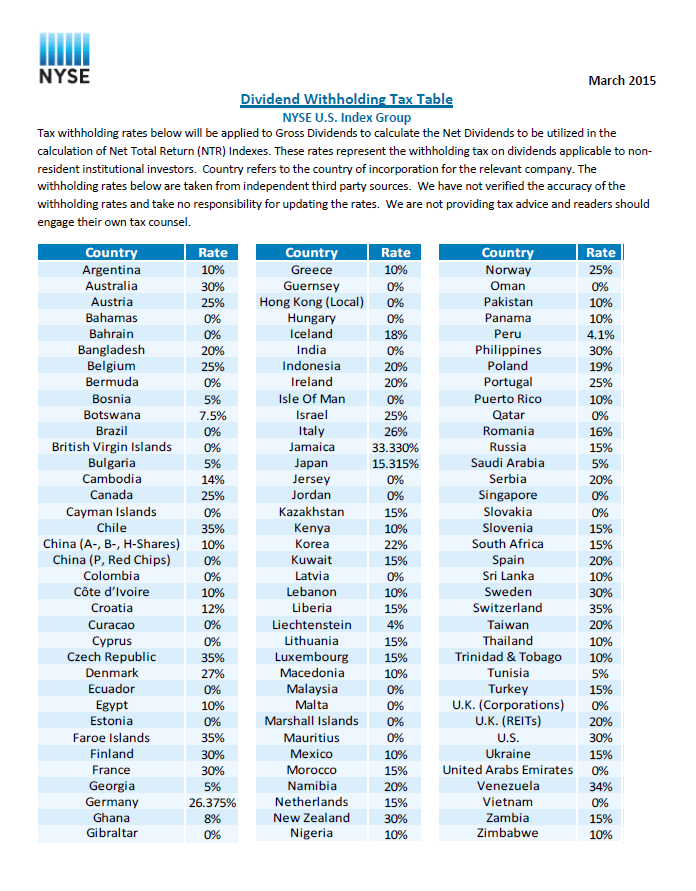
  • The British dividend withholding tax is 0% for UK equities (excluding REITs).
  • Many of the large British firms in the FTSE 100 derive a high portion of their revenues from overseas markets than the domestic market. So their earnings will be adversely impacted due to ongoing volatility in emerging markets. But they also have substantial exposure to the US and other developed markets. So opportunities can be found with careful selection.

Eleven British stocks to consider for further research are listed below with their current dividend yields:

1.Company:Diageo PLC (DEO)
Current Dividend Yield: 3.35%
Sector: Beverages

2.Company: AstraZeneca PLC (AZN)
Current Dividend Yield: 4.42%
Sector: Pharmaceuticals

3.Company: Vodafone Group PLC (VOD)
Current Dividend Yield: 5.12%
Sector: Wireless Telecom

4.Company: British American Tobacco PLC (BTI)
Current Dividend Yield: 4.48%
Sector:Tobacco

5.Company: Royal Dutch Shell PLC (RDS.A)
Current Dividend Yield: 7.59%
Sector:Energy

6.Company: Imperial Tobacco PLC (ITYBY)
Current Dividend Yield: 1.40% 3.90%
Sector:Tobacco

7.Company: Aviva PLC (AV)
Current Dividend Yield: 4.03%
Sector: Insurance

8.Company: Legal & General PLC (LGGNY)
Current Dividend Yield: 4.80%
Sector: Insurance

9.Company: Reckitt Benckiser Group plc (RBGLY)
Current Dividend Yield: 2.27%
Sector: Household goods

10.Company: National Grid plc (NGG)
Current Dividend Yield: 5.21%
Sector: Electric Utilities

11.Company: Unilever PLC (UL)
Current Dividend Yield: 3.42%
Sector: Consumer Staples

Note: Dividend yields noted above are as of Sept 4, 2015. Data is known to be accurate from sources used.Please use your own due diligence before making any investment decisions.

Disclosure: Long LGGNY and RBGLY