How the US Railroad Industry Became a Monopoly: Chart

A few years ago I wrote a post about how the US railroad industry has become a monopoly with a neat map. The article was well received and continues to receive interest from readers. The following post is an update to that article.

Of the Class I railroads in the US, the following four are majors:

  1. BNSF Railway
  2. CSX Transportation (CSX)
  3. Norfolk Southern Railway (NSC)
  4. Union Pacific Railroad (UNP)

Out of these, BNSF is private owned by Buffet’s Berkshire Hathaway. The other three are available on the market for investors.

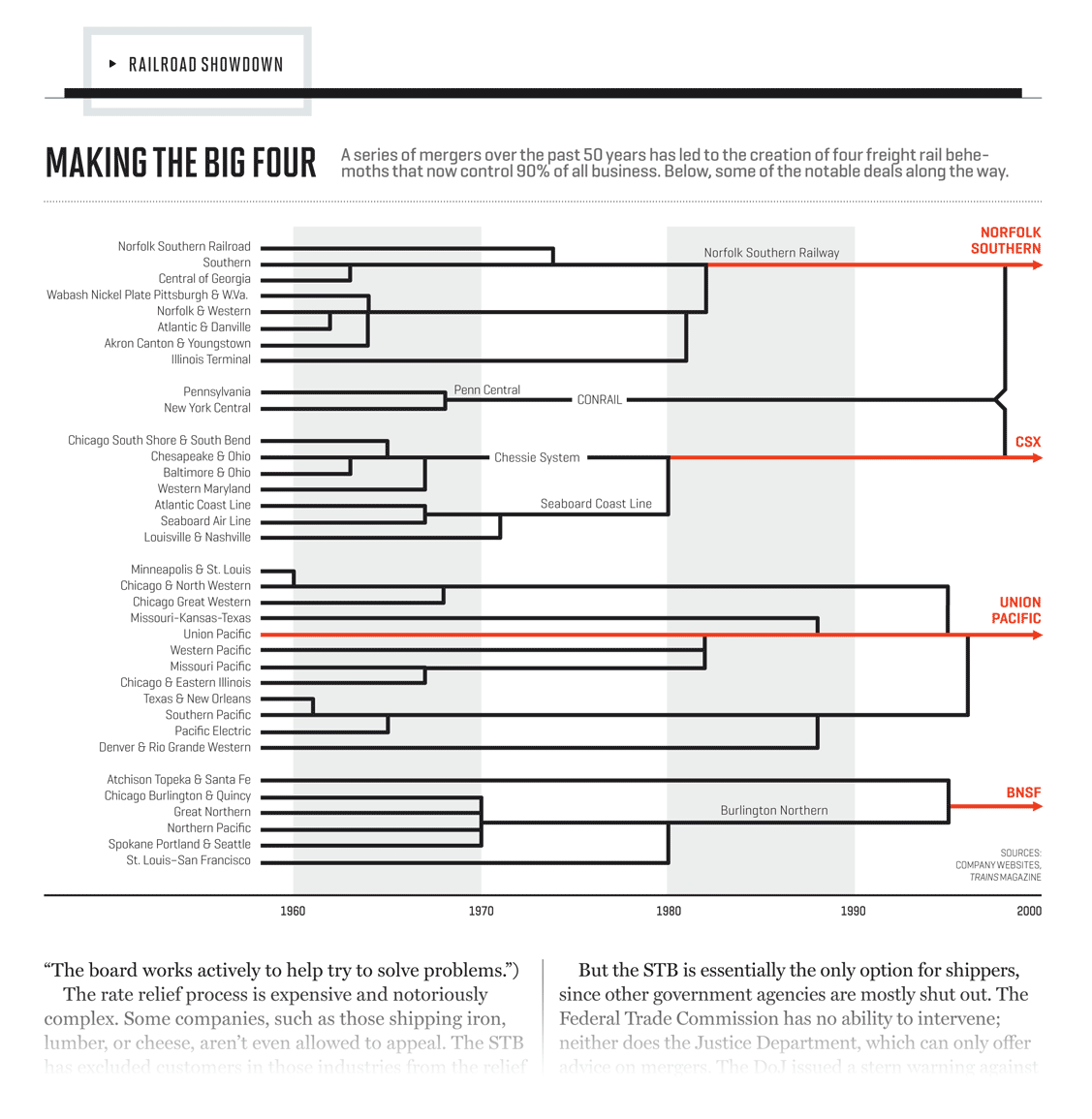
These four major railroads became powerful as a result of many mergers and acquisitions over the past 50 years. The following chart shows the evolution of these railroads:

Click to enlarge
The chart below shows the Network Map for the four US Railroads:

Click to enlarge
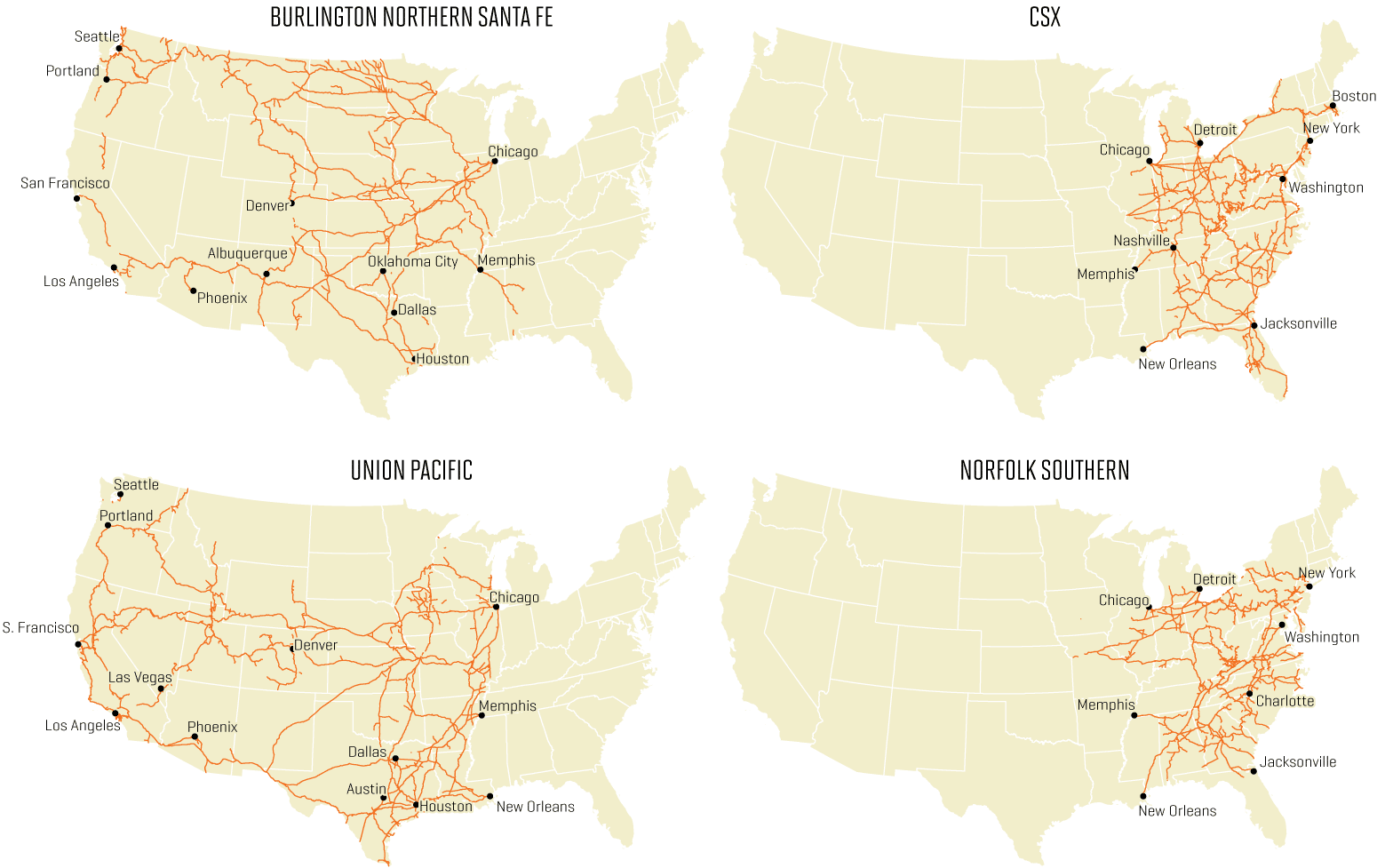
Via: The Big Picture

The following is another chart showing the merger wave in the American railroad industry:
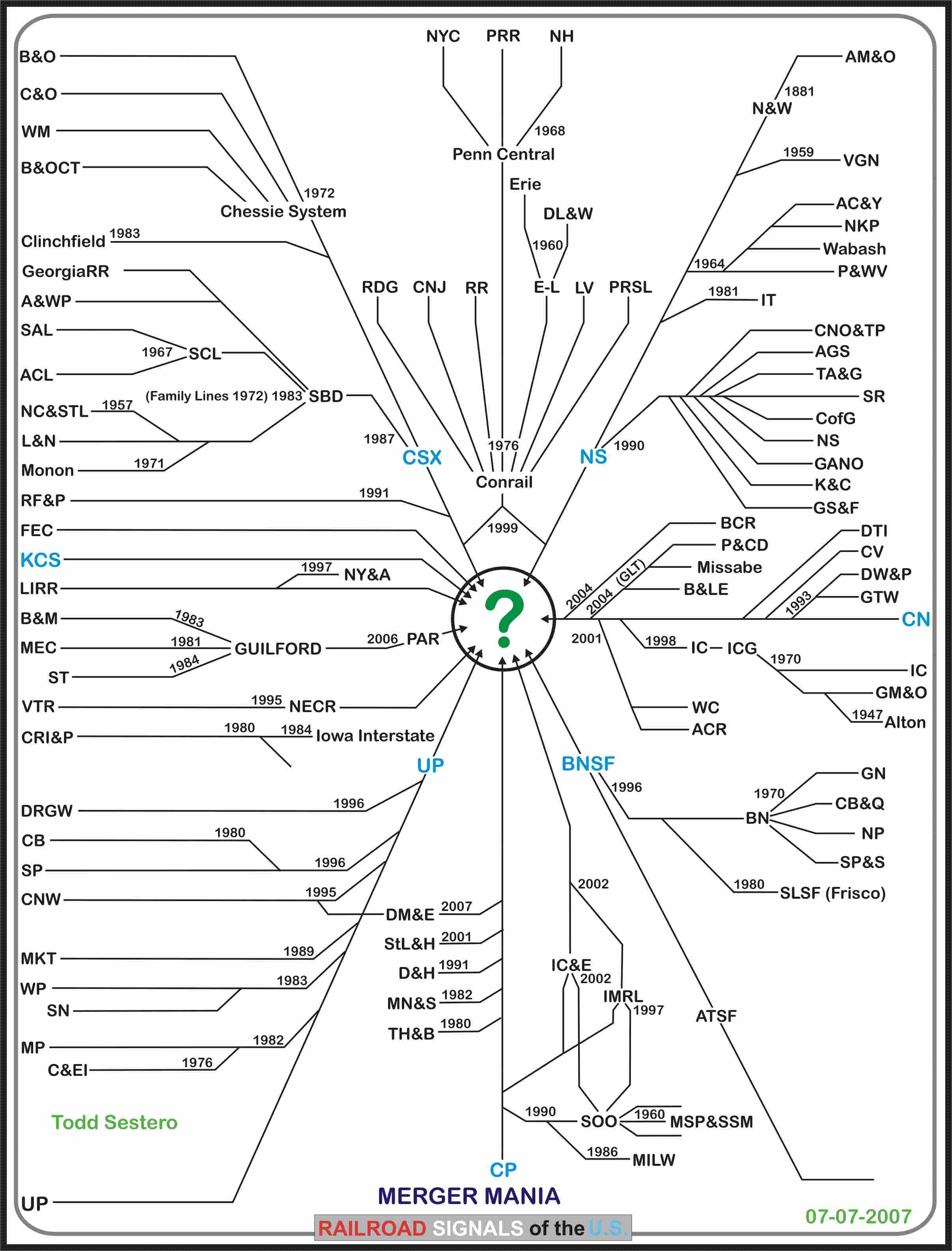
Source: RailRoad Signals

All US railroads are excellent for long-term investments. The best way to profit from railroads is simply buy a bunch of stocks and forget about them for years. After 10 or 20 years with dividend reinvested an investor will be rewarded well.

Also see:

Disclosure: Long NSC, CSX, UNP

The Worlds Fastest High-Speed Trains: Chart

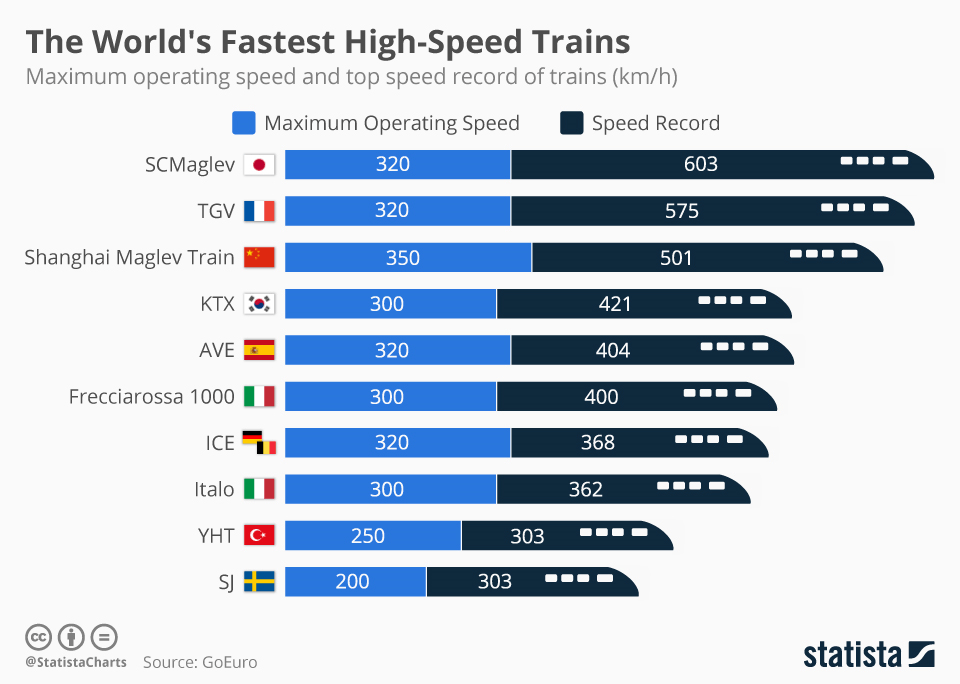
The fastest high-speed train the world is the Fuxing train in China. Currently Japan is working on building Maglev trains that can go higher than 600 km/hr. The chart below shows the world’s fastest high-speed trains:

Click to enlarge

Source: World Economic Forum

In terms hi-speed network, China has 22,000 kms of hi-speed rail making it the top country. To put it another way, China has 60% of all hi-speed rail track in the world.

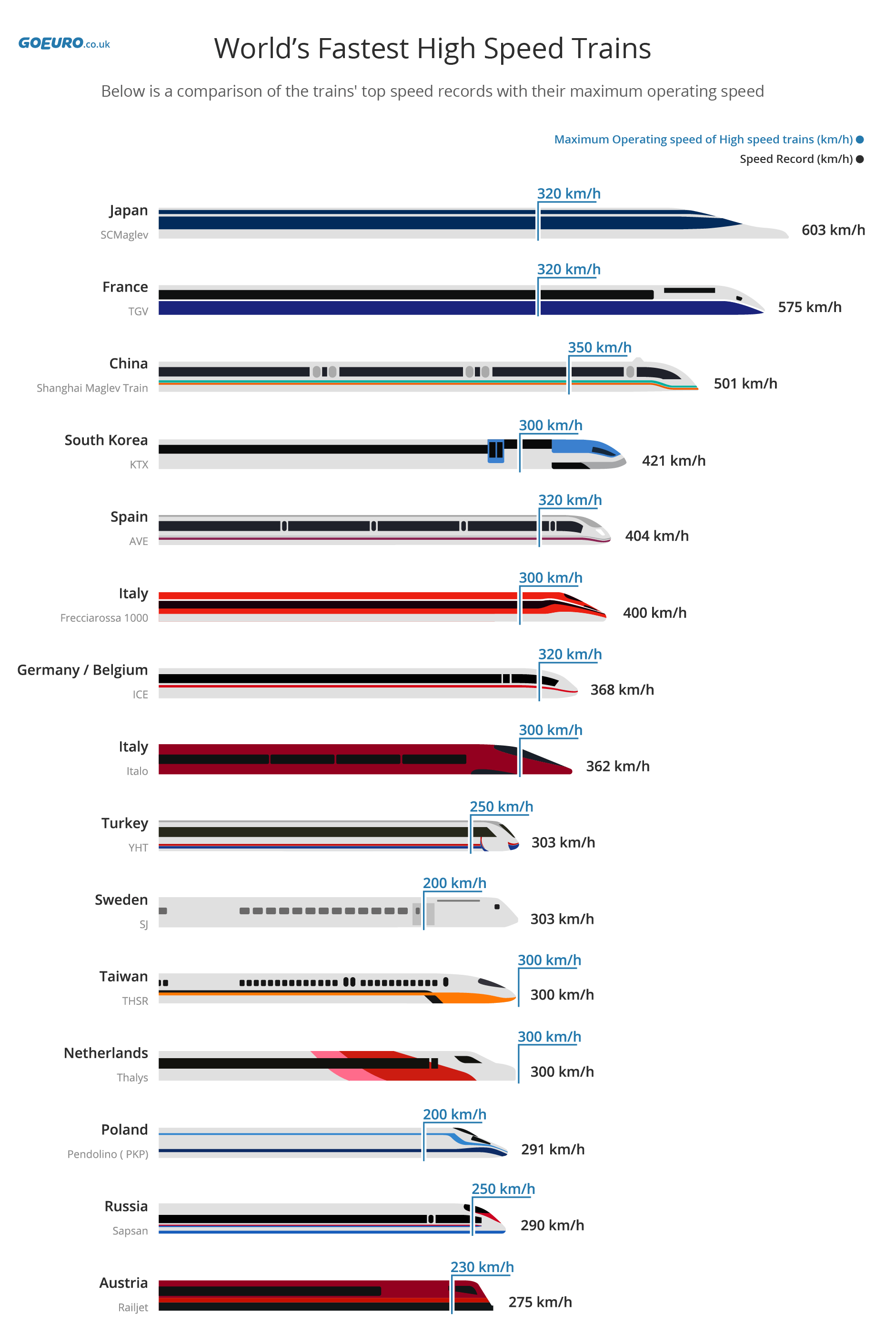
The Worlds Fastest High-Speed Trains at Max Speed:

Source: GoEuro


Which Foreign Biotech and Healthcare Companies have Raised Capital in the US

The biotech and healthcare sector has been hot in the past few years. Almost every week new biotech IPOs are coming to the market and investor appetite for these stocks seems no sign of waning. According to a report by BNY Mellon, more than 150 foreign Biotech and Healthcare stocks are listed or traded on the US markets.

In addition, many companies are also raising capital in the US by listing their DRs. About 44 firms raised capital from 2013 to 2017. The table below shows the top 20 in that group:

Click to enlarge

Source: BNY Mellon

Related:

  1. The Complete List of Biotech Stocks Trading on NASDAQ
  2. The Complete List of Biotech Sector-Related Stocks on the NYSE 
  3. The Complete List of Pharma and Biotech ADRs Trading on the OTC Markets

The Participation Rate of American Households in the Stock Market is Low

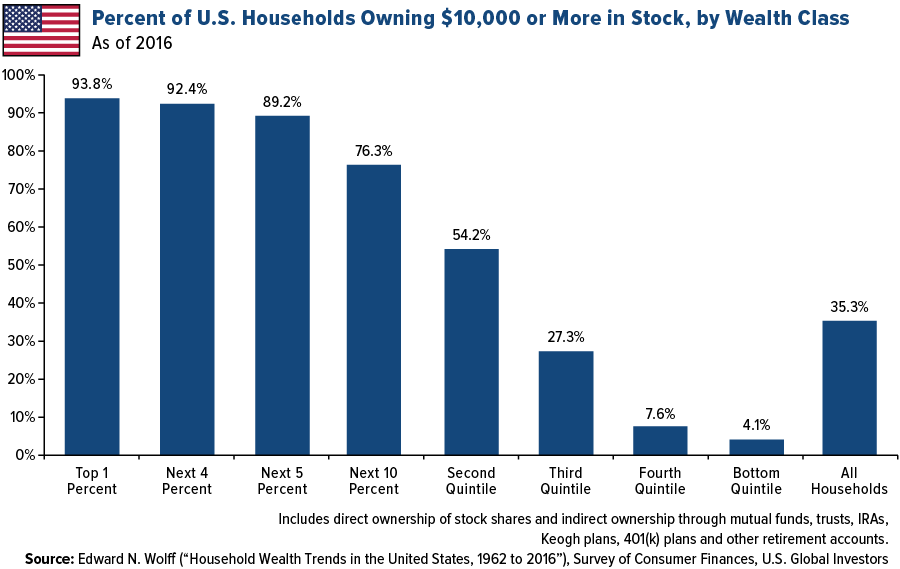
Contrary to popular belief most Americans are not participating in the stock market. Though the stock market gets most of the attention all the time in the media and even Trump finds the time to comment about it whenever there is a big move, in reality not all Americans are benefiting from the bull market. Some have totally avoided the market like the black plague after the global financial crisis wiped out their investments. Some consider the market is rigged in favor of the powerful and wealthy like it was long time ago and do not want to deal with all the drama and stress that goes with putting one’s hard-earned money in the market. As a result it is not surprising that only 35% of all households participate in the equity market. In addition, high earners participate more than low earners. The participation drops significantly for the lowest 20% of earners.

Click to enlarge

Source: Take a Peek at What the Top 1 Percent Have in Savings, U.S. Global Investors

From the above article:

Take a look at the chart above, based on data produced by American economist Edward Wolff. Of U.S. households that rank in the top 1 percent, nearly 94 percent own $10,000 or more in equities. From there, the ownership rate drops off. Less than 5 percent of the bottom 20 percent of earners have $10,000 or more invested in the stock market, either directly or indirectly. Only 35 percent of all American households do.

Related: