Inequality is Rising in the U.S.

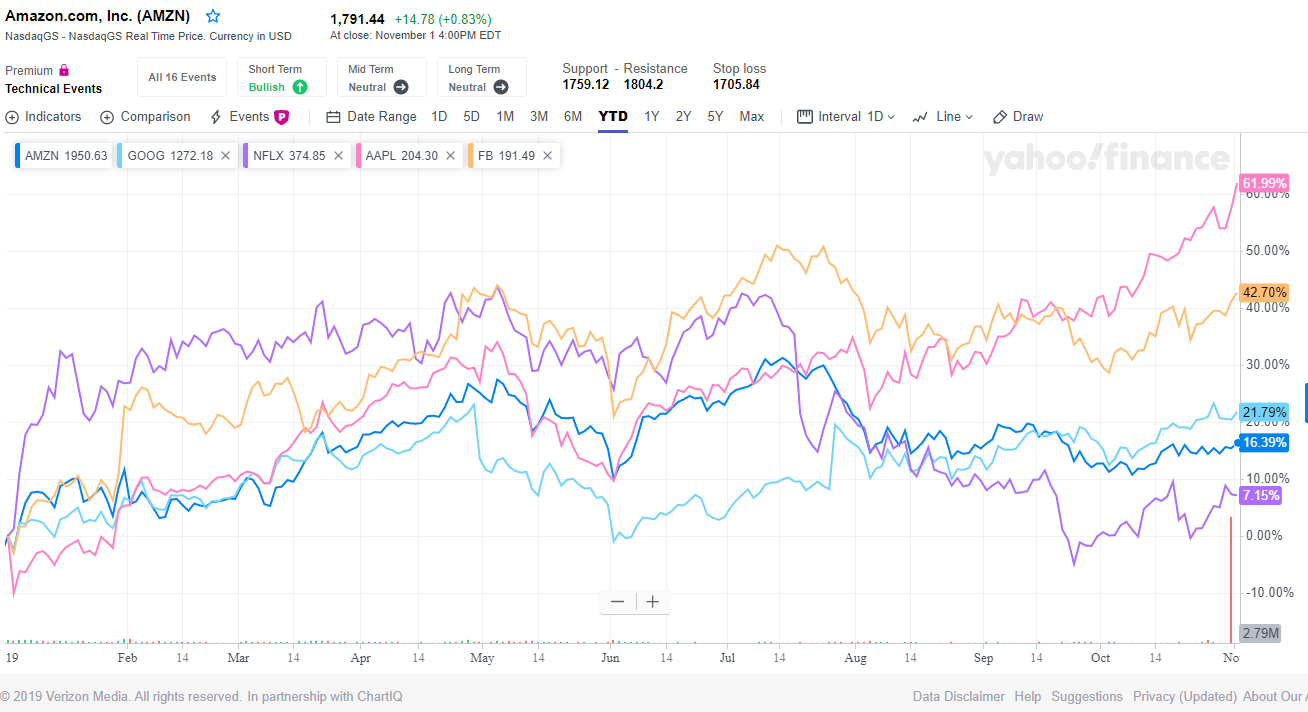
Inequality as measured by the Gini coefficients is the highest in emerging countries. Among developed countries, the US has the highest inequality which is not surprising. Inequality is also rising in the US due to a variety of reasons including tax cuts for the wealthy, lower tax rates on capital gains over labor income, etc.

Click to enlarge
 

Source: Five reasons why I am not so fussed about the global outlook by Dr.Shane Oliver, AMP Capital
On The Correlation between German Stock Market and Auto Stock

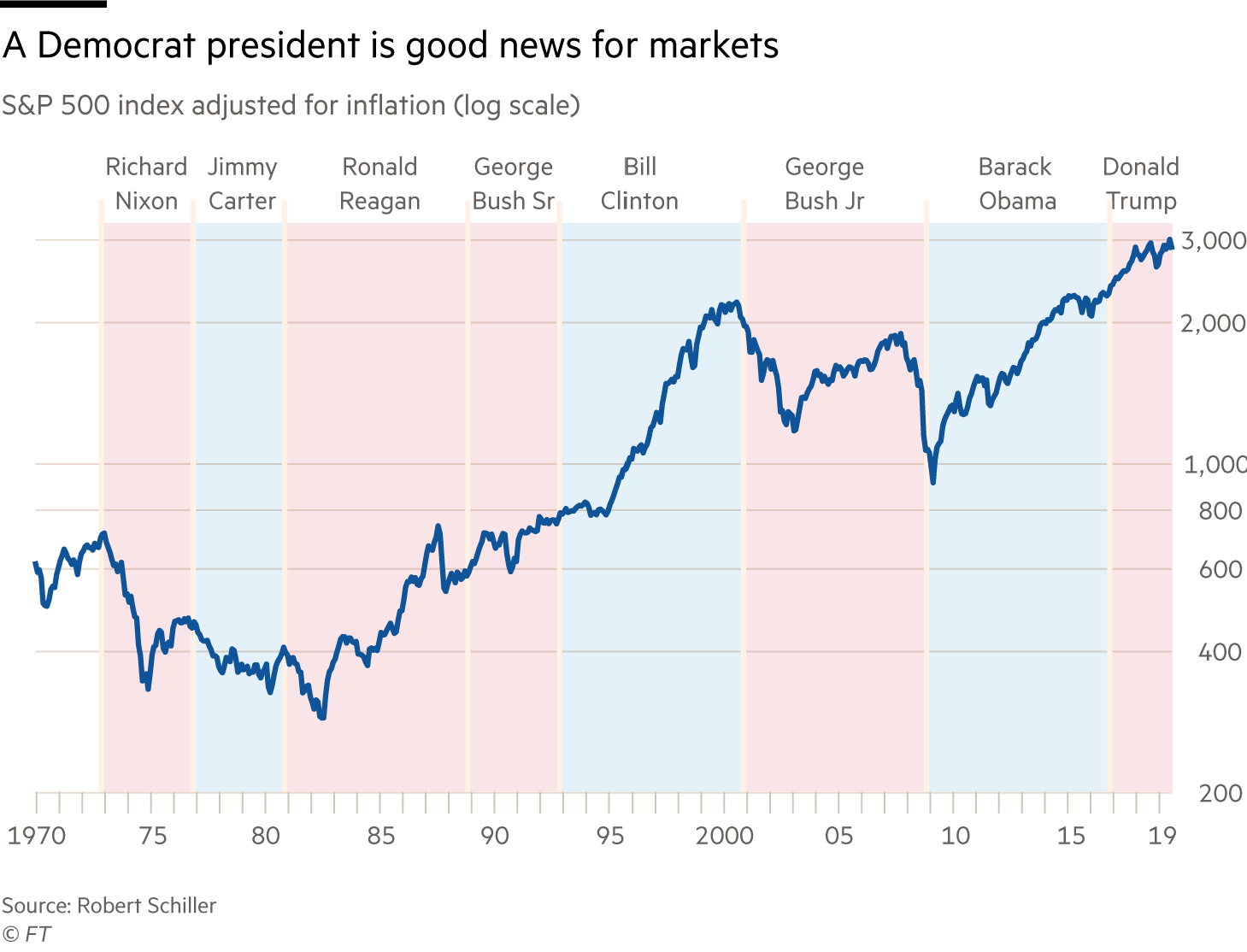
Manufacturing is the largest sector of the German economy. More specifically, the auto manufacturing industry is the largest in Germany. As a result, the German stock market tend to follow the auto industry.

The following chart shows how the German stock market is highly correlated to the auto industry:

Click to enlarge

Cumulative total return since start of 2002. Source: Charles Schwab, Bloomberg data as of 10/27/2019.

Source: Will The Crash in Autos Drive The End Of This Cycle? by Jeffrey Kleintop, Schwab

Some of the important facts of the German auto industry are:

  •  In 2018, the auto industry had a turnover of EUR 426.2 billion. That is around 20 percent of total German industry revenue.
  • Germany is Europe’s top auto market – both for manufacturing and registrations of new vehicles.
  • One in five cars worldwide carries a German brand.
  • The majority of autos produced in Germany are for export. Last year the figure stood at 78 percent.
  • Germany-based Volkswagen is the world’s number auto maker and seller with sales of over 10 million last year.

Source: Germany Trade and Invest

The key takeaway for equity investors is that German stocks tend to perform well if the domestic auto industry is growing.

Tech Stocks: Is It Really Different This Time?

Tech stocks are hot again this year. The top flying stocks are up by double digits percentage points year-to-date. The bull market in this sector continues for the past few years. Seemingly endless growth and innovation are driving investors to pay sky-high premiums for the top tech market darlings such as the FAANGs. Some of these firms are not exactly coming up with innovative products but rather adding new features or slightly tweaking existing products in order to provide an aura of ground breaking innovation. One company that follows this “strategy” is Apple(AAPL). Recently the firm add yet another camera to its flagship product iPhone claiming this is some of innovation and pricing it accordingly. Apple also added noise cancellation technology to its Airpods and named its Airpod Pro with a 50%+ increase in price. Obviously this sort of innovation is dubious at best. Apple simply expects customers will shell out an extra $100 or so for this feature. While airpods may be popular they are not really practical at all and are prone to getting lost easily Because they are so tiny many customers have lost them. So asking customers to pay more for the same product but with some new gimmick is probably a tough sell.

Other firms such as Facebook(FB) and Alphabet, parent of Google (GOOG) are also not exactly innovative firms anymore. Facebook in a true sense is a giant mess and is primarily an advertising company and extracting time and attention from people with time on their hands. Obviously it is not considered an ad company but rather a silicon valley giant. Wallstreet values Facebook as a tech company. Similarly lately Google has become another huge ad platform. Though the company is primarily in the search engine business, it is morphing into another ad platform.

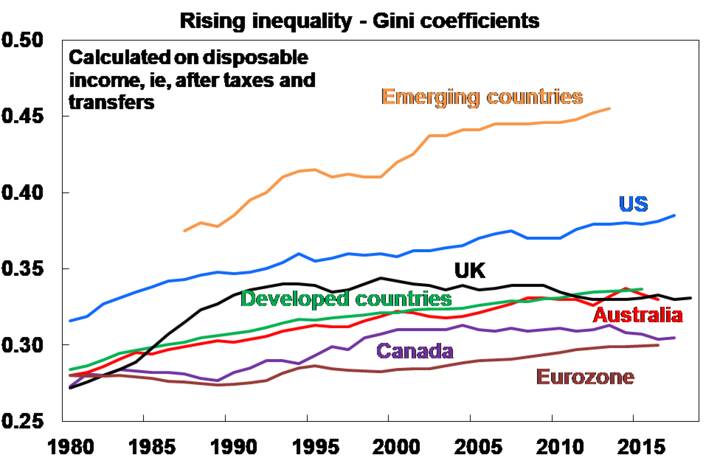
With that said, some investors may be wondering is it really different this time compared to the past NASDAQ collapse?  The following chart shows the YTD price returns of the FAANGs:

Click to enlarge


Note: Data shown above is as of Nov 1, 2019

Source: Yahoo Finance

I came across an interesting article on this topic recently at Money Observer. From the piece:

Is Amazon, for example, a technology company, a cloud computing infrastructure provider or a retailer?

Rise and fall of the Nasdaq
-gained 358% Jan 1998 to March 2000

Learning from history

Similar questions arose as the dotcom era gathered momentum. The likes of Boo.com and Pets.com were retailers using the internet as a distribution channel, but they were considered to be tech stocks and their valuations reflected that. It was the same with Webvan, the grocery delivery service that saw its price tumble from $30 a share at IPO in November 1999 to just 6 cents a share when it ceased trading, 20 months later.

This is why focusing on fundamentals and the business model of a company can help investors avoid repeating the mistakes of the dotcom crash, when many were dazzled by the hype surrounding certain firms rather than focusing on their actual value, says Mark Leach, portfolio manager at wealth manager James Hambro & Partners. “Always focus on value, cash and profits. It’s a lesson that investors repeatedly fail to heed – that’s why these bubbles happen.”

Source: Two decades on from tech bubble trouble: is it different this time?, Money Observer

Another dot con of the late 1990s that disappeared is Infospace. The CEO of that firm went on TV to proclaim that his firm will be the first trillion dollar market cap in the world. After that fantastic prediction he went the way of the dodo bird never to be seen or heard again.

Nobody knows if tech stocks are in a bubble or not. One thing is clear. The tech stock industry always goes thru booms and busts. Currently we are in the boom side of the two categories.

Disclosure: No Positions

Travel Times from London to Rest of the World

The following is a fascinating map showing the travel times from London to the rest of the world in 1881 produced by the Royal Geographical Society. In those days London was the center of the universe. Even in those days all of Europe was reachable within 10 days. The travel time from London to the east and midwest of the US took 10 to 20 days.

Click to enlarge

Source: Royal Geographical Society via Reddit

US Stock Markets Generate Higher Returns During Democrat Presidents

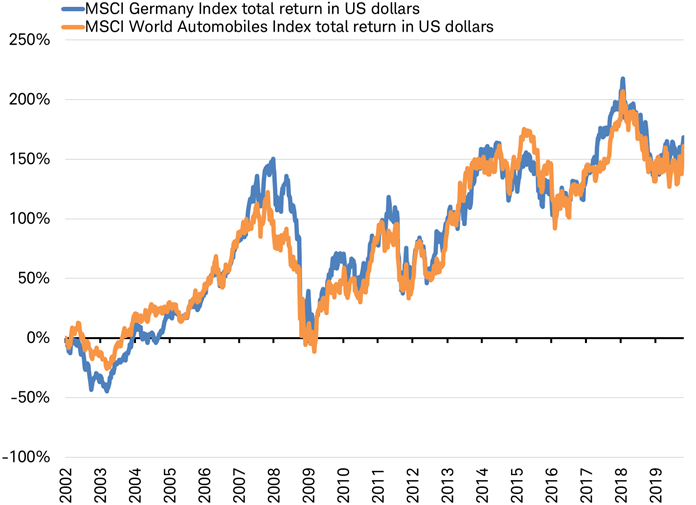
US equity markets tend to perform better when a democrat is president than a republican president. During republican administrations economy tend to be stagnant or have lackluster growth. During democrat presidents’ administrations the economy tends to grow leading to higher stock market returns.

From an article in FT Alphaville quoting a recent working paper by Lubos Pastor and Pietro Veronesi of Chicago’s Booth School of Business:

Stock market returns in the United States exhibit a striking pattern: they are much higher under Democratic presidents than under Republican ones. From 1927 to 2015, the average excess market return under Democratic presidents is 10.7% per year, whereas under Republican presidents, it is only −0.2% per year. The difference, almost 11% per year, is highly significant both economically and statistically

And here’s a neat chart our graphics team put together showing the S&P 500’s performance under various presidents, going all the way back to 1970:


Figuring out why Dems garner the best returns has largely escaped academia, leading to economists dubbing the issue the “presidential puzzle”. (There is also a significant gap in GDP growth — 3.2 per cent, in case you were wondering.)

Pastor and Veronesi reckon it’s all about timing. Republican presidents often get elected when expected returns are low and vice versa. This is because Democrat presidents tend to take office when the economy is weak, and therefore risk aversion is high. As the economy recovers, consumers and businesses begin to regain confidence, and take on more risk — whether in the form of spending, or investment.

A great example would be Obama’s presidency. He inherited a distressed economy and stock market off Dubya which, arguably, would always recover. Still, a return of 182 per cent in the S&P 500 is nothing to be sniffed at. (We also note that many predicted a further stock market crash under Obama in 2008, but there we go.)

Source: Masters of the universe, don’t be scared of Elizabeth Warren, FT Alphaville