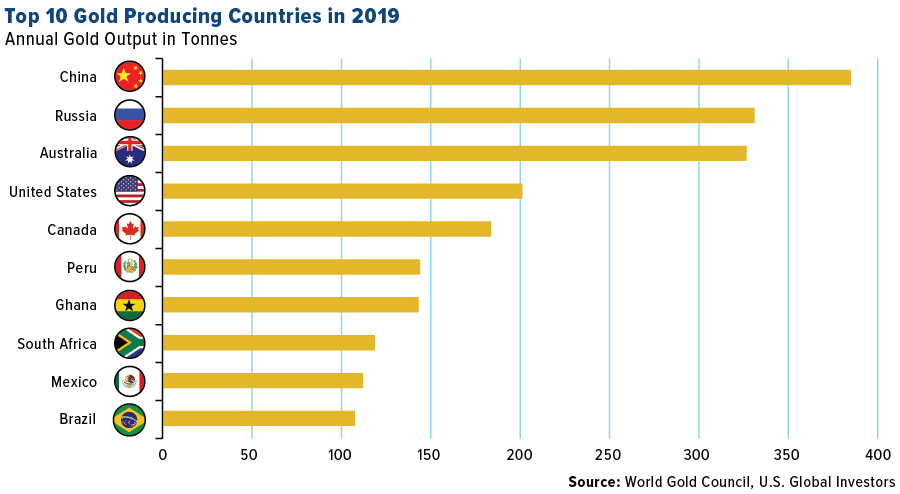
The Top 10 Gold Producing Countries in 2019: Chart

The Top 10 Gold Producing Countries in 2019 are shown in the chart below. China was the top producer of gold followed by Russia and Australia. It is surprising that China is a big gold producer. Though one would expect South Africa to be the top producer the country was the eighth producer behind Ghana.

Click to enlarge
Source: Top 10 Gold Producing Countries, U.S. Global Investors

The World’s Top 12 Amazing Rail Journeys: Infographic

The following infographic shows some of the top rail journeys in the world. The Trans-Siberian Railway is by the far the top train trip in the world for the sheer distance it covers and the landscape it passes through. The Jacobite is the famous rail line in Scotland that appeared in the Harry Potter movies.  The Rocky Mountaineer running through the Canadian Rockies is also another great train journey.

Click to enlarge

Source: The World’s 12 Most Amazing Rail Journeys, Global Rail Review

Another Perspective on The Concentration in the US market

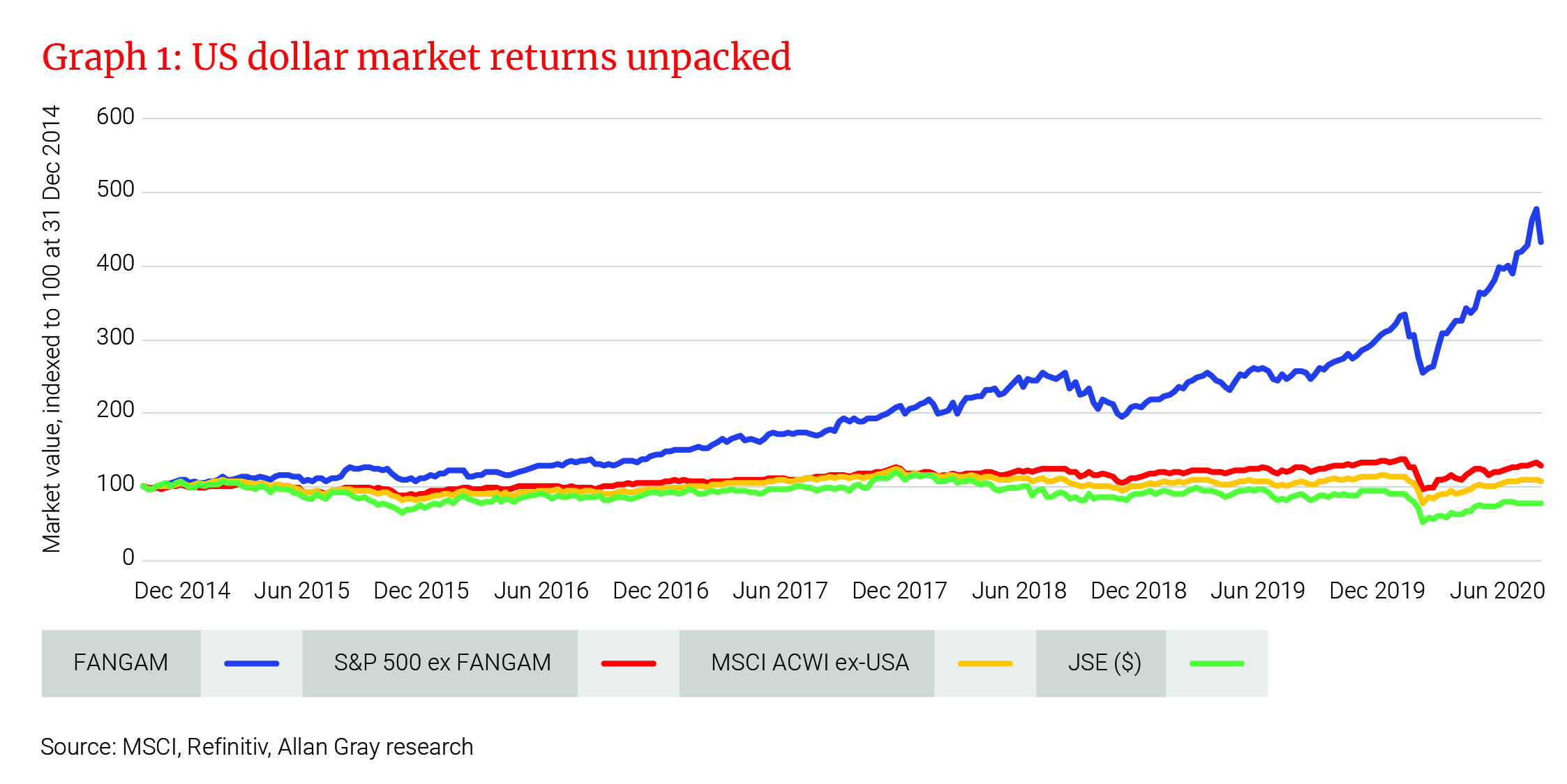
The US equity market has become highly concentrated. A handful of firms particularly in the tech sector account for most of the gains earned so far this year. I recently came across an article by Rory Kutisker-Jacobson at South Africa-based Allan Gray who noted a different perspective on the concentration in the US market. Below is an excerpt from the piece:

Concentration in the US market

As shown in Graph 1, if we unpack the US market, we see a similar concentration in returns. Over this same period, the S&P Index is up a cumulative 65%, but if we strip out the largest contributors, a very different picture emerges. Just six stocks, Facebook, Amazon, Netflix, Google (Alphabet), Apple, and Microsoft (the so-called FANGAM stocks) account for most of the S&P’s returns. Excluding these, the S&P is only up 29% since December 2014. In contrast, the weighted average return of the FANGAM stocks is a stellar 333%. US tech stocks have been just about the only game in town. This has created huge concentration in the S&P, with the five largest companies (FAGAM) now accounting for more than 20% of the index overall. This level of concentration is higher than that seen at the peak of the dotcom bubble. (emphasis mine)

Make no mistake, these are high quality businesses, but when you look more closely at the numbers, there is a huge amount of positive sentiment priced into their current market prices. For companies that are already massive by global standards, it may become increasingly hard to achieve the growth prospects implied by their current multiples.

SourceDo fundamentals still matter? by Rory Kutisker-Jacobson, Allan Gray

The complete article is worth a read.

Disclosure: No Positions