The Top 10 Banks of Ukraine based on Assets as of December 2008 are shown below: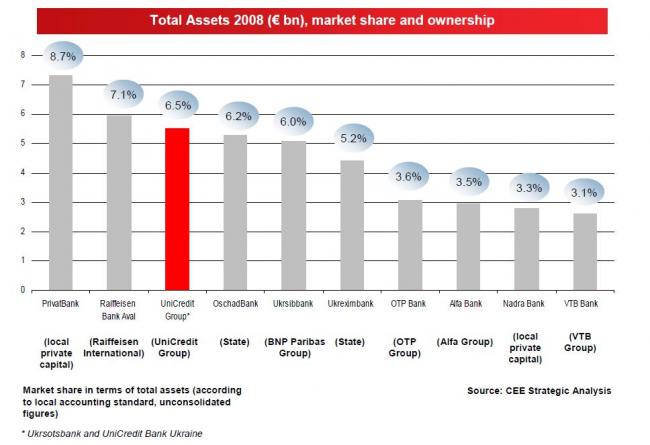
Source: Banking in CEE: Challenging Times but Recovery on the Horizon by UNICREDIT TIRIAC BANK S.A.
The Top 10 Banks of Ukraine based on Assets as of December 2008 are shown below:
Source: Banking in CEE: Challenging Times but Recovery on the Horizon by UNICREDIT TIRIAC BANK S.A.
The Top 10 Banks of Turkey based on Assets as of December 2008 are shown below: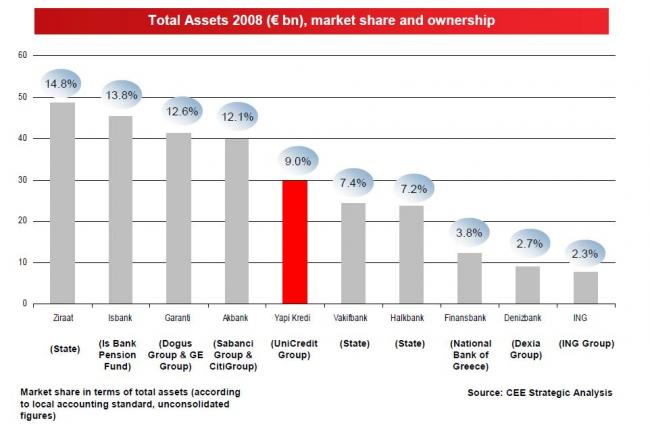
Source: Banking in CEE: Challenging Times but Recovery on the Horizon by UNICREDIT TIRIAC BANK S.A.
Poland is one of the few Eastern and Central European countries that is in a better shape in the current recession. A small contraction of 0.75% is projected by the IMF for this year.
In the article Poland: Bright Spot in Recession-Hit Europe, the IMF states:
“Why is Poland different? To be sure, its flexible exchange rate regime has served it well by facilitating the economy’s adjustment to the external shock. Also, the approval of an IMF credit line for Poland earlier this year—a new instrument known as the Flexible Credit Line—helped calm markets. The zloty stabilized at its new lower level, CDS spreads declined, and the government—which, throughout the crisis, had maintained access to international markets—saw a decline in the interest rate it was paying on its bonds.
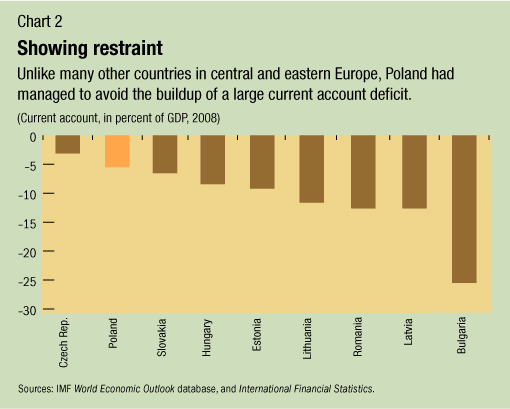
But, most importantly, Poland’s resilience owes much to sound economic policies that have helped the country avoid the buildup of large external and internal imbalances seen elsewhere in central and eastern Europe (see Chart 2). Because Poland entered the crisis with relatively healthy fundamentals, the government has been able to implement counter-cyclical policies. These, in turn, are now cushioning the downturn.”
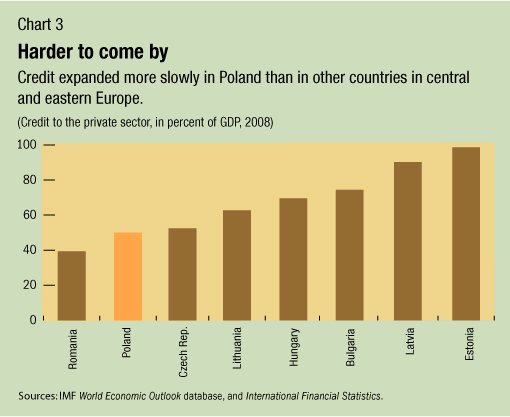
Another reason is credit expansion was much lower in Poland than other peer countries. Unlike the US Fed, the authorities in Poland are vigilant and proactive.
Which brings us to the banking system in Poland. Foreign banks dominate the Polish banking system.
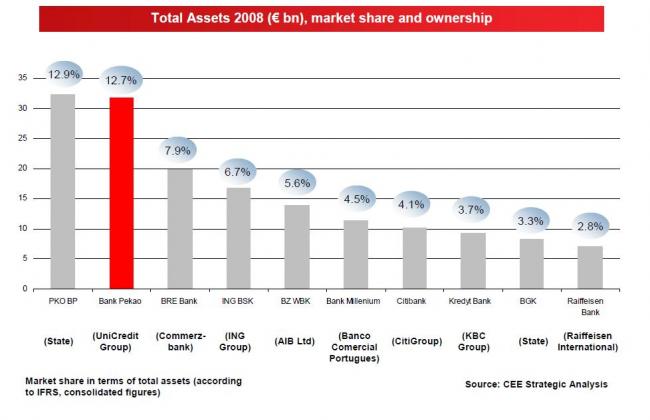
The Top 10 Banks in Poland based on Assets held at the end of 2008 were:
1.PKO BP (OTC: PSZKY)
State-owned
2.Bank Pekao (part of UniCredit of Italy)
3. BRE bank (OTC:BREJY)
Investor – Commerzbank of Germany (OTC: CRZBY)
4. ING BSK (Investor – ING Group (ING) )
5. BZ WBK
Investor – Allied Irish Bank (AIB)
6. Bank Millenium
7. Citibank (C)
8. Kredyt Bank
9. BGK
State-owned
10. Raiffeisen Bank – Part of the Raiffeisen Group of Austria.
Brazil is one of the year-to-date top performing markets among the emerging countries. The infrastructure in Brazil is good and the country is blessed with an incredible array of natural resources.
The Dow Jones Brazil Titans 20 ADR Index represents the 20 largest and most liquid Brazilian stocks traded on the major exchanges of the United States.
The key features of this index include:
“The index universe consists of all Brazilian issues that trade on U.S. exchanges, subject to screens for security type and trading volume history.
Twenty stocks are selected to the index based on rankings by float-adjusted market capitalization and average trading volume.”
As of August 31,2009 the index is up 62.31%. Last year the index was down nearly 52%. Financials make up just 20% of the index.
The Top 10 Components of this index are:
Petroleo Brasileiro (PBR)
Itau Unibanco Banco Multiplo (ITUB)
Vale S.A. ADS (VALE)
Banco Bradesco (BBD)
BRF-Brazil Foods (PDA)
Companhia Brasileira de Distribuicao Grupo Pao de Ac(CBD)
Embraer-Empresa Brasileiras de Aeronautica (ERJ)
Vivo Participacoes Companhia de Bebidas das Americas (ABV)
Gafisa (GFA)
The two private sector banks Banco Bradesco and Itau Unibanco Banco Multiplo are widely held by investors worldwide. Petroleo Brasileiro is another world’s top integrated oil producer.
The U.S. personal savings rate rose to 6.9% in May this year as American consumers saved more of their income. This is the highest in the past 15 years. In 2006, the savings rate fell below zero.
Chart: Recent Trends in US Personal Savings Rate
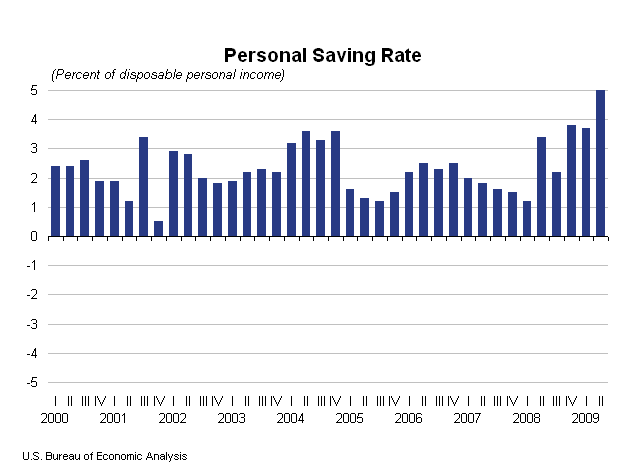
As households net worth increases the personal savings rate decreases as shown in the chart below.Since the 90s the U.S. savings rate has been decreasing year after year even after the net wealth declined after the dot com bubble in 2001. Since late 2008, the savings rate has started to climb. Many economists predict it will continue to climb to pre-bubble levels. In the early 80s Americans saved over 12%.

Source: Frugality: Are We Fretting Too Much?, Household Saving and Assets in the United States by Yasser Abdih and Evan Tanner, IMF
