ABN AMRO Bank Returned To The Stock Market

The Netherlands-based ABN AMRO Bank had its IPO on the Dutch equity market this past Friday. The bank returned to the markets after a break of eight years when it was taken over in a complex deal. Here is an excerpt from an FT article:

ABN Amro shares rose 3.5 per cent on Friday after the Dutch government sold a fifth of its stake in the biggest initial public offering of a European bank since before the financial crisis.

The IPO, raising as much as €3.8bn for the government, marks the return of ABN to the stock market eight years after it was taken over in a record €71bn deal that led to the collapse of two of its three acquirers: Royal Bank of Scotland and Fortis.

The shares floated at €17.75 and rose in early trading to €18.37. That valued the bank at almost €16.7bn, which is well below the €24bn of taxpayer money used to bail out the Dutch banking activities of ABN and Fortis after the fateful 2007 deal.

ABN has been pitched to investors as a defensive yield stock that could be attractive in the low interest rate environment. It has promised to pay out 40 per cent of its profits in dividends until 2017 and half of them after that.

Analysts estimate it will make a net profit of about €2bn this year and pay a €0.85-per-share dividend, representing a yield of about 5 per cent.

Source: ABN Amro rises 3.5% as it returns to market, Financial Times, Nov 20, 2015

The shares trade on the Amsterdam Exchange under the ticker ABN.

For in Q3, 2015 ABN reported a net profit of EUR 509 million.

For more information checkout ABN Amro Investor Relations Site.

As a global bank ABN has a strong presence in many countries including the UK and the continent of Asia. With an excellent historical performance and the global reach the stock is worth a look especially with a nice dividend yield.

Disclosure: No Positions


Avoid National Bank of Greece After 3rd Reverse Split In 5 Years

***** UPDATE (Dec 10, 2015): National Bank of Greece ADR Resumed Trading on the OTC Market, TFS

UPDATE (Nov 27, 2015): NYSE Delisting National Bank of Greece ADR, TFS

National Bank of Greece(NBG) has decided to do another reverse stock split in the ratio of 1:15 this week. Based on Thursday’s price of the ordinary share at 0.02 Euros the new price of the stocks would be 0.30 Euros after the reverse split is implemented.

From a Reuters article:

National Bank of Greece on Thursday priced its share offering to plug a capital shortfall revealed in the European Central Bank’s health check, at 0.02 euros per share, or at 0.30 euros per share reflecting a one-for 15 reverse share split.

The bank, Greece’s largest lender, said investor demand for the shares, coupled with the results of a debt exchange offer to bondholders, reached about 1.16 billion euros. Its capital gap in the ECB’s baseline scenario was 1.456 billion euros.

National Bank said a public offering of new shares in the Greek market at the same price on or around Nov. 30 aims to raise another 300 million euros.

The bank said that an additional 308 million euros will result from further burden sharing. These will include the conversion into common shares of all capital means.

Source: Greece’s National Bank prices share offering at 0.02 euros per share, Nov 19, 2015

This is the third reverse stock split the bank has implemented in the past five years. The previous splits were 1 for 5 in 2011 and 1 for 10 in 2013. Both the times I suggested that investors avoid the stock.

** NOTE: The actual Record Date and Effective Date for the reverse split has not yet been announced yet. But the decision to do the reverse split has been made.

This time won’t be different. Structural changes are still an issue with the Greek economy. From labor laws to retirement age to tax evasion have not been reformed. Hence investors can avoid investing in NBG for the foreseeable future.

The long-term return for National Bank of Greece ADR from Oct 1999 thru Nov 20, 2015 is an astonishing -99.73% according to Google Finance:

Click to enlarge

NBG Long Term Returns

Source: Google Finance

The ratio of Ordinary to Depository Receipt is 1:1. Yesterday the ADR closed at $0.18. After the reverse split the stock price will be approximately around $3.60 or so depending on the reverse split effective date.

Here is the official announcement from the depository BNY Mellon published on Nov 25, 2015:

Reverse Split National Bank of Greece S.A.

DR CUSIP: 633643705 / ISIN:US6336437057

DR Ticker Symbol: NBG

Ratio: (DR: Underlying Share): 1:1

Please be advised that National Bank of Greece (“NBG”) has announced a share consolidation of one (1) new share for every fifteen (15) existing shares. As a result, BNY Mellon will affect a reverse stock split on the National Bank of Greece Depositary Receipt (“DR”) program. Effective December 3, 2015, DR holders of NBG are required on a mandatory basis to surrender their DR(s) for cancellation exchange their “OLD” DR(s) (CUSIP #633643705) for “New” DR (CUSIP # 633643804). DR holders will receive one (1) “New” Depositary Shares (“DS”) (CUSIP# 633643804) for every fifteen (15) “OLD” DSs (CUSIP # 633643705). Only whole DRS(s) will be distributed. BNY Mellon will attempt to sell any fractional DSs and distribute the cash proceeds to DR holders.

The Effective Date for the reverse split is Dec 3, 2015.

Related Links: 

UPDATE (Nov 27, 2015):

If you are a holder of NBG, What to do now?. You may want to checkout: What to do when an ADR is delisted from NYSE or NASDAQ

You can sell it on the OTC market as NBG is trading under the ticker NBGGY.

UPDATE (Nov 28, 2015):

Since NYSE has started the delisting process, the depository BNY Mellon has stopped any issuance or cancellation of ADRs.

** UPDATE (Dec 10, 2015):

Disclosure: No Positions

Knowledge is Power: American Shareholders Cult, easyJet, Oil Age End Edition

Atlanta Airport

Ground Crew in Action at Atlanta Airport

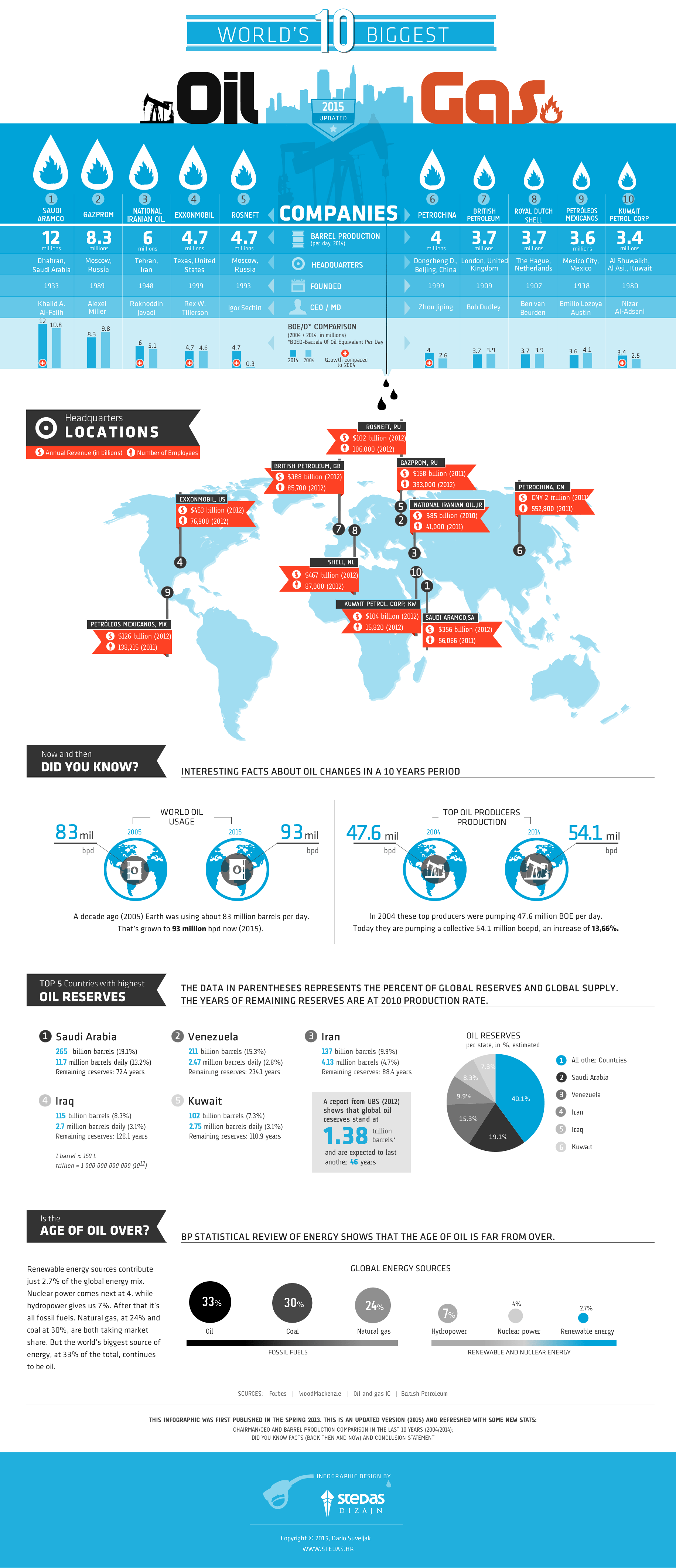
Infographic: The World’s Ten Biggest Oil and Gas Companies

Oil prices have fallen below $40 per barrel. However major oil companies have paid their regular dividends and have announced plans to continue to maintain the dividend payouts.This is good news for investors in the oil producers as opposed to investors in oil exploration firms, oil equipment makers and others whose stocks have been crushed hard since last year.

The following infographic shows the world’s ten largest oil and gas companies:

Click to enlarge

infographic-worlds-biggest-oil-gas-companies-2015

Source: Visual Capitalist

Knowledge is Power: Home Sweet Home for Chinese ADRs, Italian Households, Developing World Edition

Peacock

Peacock in a UK Farm