French Stocks in Focus

The French election is currently under-way. Tomorrow global investors may react based on the outcome of this divisive election. For US investors, only 11 French companies now trade on the organized exchanges. However those willing to go to the OTC markets have an additional 102 companies to choose from.

Among the major firms trading on the NYSE are Sanofi(SNY), Orange(ORAN) and oil major Total(TOT). Go to The full of French ADRs on the exchanges for all the stocks.

Many of the other top companies trade on the OTC market. Some of the options to consider include: Air Liquide(AIQUY), Arkema(ARKAY), AXA(AXAHY), BNP Paribas(BNPQY), Societe Generale(SCGLY), Danone(DANOY),Electricite de France(ECIFY) and Valeo(VLEEY). The complete list of stocks on the OTC market can he found here.

Related:

Disclosure: Long AXAHY

The Number of U.S. Stock Listings Continue To Decline

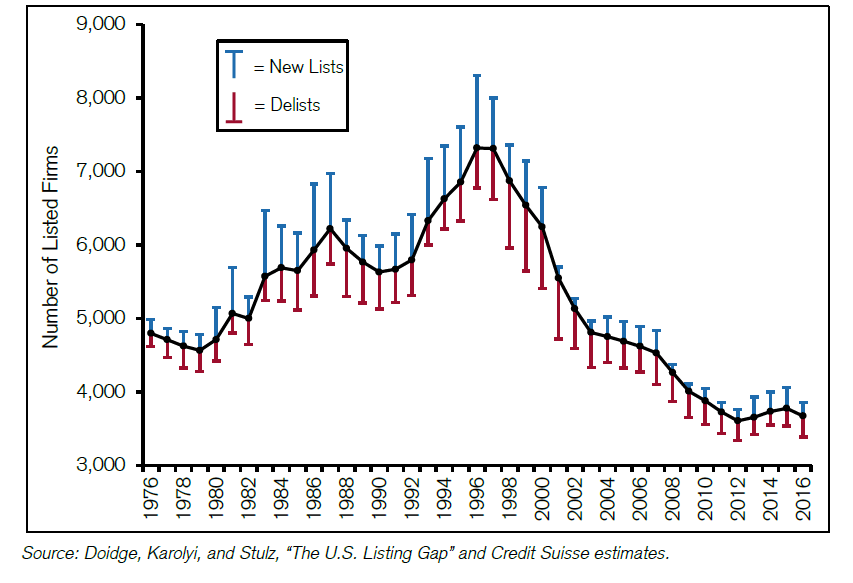
The total number of U.S. listed companies has continued to fall since the 1990s. From 1980 thru 1996 the number of listed companies rose steadily. But since then the number has declined year-after-after. The consequences of the low number of listed companies available for investors is huge. According to a research report from Credit Suisse, the number of listed US companies has fallen from 7,322 in 1996 to just 3,671 in 2016.

Click to enlarge

Sources:

The Causes and Consequences of Fewer U.S. Equities, Credit Suisse

The Case of the Missing U.S. Stocks by Frank Holmes, U.S. Funds

Some of the consequences of the low number of listed companies are:

  • Billions and billions of capital chasing investment opportunities find very options in the US market. This leads to a stampede in popular names like Amazon(AMZN), Facebook(FB), Alphabet(GOOG), Netflix(NFLX), Apple(AAPL), etc. and also some traditional  large-cap companies leading to sky-high valuations.
  • According to Frank Holmes of US Funds, since the US is the world’s largest equity market, low listed companies has huge implications.
  • From 1996 thru 2016, the number of listings has declined by 50%.
  • Private-equity investors are reaping incredible profits as public investors scramble to find opportunities in the markets. This is because private equity can keep companies private and earn profits to themselves or take public firms private leading to the continued decline in listings.
  • M&A activity has also contributed to the issue since large caps gobble up smaller companies at an alarming rate without worrying about things like anti-trust regulations as regulators and politicians look the other way.
  • Another impact is the scary ride that investors are subjected to in most US IPOs. Companies going public reach astronomical stock prices only to crash to fair levels in a few months as investors exit their positions looking for other investments. Firms with low to no profits and questionable products or businesses are also taken public. They hype surrounding the rare companies that go public are also awful.

Download Report: Listed US companies Report by Credit Suisse (in pdf format)

New Feature Added: Dividend History of Dow Jones Index Constituents

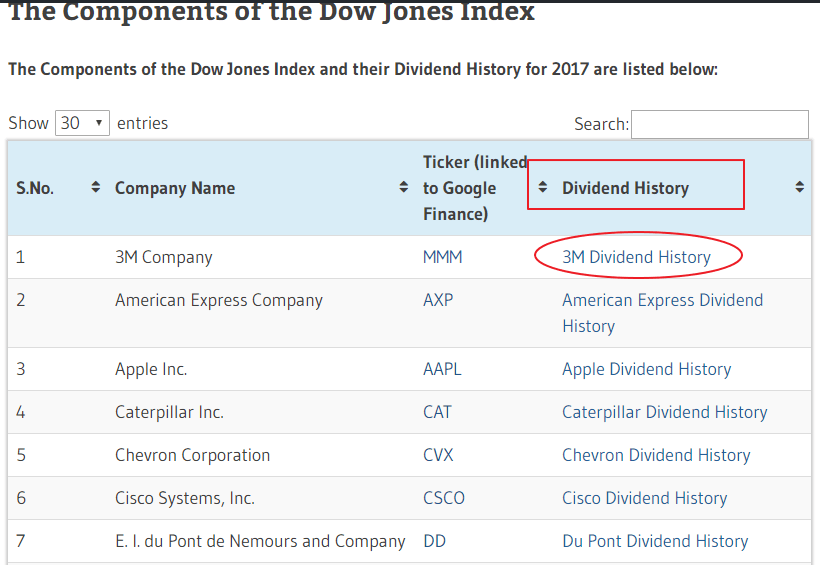
One of the new features that I have added on this site is the Dividend History of Stocks. Currently the dividend history of all the components of the Dow are posted. More dividend history pages of other companies will be added regularly.

You can check out the dividend history pages by clicking on the Dividend history link on each component here:

Click on above image to go the dividend history pages.

Dividend History page links for a few components are listed below:

Disclosure: No Positions


Tech Firms Dominate The World’s Top Companies By Market Value

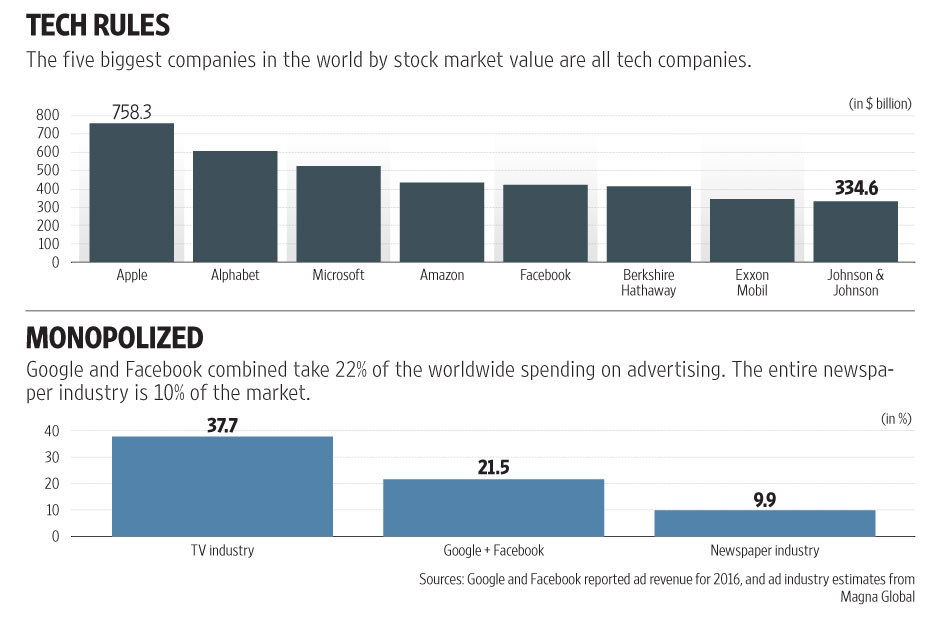
Silicon Valley tech companies dominate the list of the world’s top eight companies by market capitalization. The five tech firms in the list are: Apple(AAPL), Alphabet(GOOG), Microsoft (MSFT), Amazon (AMZN) and Facebook(FB). Old-world giants like Exxon Mobile(XOM) and Johnson & Johnson(JNJ) have lower market caps than the tech titans.

Click to enlarge

Source: Silicon Valley behemoths raise monopoly concerns, Livemint, May 1, 2017

Disclosure: No Positions

Corporate Tax Rates in Select Developed Countries: Chart

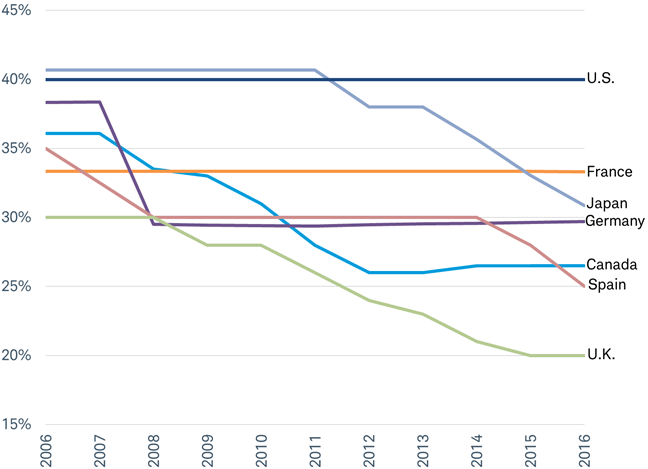
The US corporate tax rate has stayed at the 40% rate for many years now. But in many developed countries the tax rate has been been declining in the past few years as shown in the chart below:

Click to tn enlarge


Source: Charles Schwab, KPMG data as of 4/26/2017.

The U.S. statutory corporate income tax rate is approximately 40%. While the marginal federal corporate income tax rate on the highest income bracket of corporations is 35%, state and local governments also impose income taxes averaging approximately 7.5%. Since corporations may deduct its state and local income tax expense when computing its federal taxable income, this generally results in a net effective rate of approximately 40%.Corporate tax rate displayed is the combination of federal and local taxes and surcharges in each country to allow for accurate comparisons across borders.

Source: What the Coming Tax Cuts Mean for the Stock Market, Schwab