S&P 500 Intra-Year Declines and Annual Price Returns 1948 to 2017: Chart

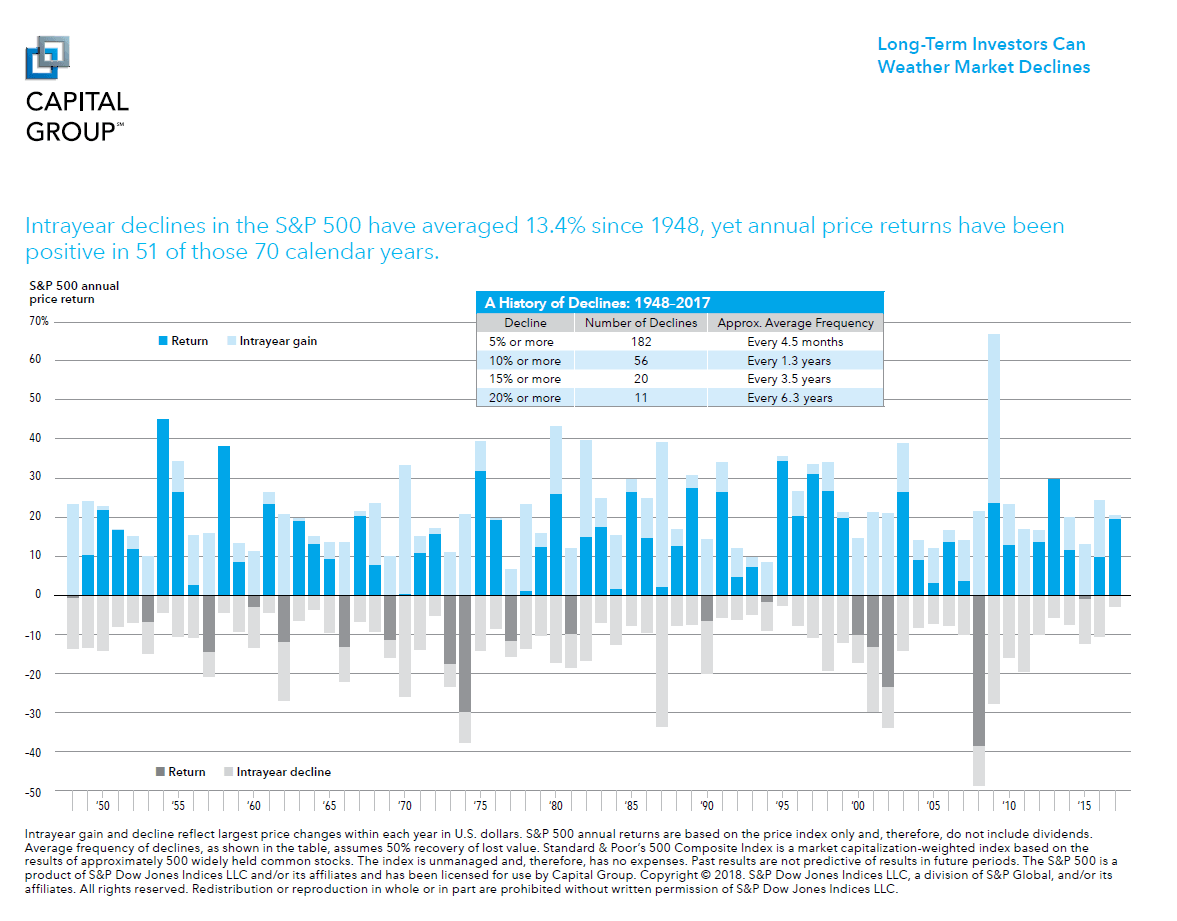
One of the biggest factors that impact investor returns with equity investing is selling out when markets correct.  Patience and not panicking is the key to long-term success with stocks. Just as stocks can go up they go down as well. For instance, the S&P 500 has seen annual average declines of 13.8% since 1948. Yet the annual returns in terms of price changes only have been positive in 51 of those 70 years as shown in the chart below.

Click to enlarge
Source: Capital Group

So the key takeaway for investors is that when markets declines staying put and not selling out is important. As we have discussed many times on this blog, trying to time the market is a foolish idea.

Related ETF:

  • SPDR S&P 500 ETF Trust (SPY)

Disclosure: No Positions
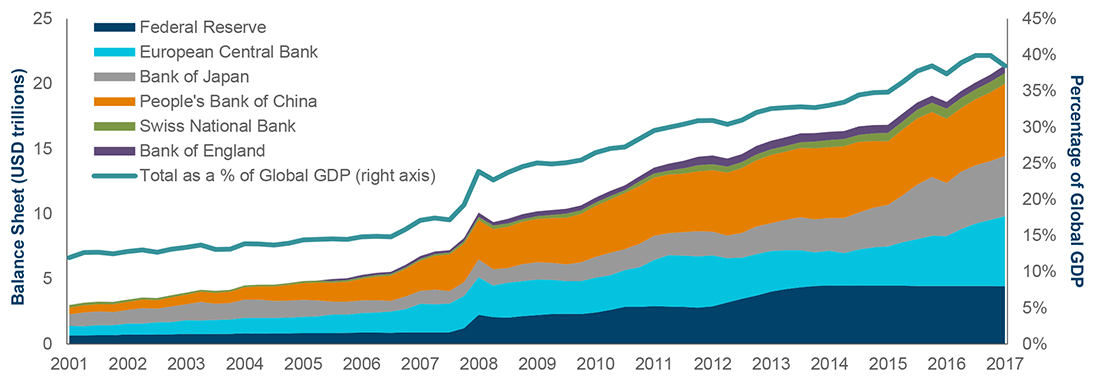
Central Bank Balance Sheets as a Percentage of GDP For Major Economies

The Balance Sheets of Central Bank of major economies have been increasing for many years now as a result of the many Quantitative Easing(QE) programs implements. The following chart shows the Central Bank Balance Sheets as a Percentage of GDP For Major Economies:

Click to enlarge

Source: The Long Unwinding Road—Navigating Regime Shift, T.Rowe Price

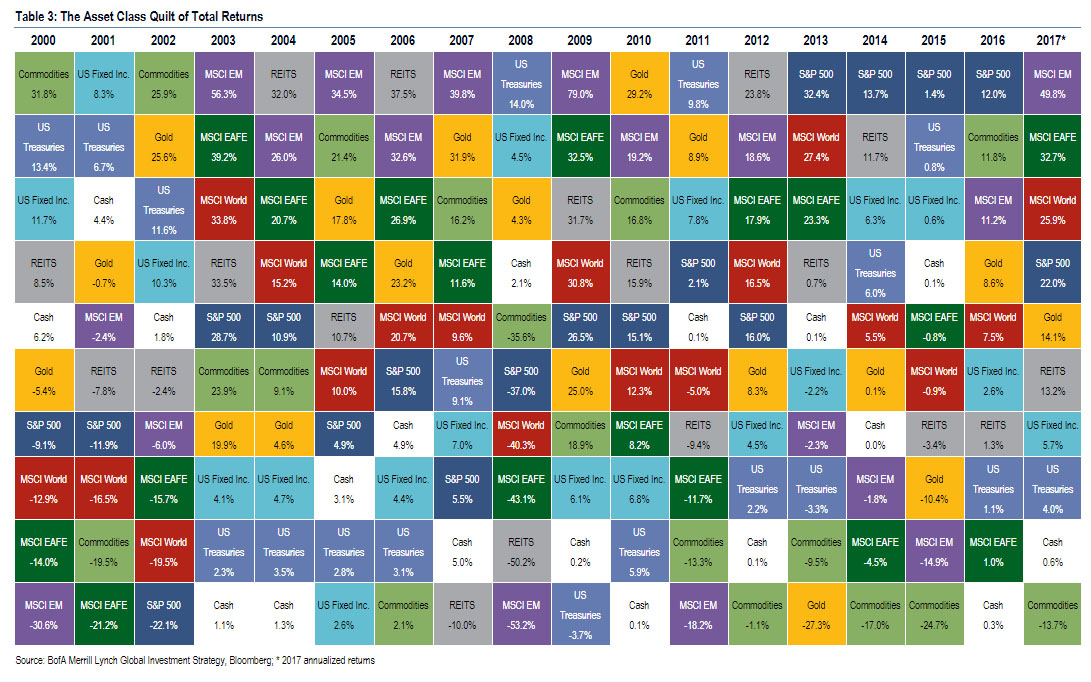
The Periodic Table of Total Returns for Asset Classes 2000 to 2017

The Periodic Table of Total Returns for Asset Classes is hard to find on the internet. The regular Periodic Table by Callan and others based on price returns is widely available online. Since total return is more important just than price returns for long-term investors the following chart is especially fascinating for analyzing returns.

The Periodic Table of Total Returns for various Asset Classes from 2000 to 2017 is shown in the chart below:

Click to enlarge

Source: Matasii

For example, in 2016 the S&P price return was 9.84%. However with dividends included the total return was 12%. Similarly the MSCI Emerging index soared by about 50% based on total returns last year.

Related ETF:

  • SPDR S&P 500 ETF Trust  (SPY)

Disclosure: No positions

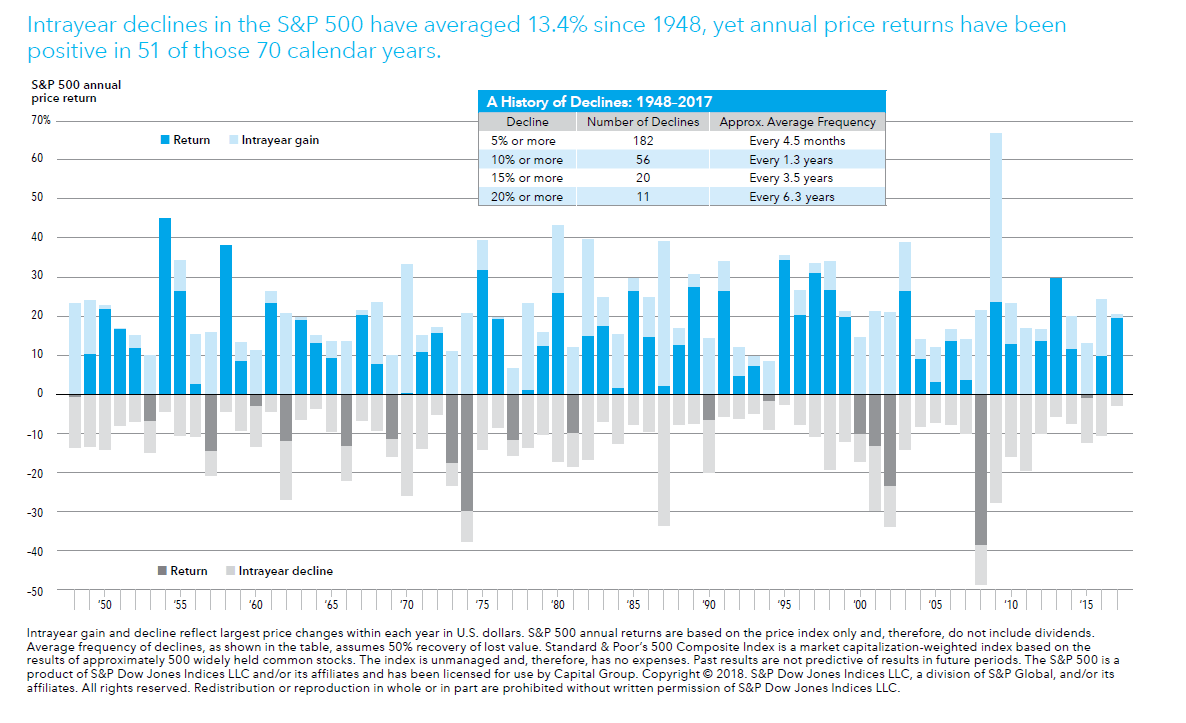
Intra-Year Declines of S&P 500 Index Since 1948

Intra-year drawdowns in the S&P 500 are common in the S&P 500 or any other index. The same can be said of any individual stock as well. Though S&P has had intra-year declines of an average of 13.4% since 1948 the annual price returns have been positive in 51 of the past 70 years.

Click to enlarge

Source: Capital Group

The key takeaway for investors is that long-term success in equity investing involves being patient and not getting worried everytime the S&P 500 falls in any year.

Related ETF:

  • SPDR S&P 500 ETF Trust (SPY)

Disclosure: No positions

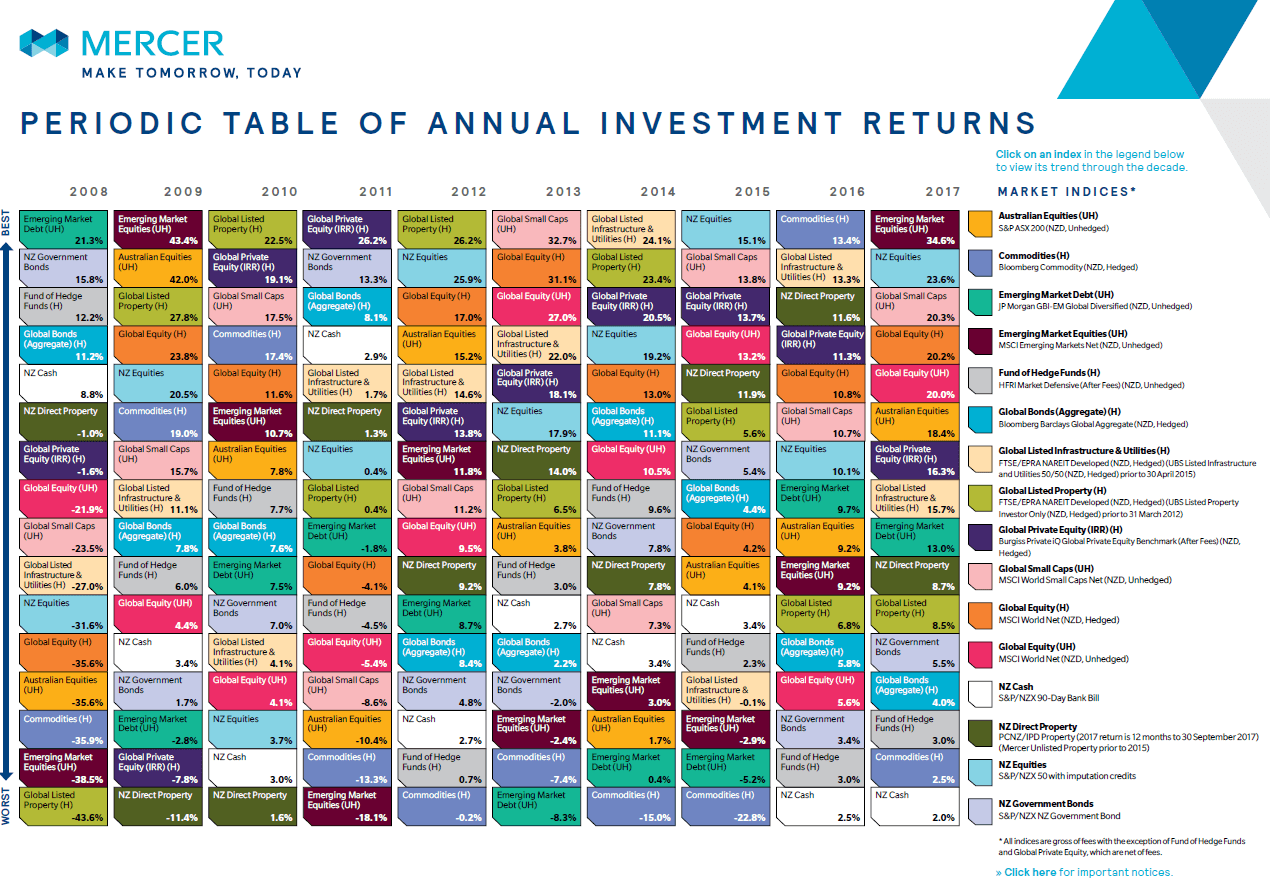
The Periodic Table Of Investment Returns New Zealand Edition From 2008 To 2017

Mercer publishes The Periodic Table Of Investment Returns for New Zealand each year.Similar to the Callan Periodic Table, this chart offers a wealth of information from a New Zealand and Australian perspective. For example, the 2017 edition shows that NZ stocks (light blue color) earned nearly 24% compared to 18% for Aussie equities.  Australian and NZ investors can use the chart below to analyze and educate themselves on the importance of diversification and other global investors may also find the chart useful in order to evaluate the returns of NZ and Aussie stocks relative to other assets.

The Periodic Table Of Investment Returns From 2008 To 2017 (New Zealand Edition):

Click to enlarge

Source: Mercer NZ

Download: