Platinum is one of the most invaluable metal. It is used in many technologies from fiberglass to pace makers. The infographic below shows some of the great uses of Platinum:
Click to enlarge

Source: BuillionVault
Platinum is one of the most invaluable metal. It is used in many technologies from fiberglass to pace makers. The infographic below shows some of the great uses of Platinum:
Click to enlarge
Source: BuillionVault
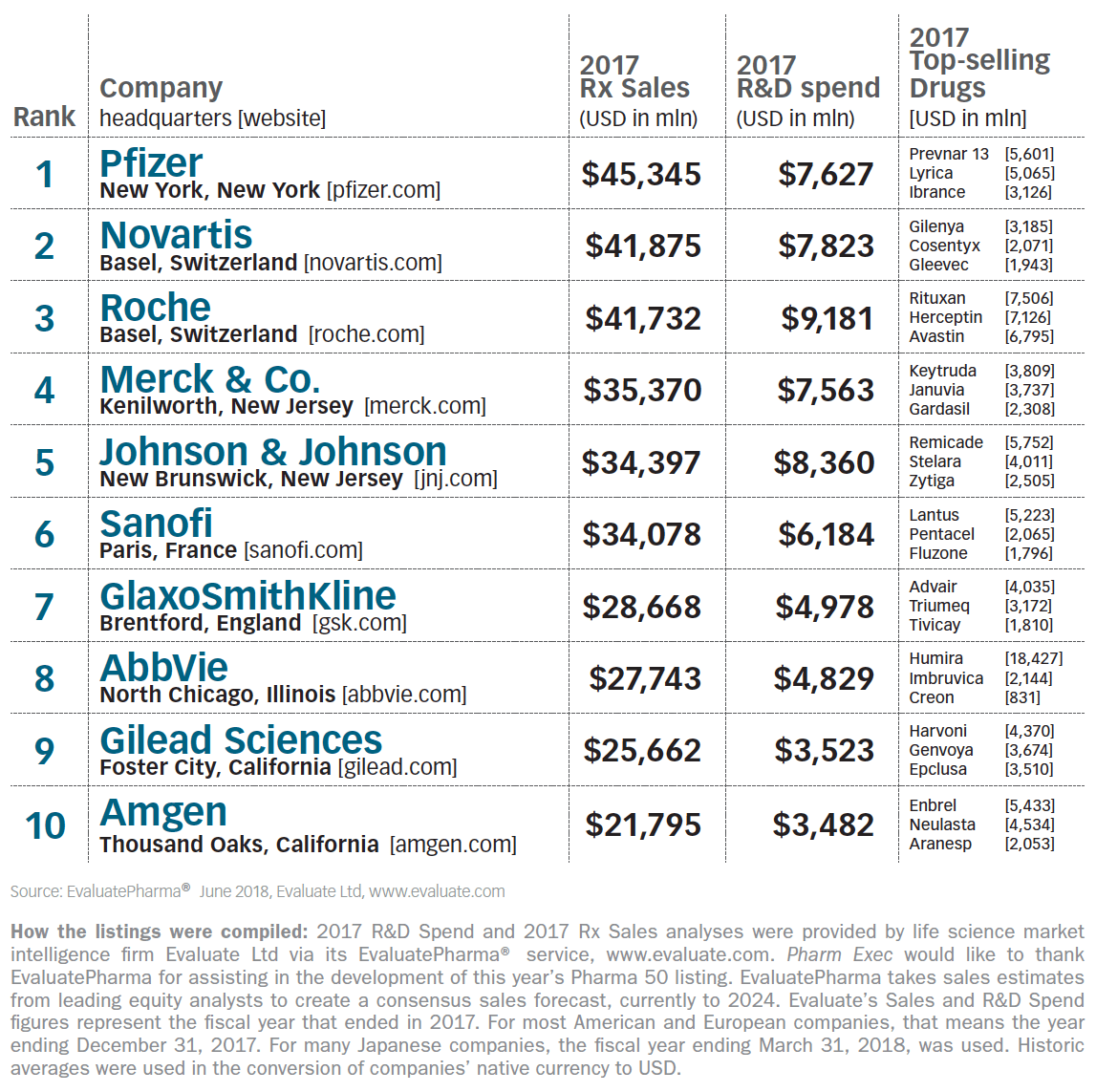
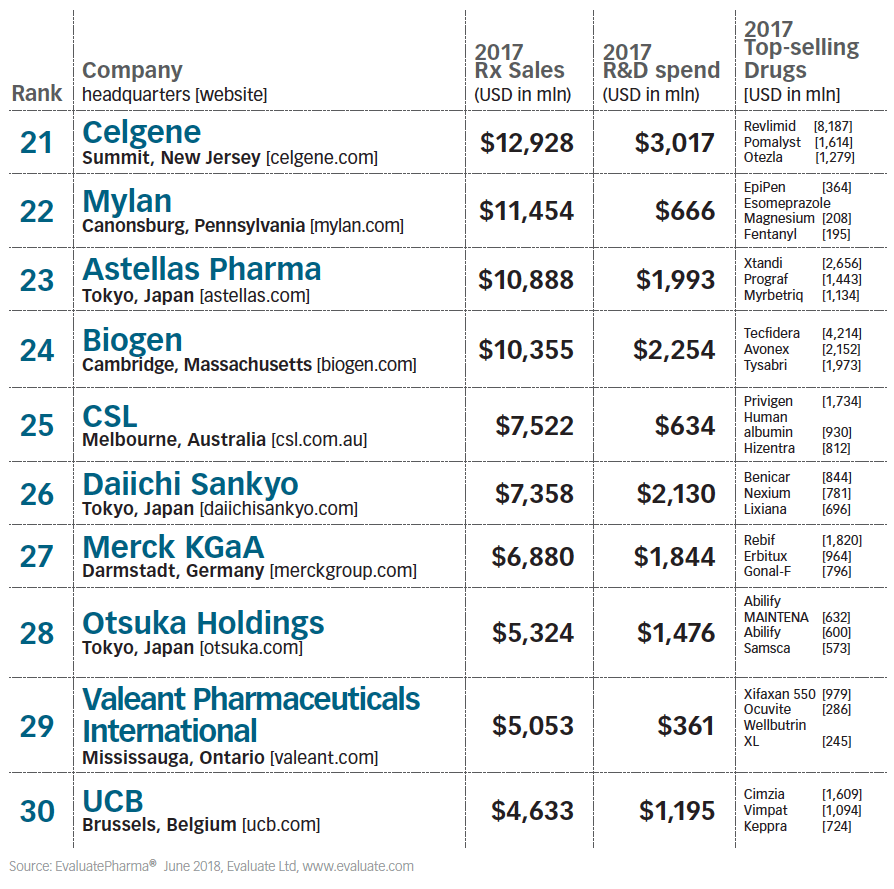
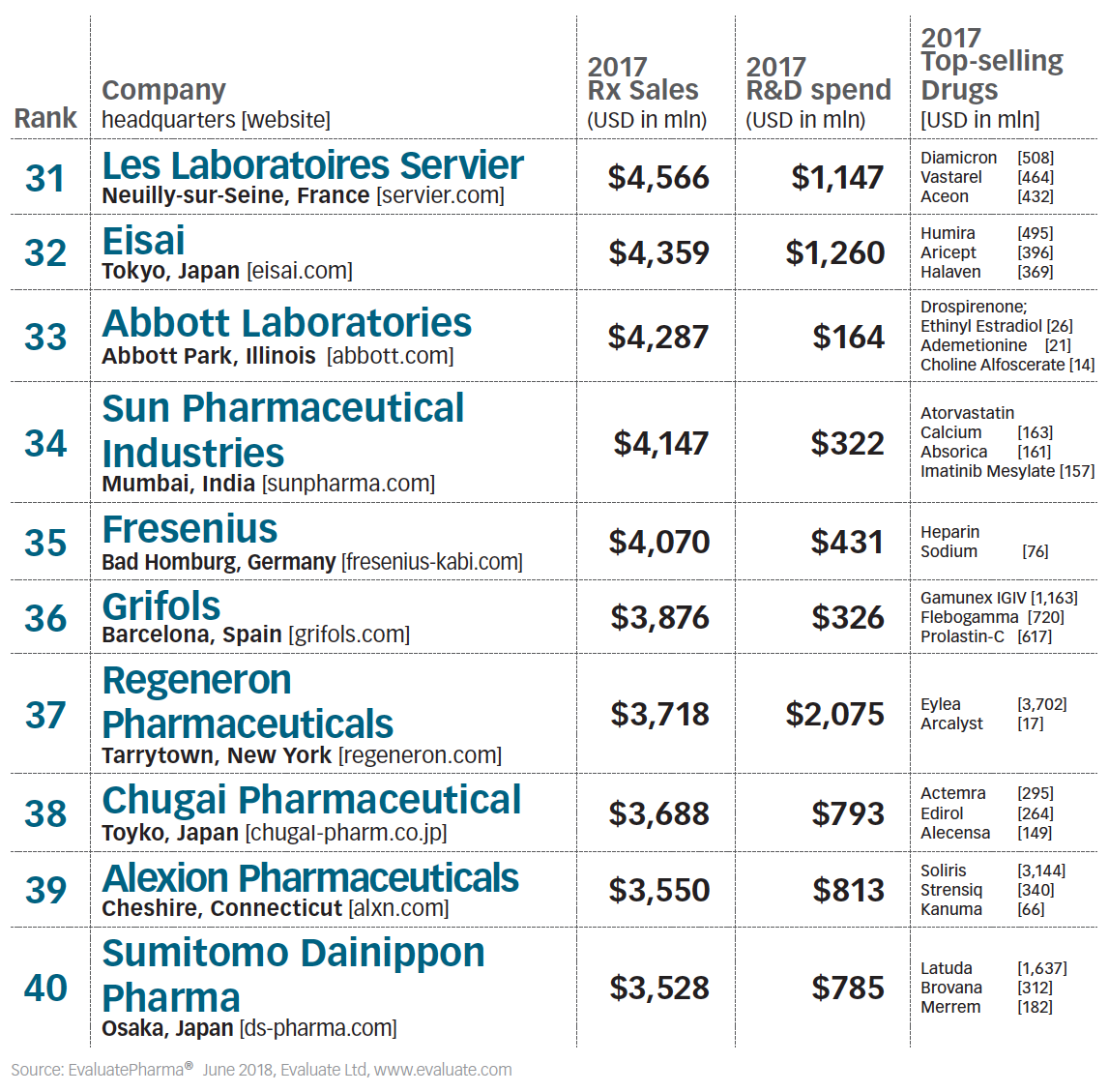
Pharmaceutical Executive magazine published their annual ranking of the world’s top pharma firms for 2018 last month. Pfizer(PFE) is the world’s top drug firm based on sales. Last year Pfizer had sales of over $45 billion. The 2nd top firm was Novartis(NVS) of Switzerland. US drug giant J&J came in at number five.
From the research report:
The first 10 spots on the ledger, once again led by Pfizer, changed little from the previous full-year rankings, with some movement of positions up or down a slot. Prescription sales gains among the entrenched stalwarts were relatively modest, on average, with AbbVie and Johnson & Johnson experiencing the largest increases at 9.7% and 8.6%, respectively. In assembling the data for the annual listing—now in its 18th year—Pharm Exec partnered again with life sciences market intelligence firm Evaluate Ltd.
Sanofi, ranked sixth in sales, boosted its R&D investment by 8.1% versus the previous year. The Paris-based company currently has 28 projects in Phase III development or seeking approval with regulators, and has six programs targeting rare diseases in Phase II or III clinical trials. It’s no secret that, overall, industry investment in rare disease drugs—on the investigative and commercial-expansion stages—is on the rise. The FDA, for example, reportedly granted 77 orphan drug approvals last year and 476 orphan drug designation requests.
Among the top 20 sales leaders on our list, other companies with notable spikes in R&D spending year-on year include AbbVie at 16.3%, Shire at 21.6%, and Bristol-Myers Squibb, which invested $4.82 billion in R&D, at 9.5%.
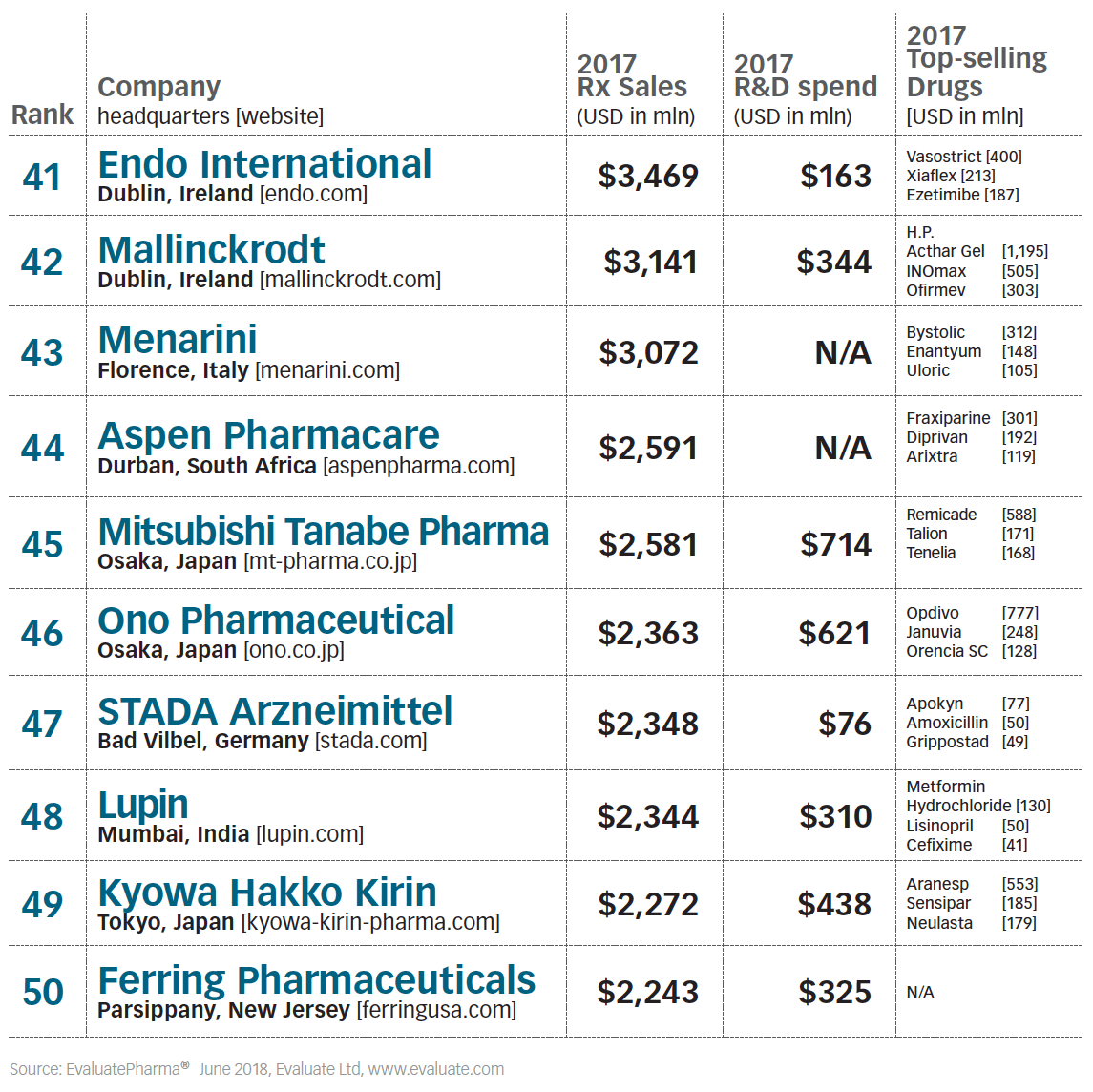
Source: Pharm Exec’s Top 50 Companies 2018, Pharma Exec, July 25, 2018
Disclosure: No Positions
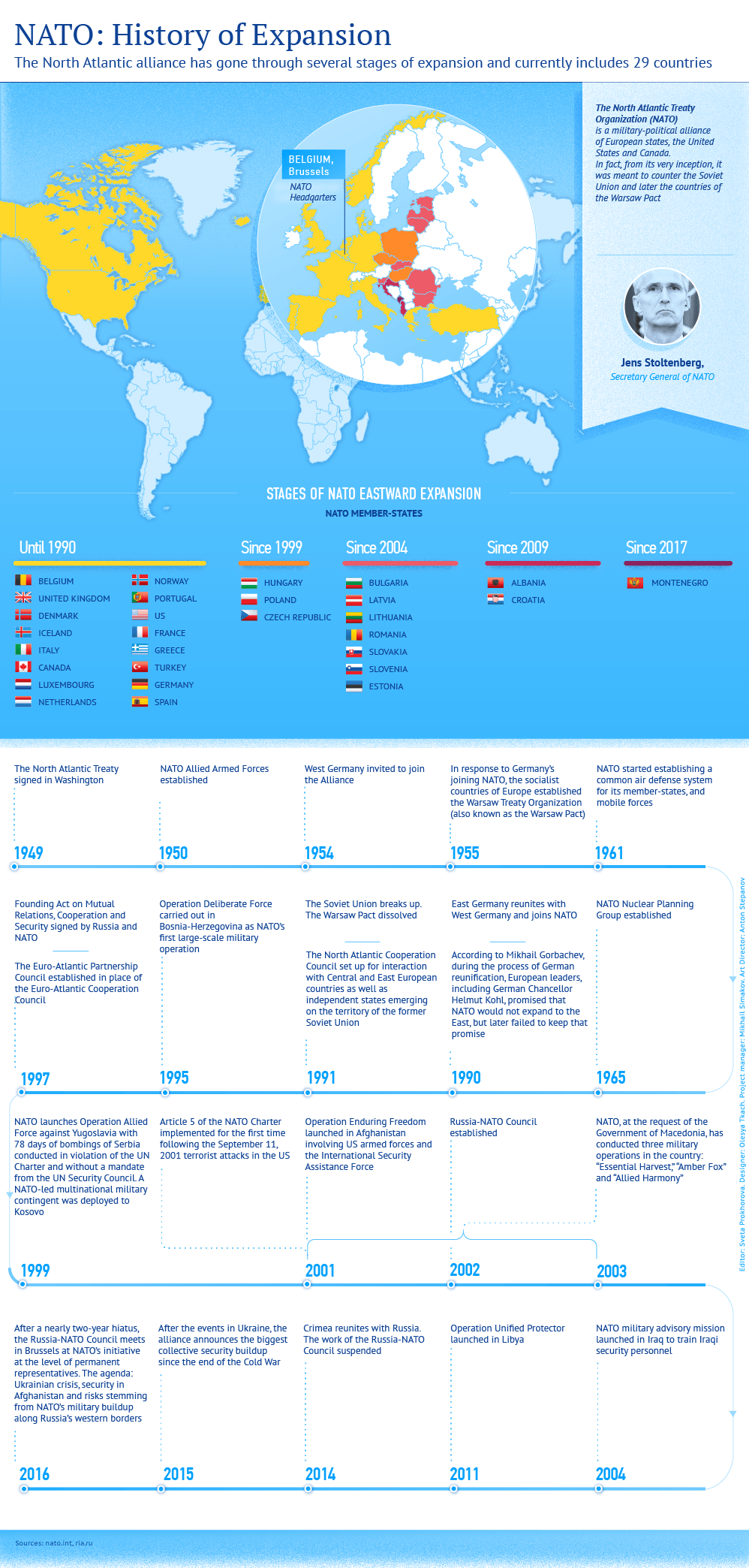
The North Atlantic Treaty Organization(NATO) was founded in 1949 and evolved to protect the West from the USSR. The USSR established its own organization called The Warsaw Pact to protect its allies in Europe. The Warsaw Pact collapsed when the USSR collapsed in 1989-91. Though the enemy split into countries the NATO survived and continues to evolve to combat present and future attackers.
From its original inception the NATO has added new members and today 29 countries are members of this powerful military alliance as shown in the infographics below:
Click to enlarge
Source: Sputnik News
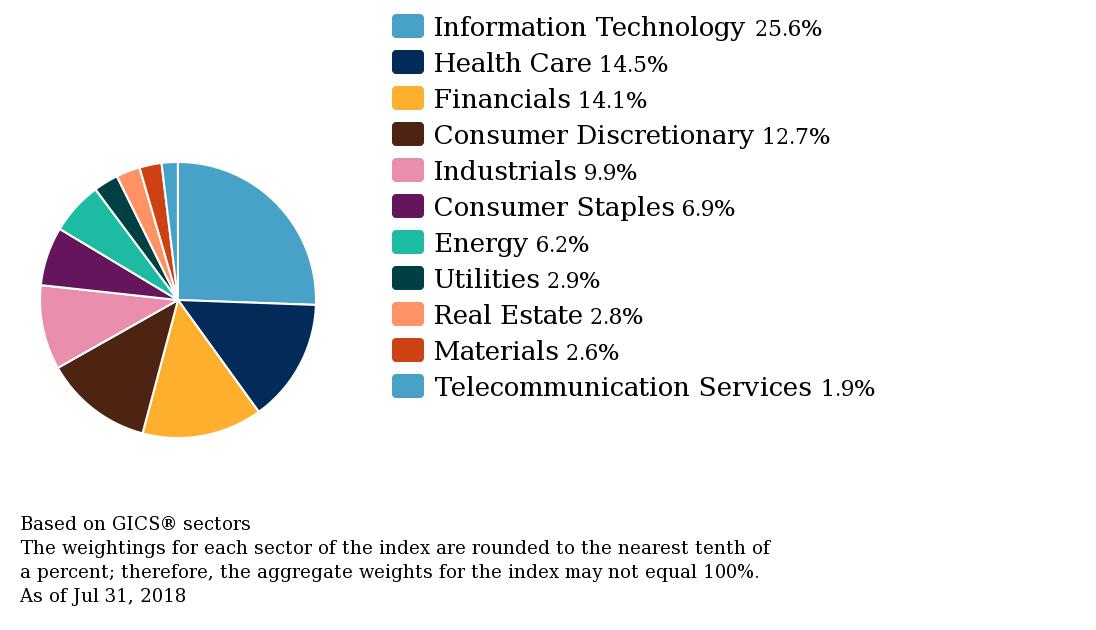
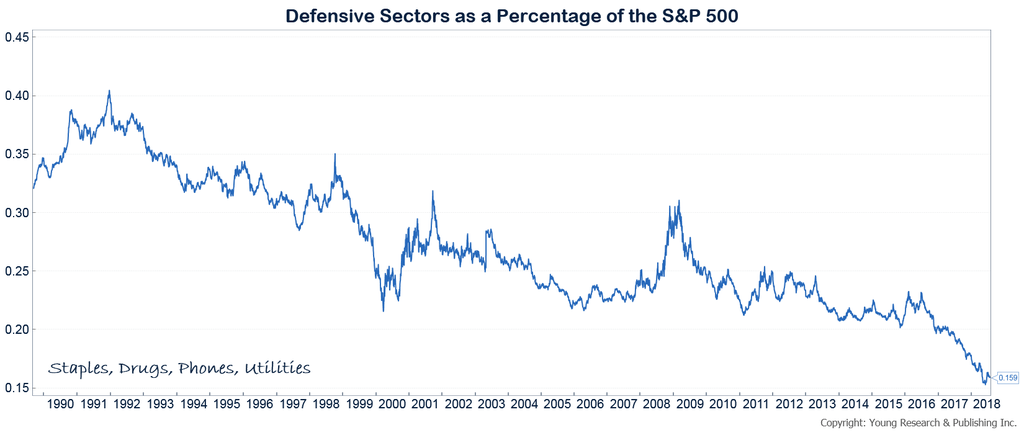
The S&P 500 Index is not as diversified as many investors think. In fact, the IT sector alone accounts for just over 25% of the index and the weightage of the defensive sector has fallen continuously since the 1990s.
S&P 500 sector breakdown:
Click to enlarge
Source: S&P
The defensive sector used to account for 35% to 40% in the early 1990s. Since then it has declined to reach 16% now. In the past two the decline in weightage has accelerated sharply according to Matthew A. Young of Young Investments.
Click to enlarge
Source: July 2018 Client Letter: Are you Prepared for the Next Stock Market Downturn?, Young Investments
The high allocation to the tech sector is big risk for investors especially during market corrections or a bear market. From the above article:
If the S&P 500 was able to fall more than 50% during the last two big bear markets when defensive stocks were a greater share of the index, what happens during the next big bear market?
The biggest sector in the S&P 500 today is technology. During the dotcom bust, the S&P 500 technology index plunged 83%, eviscerating the savings of millions of investors loaded to the gills with technology shares.
According to the most recent Bank of America Merrill Lynch Fund Managers Survey, the most crowded trade on Wall Street today is big technology stocks.
Unsuspecting index-based ETF investors may have an unpleasant surprise in store during the next market downturn. That seems to be the opinion of Jim Rogers. Rogers was the co-founder of the Quantum Fund, one of the most profitable hedge funds on record. Rogers expects the next bear market to be “horrendous”—maybe even the “worst”—and he thinks ETFs could collapse more than anything else because that’s what everybody owns. ETFs are of course supposed to trade near the underlying value of their assets, but during sharp market moves we have seen prices diverge widely from the underlying value of those assets.
The key takeaway for investors is that the S&P 500 should not be considered as well diversified. Hence products derived off of the index such as ETFs or mutual funds will perform poorly in adverse market conditions.
Related ETF:
Disclosure: No Positions
Many multi-national firms based in the developed world have substantial exposure to overseas markets than their domestic markets. In fact, some derive a big portion of their revenue and earnings in foreign countries than their home countries. For instance, BHP Billiton Ltd is a FTSE 100 firm in the UK. However the mining giant earns most of its earnings from abroad for obvious reasons that the UK is an island and does not have many natural resources. So when looking for foreign stocks it is important to understand where they are most exposed to. In the BHP example, it is more dependent on the global economy than the British economy. So investing in BHP to gain exposure to the UK market will not be a wise move.
I came across an article recently that discussed the factors to consider for diversification using the MSCI Europe as an example. From the article:
Globalization has changed the diversification game. For decades investors could diversify their exposure to U.S. stocks by buying baskets of companies based overseas. But new global trade patterns have turned ideas and information, not just manufactured goods, into valuable products. This shift has blurred the lines and turned companies’ physical headquarters into just a mailing address. Successful global companies often collect more revenue outside their own home country borders. For instance, a review of S&P 500 company revenues shows that about 37% is derived from outside the U.S. Meanwhile, the 10 largest companies in the MSCI Europe Index get approximately 69% of revenues from outside Europe, in part due to slower growth in their region and better opportunities abroad.
Source: Global investing reality check, Capital Group
The companies listed above are shown below with their ADR tickers and current dividend yields:
1.Company: Royal Dutch Shell PLC (RDS.A)
Current Dividend Yield: 5.50%
Sector: Oil, Gas & Consumable Fuels
Country: UK
2.Company: Nestle SA (NSRGY)
Current Dividend Yield: 3.10%
Sector: Food Products
Country: Switzerland
3.Company: Novartis AG (NVS)
Current Dividend Yield: 3.50%
Sector: Pharmaceuticals
Country: Switzerland
4.Company: HSBC Holdings PLC (HSBC)
Current Dividend Yield: 5.27%
Sector: Banking
Country: UK
5.Company: Roche Holding AG (RHHBY)
Current Dividend Yield: 3.53%
Sector: Pharmaceuticals
Country: Switzerland
6.Company: BP PLC (BP)
Current Dividend Yield: 5.46%
Sector:Oil, Gas & Consumable Fuels
Country: UK
7.Company: Total SA (TOT)
Current Dividend Yield: 4.53%
Sector:Oil, Gas & Consumable Fuels
Country: France
8.Company: British American Tobacco PLC (BTI)
Current Dividend Yield: 6.03%
Sector:Tobacco
Country: UK
9.Company: Siemens AG (SIEGY)
Current Dividend Yield: 3.25%
Sector:Industrial Conglomerates
Country: Germany
10.Company: Sanofi (SNY)
Current Dividend Yield: 4.13%
Sector: Pharmaceuticals
Country: France
Note: Dividend yields noted above are as of Aug 1, 2018. Data is known to be accurate from sources used.Please use your own due diligence before making any investment decisions.
Disclosure: No Positions
The above firms, except HSBC, are excellent multi-national firms with established track records. Investors looking to diversify with European companies can consider adding them in phases.
