OECD Countries Ranked in Controlling Coronavirus

Australia is called as The Lucky Country due to all the advantages it has including the abundance of natural resources. In an article today Dr.Shane Oliver at AMP Capital writes on the reasons why Australian stocks are likely to outperform in 2021. One of the reasons he notes is on the success of Australia in controlling the coronavirus.

Below is an excerpt from the article:

First, better virus control

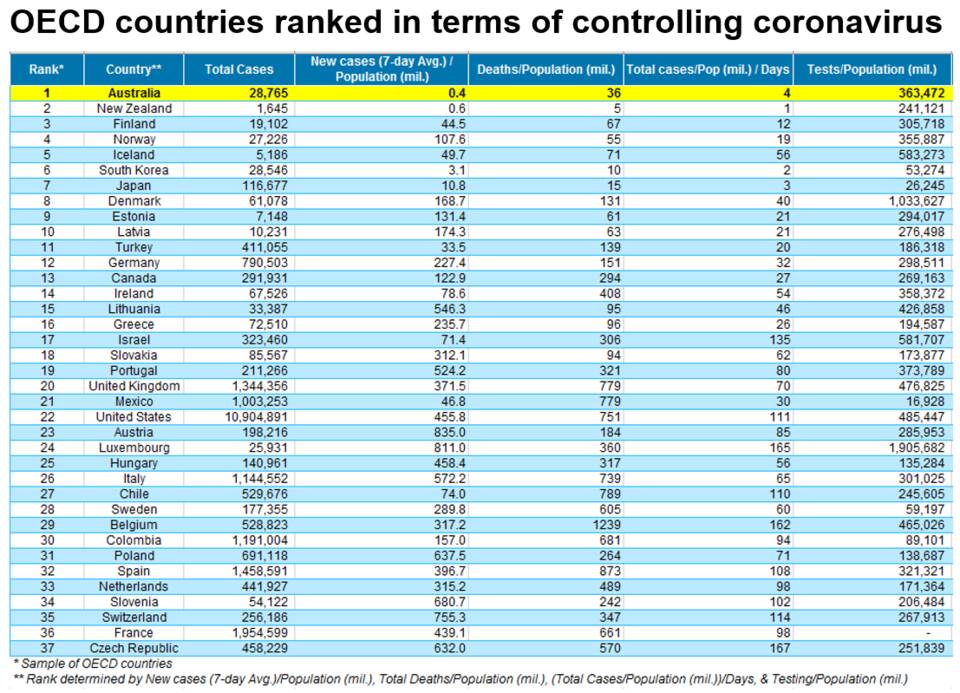
Australia’s success in “controlling” coronavirus continues to stand out globally (touch wood). Comparing OECD countries in how they are managing the coronavirus outbreak (based on new cases per capita, deaths per capita, total cases per capita and testing per capita) Australia ranks first, with NZ 2nd (this has been flipping around) compared to the US at 22nd, Sweden at 28th, Spain at 32nd and France at 36th. See the next table.

Less congested living, better weather, a younger population and luck may have all played a role, but the big driver looks to have been a public health response based on expert medical advice as opposed to bravado and crackpot theories. This has been characterised by rigorous contact tracing, quarantining and timely and targeted distancing and containment measures. Our institutions have been working well together across various levels of government – in contrast to the US where President Trump has contradicted and weakened the message. And the overwhelming majority of Australians have done the right thing.
Source: Still The Lucky Country – five reasons why Australian shares are likely to outperform in the year ahead by Dr.Shane Oliver, AMP Capital

The complete article is worth a read.

Why Staying Invested is Very Important: A DAX Index Study

One of the critical factors that determines success with equity investing is the ability to stay invested not only during bull markets but also during bear markets. As the saying goes time in the market is important than timing the market This is because bear markets are followed by bull markets and vice versa, More specifically spectacular market crashes are often followed by violent up moves. If an investor misses these days then return on an investment can get reduced substantially. In a research study done by Sutor Bank of Germany it was observed that the DAX returned an average of 7.2% per year for the 31 year period from 1988 to 2018. But if an investor missed just the 13 best days in that period then the return was halved. This is indeed shocking!. As I mentioned earlier catching the violent up wave is important to boost returns.

From the study:

DAX: invested for 31 years = 7.2% per year; without 13 best days = return halved

Since it was founded on December 31, 1987, the Deutsche Aktien-Index (DAX) has brought investors an average return of 7.2 percent year after year – if you have invested a good 8,000 days continuously. Even temporary slumps in the course of crisis situations such as the bursting of the Dot.com bubble, Lehman, Fukushima or Greece are already taken into account.

“The history of the stock market teaches us that in six out of ten cases, the best stock market days followed within two weeks of the worst. That is noticeable, but again not a rule, otherwise you could bet on it, ”explains Lutz Neumann, Head of Asset Management at Sutor Bank. “It becomes critical if you sell for fear of a stock market low, then don’t go back into the market in time, and then miss the best trading days. Because that has dramatic effects. ”

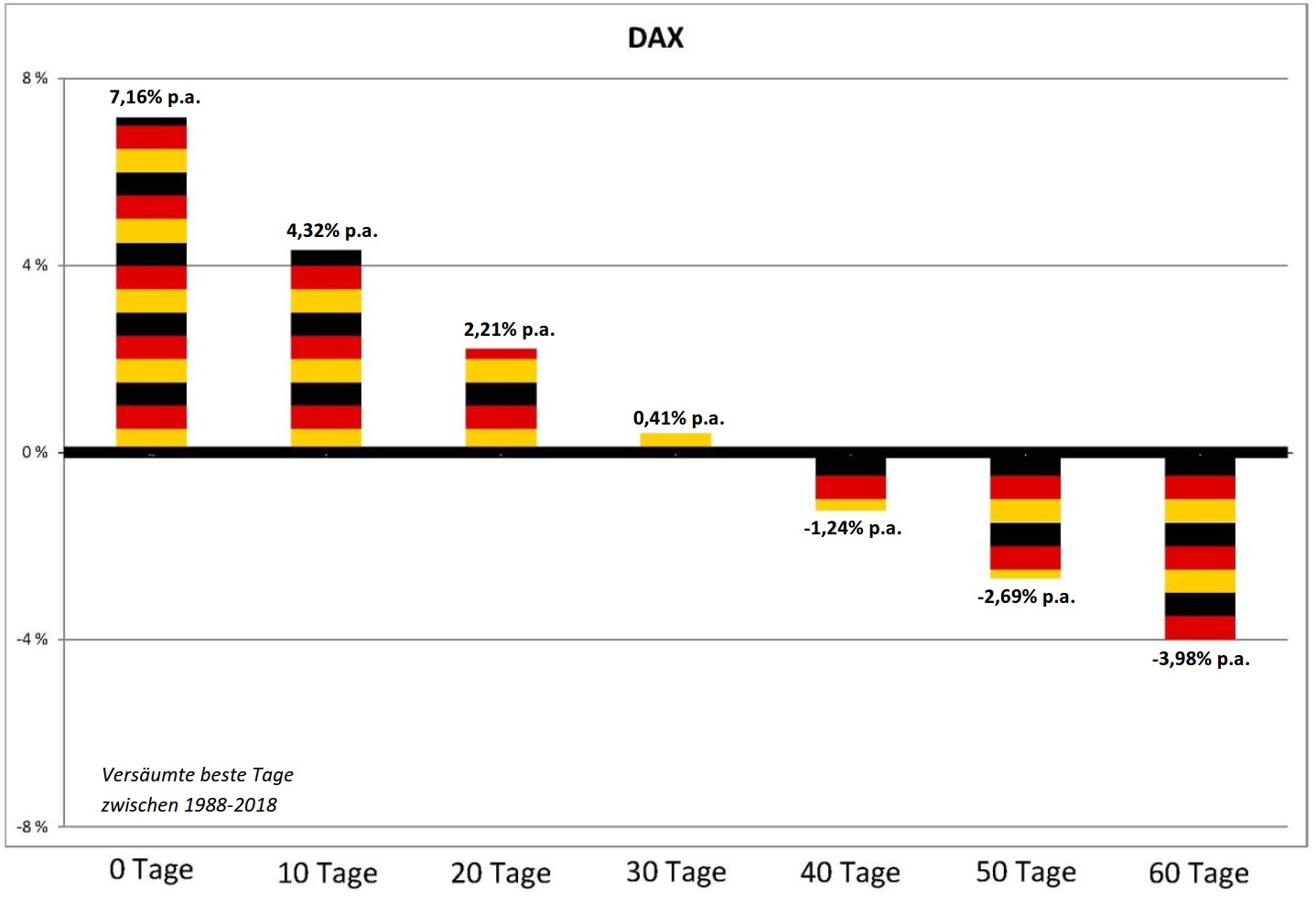
Chart 1: DAX (invested every day) vs. DAX with no best 10/20/30/40/50/60 days
Source: Sutor Bank; Observation period: 1.1.1988-31.12.2018

The analysis of the Sutor Bank showed: for an investor who missed the best 13 days in the DAX between 1988 and 2018, the return shrinks by half. If he missed the best 33 days, he would even have lost money. To put it even more pointedly: Anyone who did not invest only 0.4125 percent of the decisive trading days in the 31-year period under review has earned a negative return.

Chart 2: DAX in detail: return on investment if you missed the best days on the stock market.
Period: 1988-2018

Note: The returns are in Euros. Please use Google Translator to translate German in the charts. “Tage” in German means Days.

Source: Sutor Bank

Hap Tip: Tim Schaefer

The main takeaway is to have patience and remain calm during market declines. Simply selling our at market bottoms to get back in later won’t work. This is true in any equity market. The dramatic decline in March this year is a classic example.

Related ETF:

  •  iShares MSCI Germany ETF (EWG)

Disclosure: No Positions

The World’s 20 Leading Tire Manufacturers by Revenue in 2019: Chart

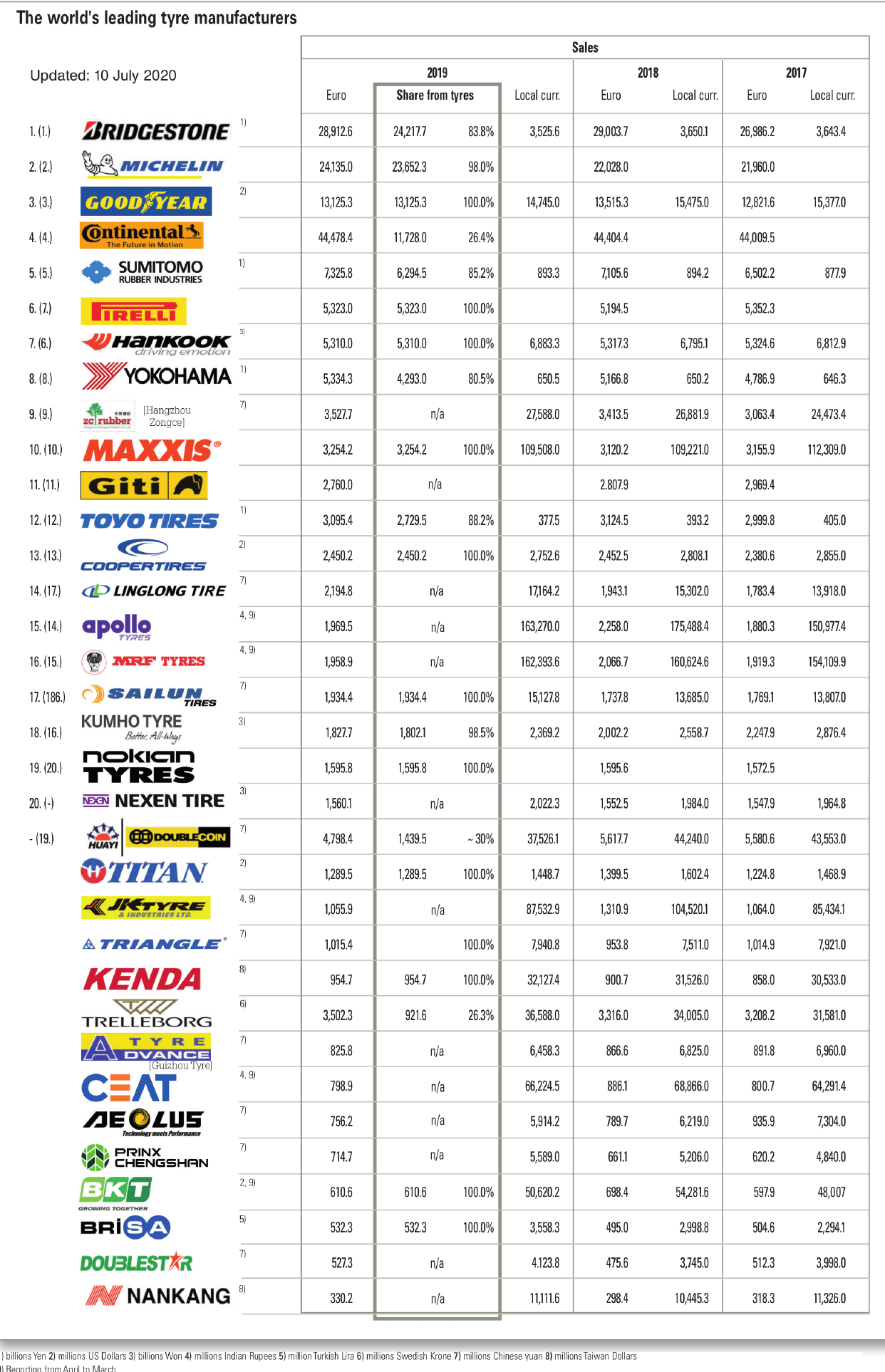
The World’s 20 Leading Tire Manufacturers based on Revenue from tires are shown in the chart below. The world’s top tire maker is Bridgestone (BRDCY) of Japan. The next top four firms are Michelin(MGDDY) of France, US-based Goodyear(GT) , Germany’s Continental (CTTAY) and Sumitomo of Japan.

Click to enlarge

Source: Tyre Press

Download:

Disclosure: Long CTTAY