The World’s Biggest Dividend Payers 2020

The world’s 1,200 largest firms by market capitalization paid out $1.26 Trillion in 2020 according to the Janus Henderson Global Dividend Index report recently. In the best case scenario Janus Henderson forecasts an increase of 5% in dividends this year. For the first time since 2015, the world’s top dividend payer was not a oil major but a tech company Microsoft(MSFT). Oil major fell from 1st in 2019 to 18th rank last year.

The World’s Biggest 20 Dividend Payers in 2020 is shown in the table below. Just these firms paid out a total nearly $199 billion in dividends.

Click to enlarge

Source: Janus Henderson Global Dividend Index, Janus Henderson Investors

Disclosure: No positions
Broad Market Diversification Can Help Avoid Large Losses

Diversification is one of the simplest ways to be successful in equity investing. Diversification can take many forms. For example, one can hold a mix of stocks, bonds, gold, real estate and cash. Or it is possible to diversify across many types of equities such as domestic and foreign or emerging, developed and frontier markets. The key is to pick a strategy that best works for each of us. Recently I came across an excellent Vanguard research study that discussed the importance of  diversification.

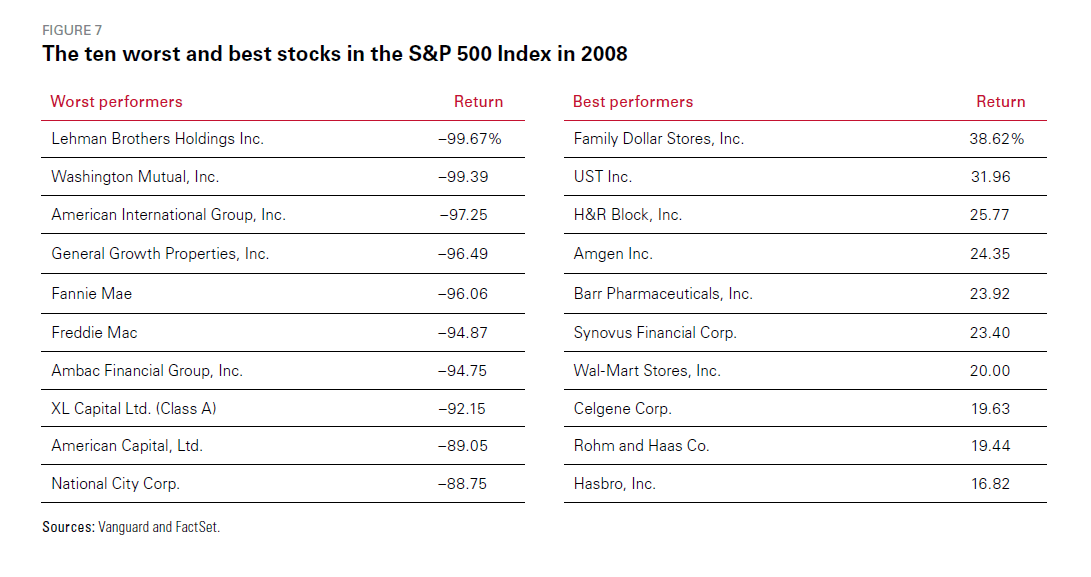
According to the study, broad market diversification cannot insure against losses but it can help reduce necessary large losses. During the 2008-09 Global Financial Crisis, the S&P 500 fell 37%. However many stocks in the index declined much more than that. Some even plunged by over 50%. Some of the companies that crashed heavily were thought of blue-chip dividend payers before. Most of these were in the financial sector. The following table shows how much losses these stocks had during that time. A portfolio heavy in this sector would have performed very poorly. On the other hand, there were also many stocks that generated strong returns in that awful year. Some of these were the best performers in the index.

Click to enlarge

Source: Vanguard’s Principles for Investing Success, Vanguard

So the key takeaway is that broad diversification cannot totally avoid losses. But it can help avoid unnecessarily large losses. In the above scenario, an investor holding an S&P 500 index fund or a basket of stocks in different industries would have done relatively very well compared to an investor with a high concentration in financial services. So even a total wipeout of disasters like Lehman Brothers would be offset by other strong stocks.

Related ETF:

  • SPDR S&P 500 ETF (SPY)

Disclosure: No Positions

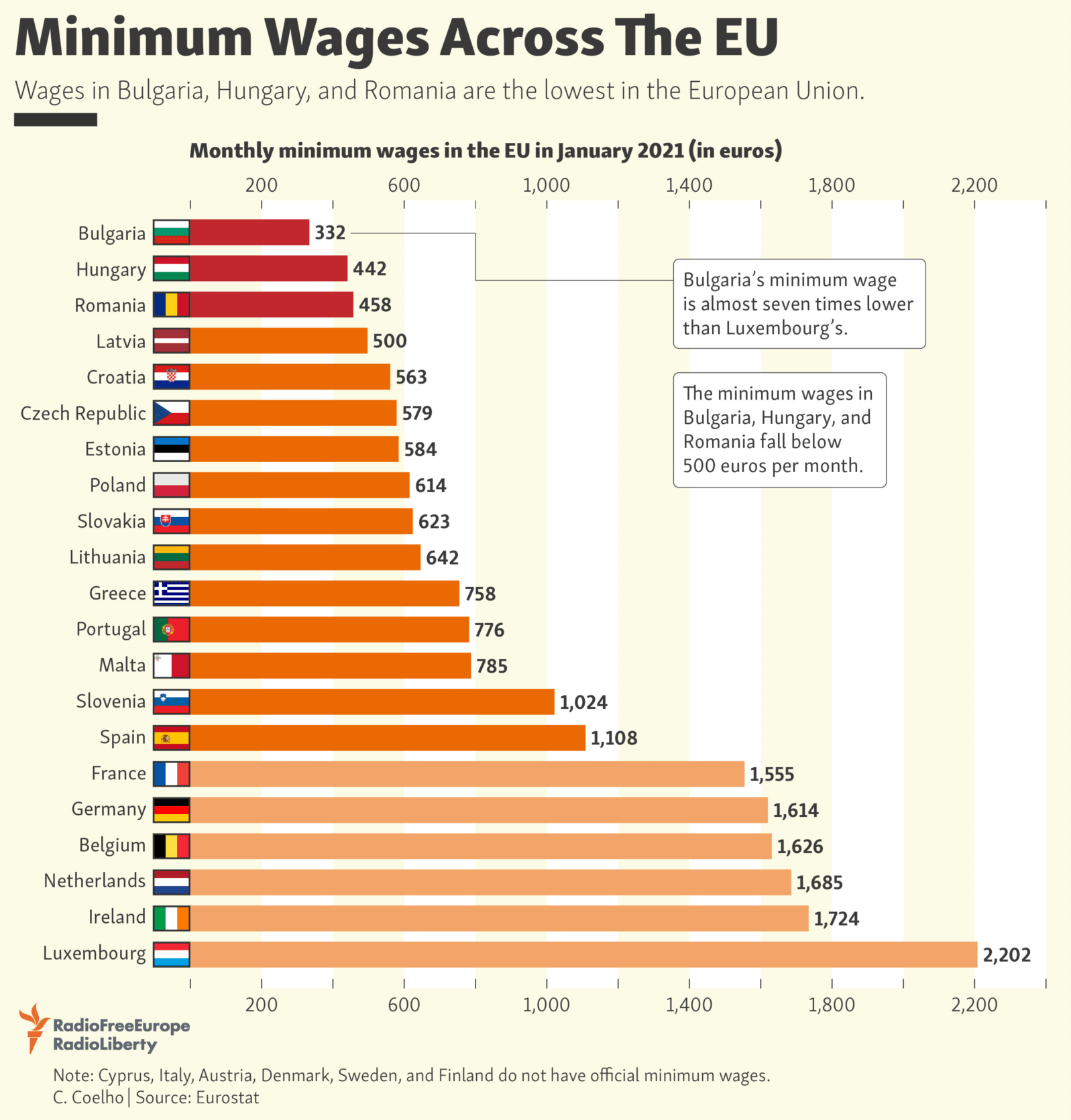
Minimum Wages Across The European Union 2021: Chart

Minimum wages vary widely across the 27 member nations of the European Union. As expected wages are high in the western part of the EU and lower in the eastern countries. Luxembourg has the highest monthly minimum wage at 2,202 Euros whereas the lowest rate is in Bulgaria at just 332 Euros. Among the east European countries Slovenia has the highest monthly wage at over 1,000 Euros.

Click to enlarge

Source: RFE/RL Infographics

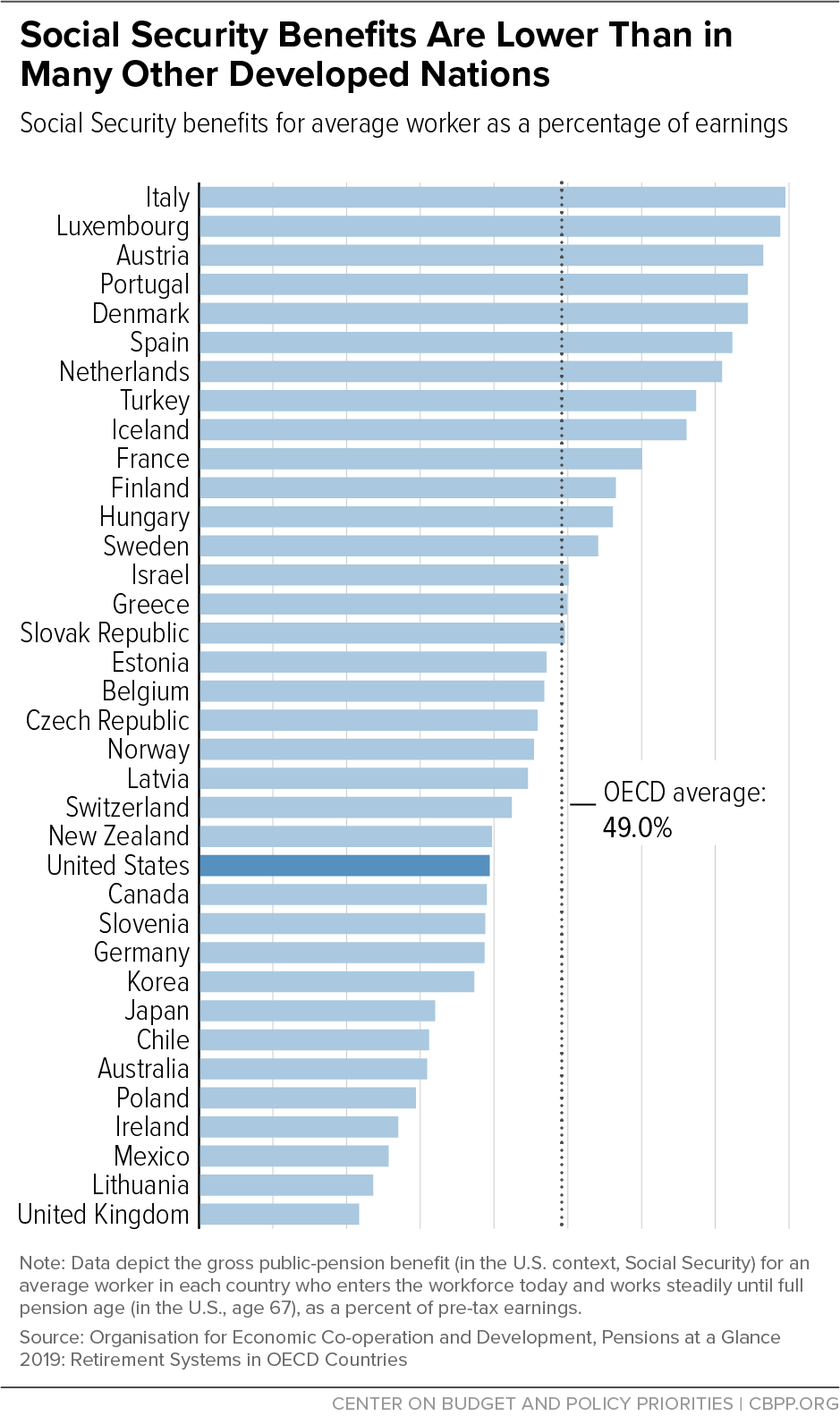
How Does Social Security Payments in the US Compare to Other Developed Countries : Chart

The Social Security is one of the main public pension system for retired Americans. Despite the presence of contribution-based retirement plans such as 401Ks, individual retirements plans, widespread popularity of equity investments including mutual funds, the good old social security payment from Uncle Sam supports a big portion of the living expenses of retired people. In fact, about half of seniors depend on social security for about 50 percent of their income. Social security benefits in the US are lower than many other developed countries according to a study by the Center on Budget and Policy Priorities.

Click to enlarge

Source: Social Security Benefits Are Modest, CBPP

The social security system in the US replaces about 40% of the earnings of a worker. The average OECD country has a public pension program similar to that of the US but covers half of the earnings.

Financial Transaction Tax Rates in Europe 2021: Chart

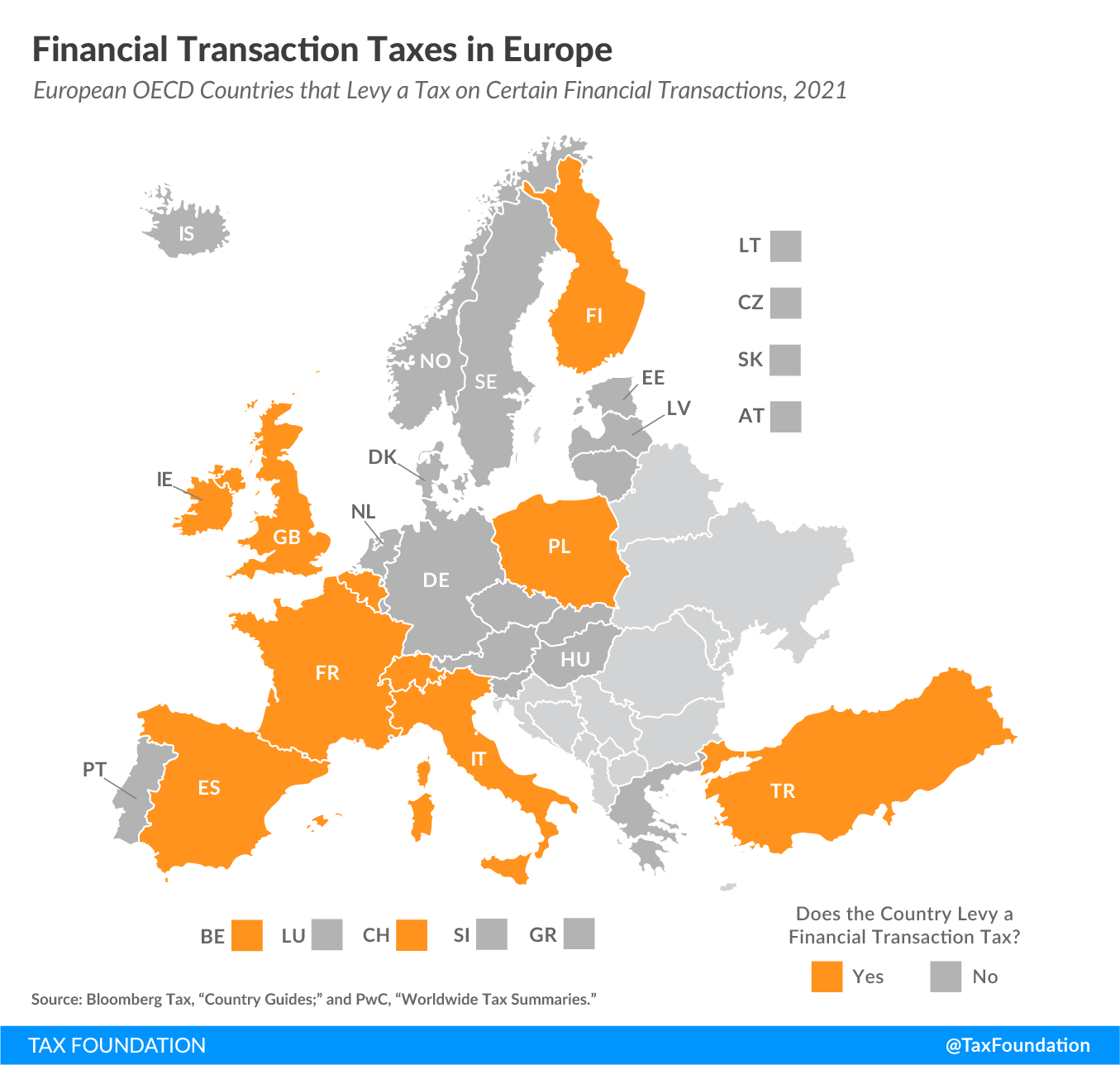
Investing in many European equities involve a tax called Financial Transaction Tax (FTT). This tax was implemented in some countries in Europe after the Financial crisis of 2008-09. In the basic sense, FTT is a levy or duty charged just for the privilege of transacting in certain financial securities including stocks.

The following chart shows which countries apply the Financial Transaction Tax for 2021:

Click to enlarge

The FTT rate varies widely across countries. The latest rate is shown in the following table:

Country Tax Rate
Belgium (BE) 0.12% – 1.32%
Finland (FI) 1.6% – 2.0%
France (FR) 0.01% – 0.30%
Ireland (IE) 1%
Italy (IT) 0.02% – 0.20%
Poland (PL) 1%
Spain (ES) 0.20%
Switzerland (CH) 0.15% – 0.30%
Turkey (TR) 0.0% – 1.0%
United Kingdom (GB) 0.5% – 1.5%
Sources: Bloomberg Tax, “Country Guides,” https://www.bloomberglaw.com/product/tax/toc_view_menu/3380; and PwC, “Worldwide Tax Summaries,” https://taxsummaries.pwc.com/.

Source: Financial Transaction Taxes in Europe by Elke Asen, Tax Foundation

Obviously the introduction of FTT has made European stocks unattractive to American investors. In addition to FTT, US investors in ADRs pay additional charges like a Dividend Withholding Tax and an ADR fee, if applicable as well.

Let’s take an example of French auto parts maker Valeo(VLEEY). An investor buying 100 shares would pay the following FTT:

VLEEY price on 2/19/21 = $19.48

For 100 shares = $1,948.00

FTT at 0.30% for $1,948 = $5.85

The FTT amount would be charged at the time of both buying and selling. Assuming the investor sells at the same $19.48 price, would pay a second FTT of $5.85. Because the FTT is a percentage and not a fixed amount, of course if the investor sells at a higher share price, he/she would pay a higher FTT as well.

On top of this, any dividends paid out will be reduced by 26.5% for dividend withholding taxes. Finally the ADR fee of $0.02 per ADR would be charged annually. So that would be $2.00. Usually this amount is deducted from the dividend paid to make it easier for investors. If a company does not pay a dividend, then it will be taken from the cash portion of an account.

Of course if the stock goes to $0, one would lose not only the original investment but also ends paying the FTT for nothing. This benefits the French government as some kind of free money donated by unknown nameless strangers from a foreign land.

The recent GameStop saga has some calling for the introduction of the FTT by the US. However it is unlikely to gain traction in the US.

Disclosure: Long VLEEY