Top 10 Brazilian Banks by Assets

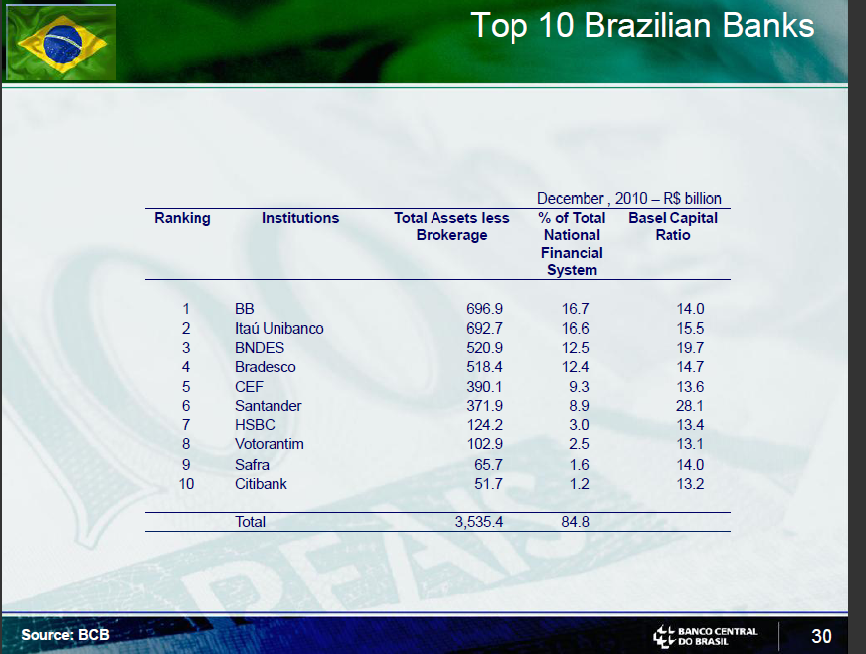
The Top 10 Brazilian Banks based on Assets held as of December 2010 are listed below:

Click to enlarge
Top-10-Brazil-Banks

Source: Banco Central Do Brasil

The top bank in this list is the state-owned Banco Do Brasil (BDORY). Its ADR currently pays a 1.12% dividend yield. The second largest bank is Itaú Unibanco Holding S.A. (ITUB) which is the largest private-sector bank in Brazil and has a 1.61% yield. A $10K investment 5 years ago would have grown to $21,878 as of May 1st, 2011 according to a S&P research report. For the first quarter the bank announced higher net earnings relative to the same period last year as its credit portfolio continues to expand.

Banco Bradesco (BBD) is the second largest private sector Brazilian bank. Like it rival Itau Unibanco, Bradesco also reported strong earnings for 1Q, 2011. Among the foreign bank subsidiaries in the above list Spain’s Santander (STD), UK-based HSBC (HBC) and US-based Citibank (C). Of these three banks Santander has the largest asset base in Brazil.

Disclosure: Long STD, BBD, ITUB
8 Economic Charts of BRICs

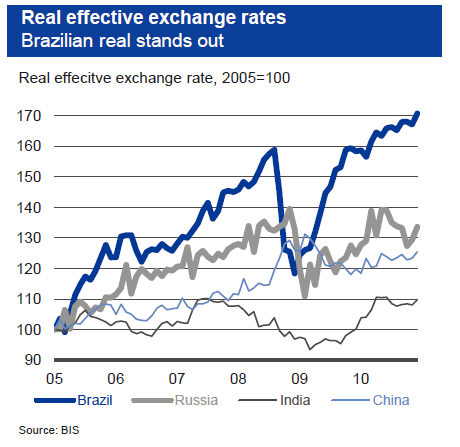
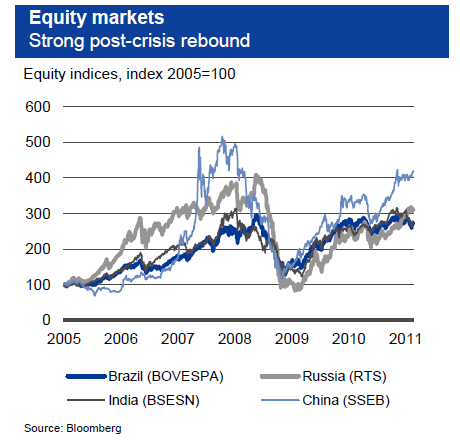
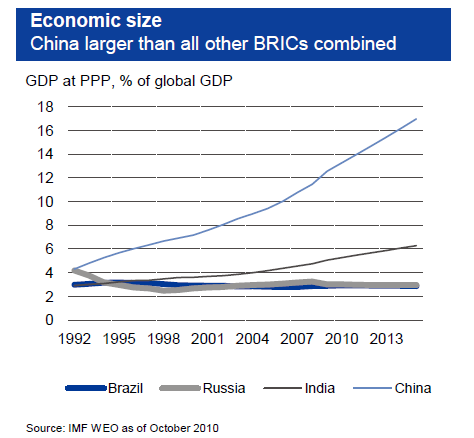
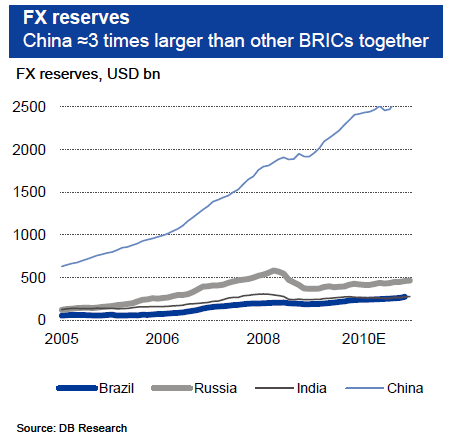
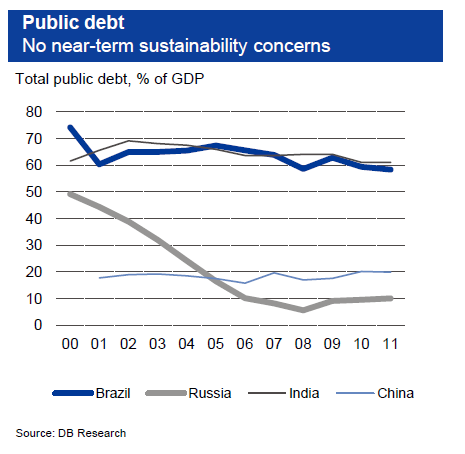
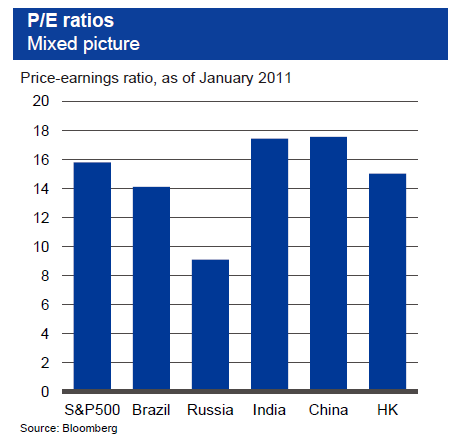
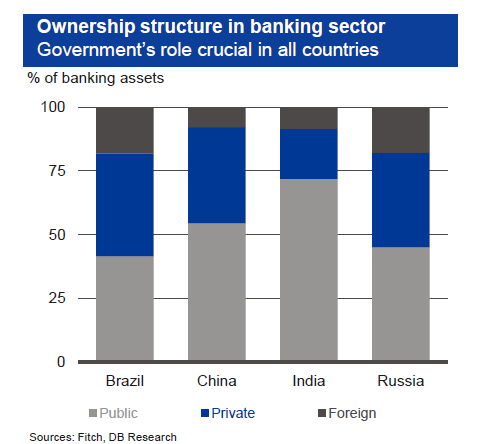
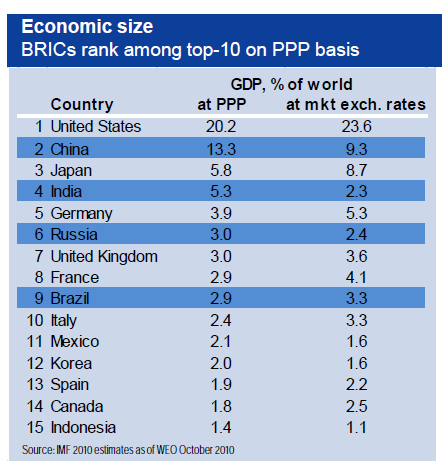
The equity markets markets of BRIC countries are not soaring this year.Brazil and India are down while China and Russia are up YTD compared to S&P’s fall of 1.90%. However the economies of BRICs continues to be strong and their growth is projected to outpace that of developed countries this year as well.

Deutsche Bank’s Research projects real GDP growth of 4.5%, 5.5%, 8.2% and 9% for Brazil, Russia, India and China respectively for 2011.The current weakness in BRIC equities offers an opportunity for investors looking to gain exposure to these countries. Some of the positive factors of the BRIC countries include strong Foreign Direct Investment (FDI) flows, low government debt, large balance-of-payments surpluses, lower labor costs, rising middle class, high foreign exchange reserves, etc.

The following eight charts offer some insight into the BRIC economies:

1-bric-chart.png

2-bric-chart.png

3-bric-chart.png

4-bric-chart.png

5-bric-chart.png

6-bric-chart.png

7-bric-chart.png

8-bric-chart.png

Source: BRIC Capital Markets Monitor, February 2011, Deutsche Bank Research

Related ETFs:

WisdomTree India Earnings (EPI)
PowerShares India (PIN)
iShares S&P India Nifty 50 (INDY)
iShares MSCI Emerging Markets Indx (EEM)
EGShares Brazil Infrastructure ETF (BRXX)
iShares MSCI Brazil Index (EWZ)
Market Vectors Russia ETF (RSX)
iShares FTSE/Xinhua China 25 Index Fund (FXI)

Disclosure: No Positions

The Largest Hole in the World

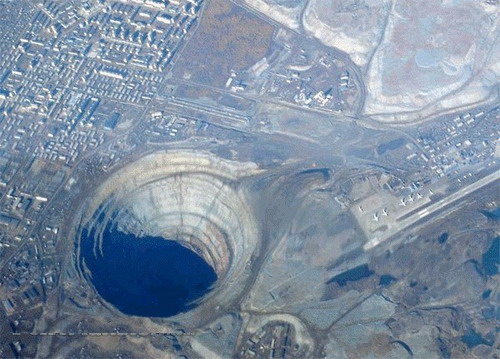
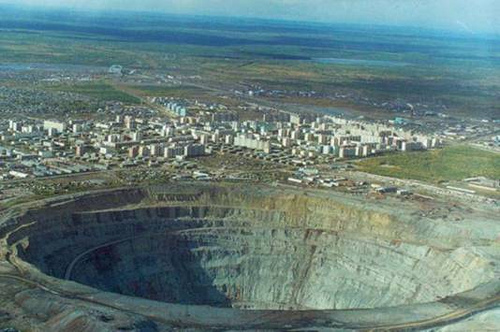
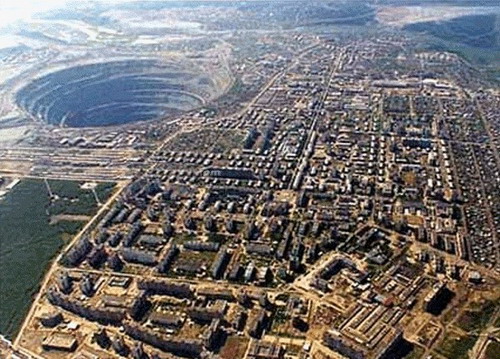
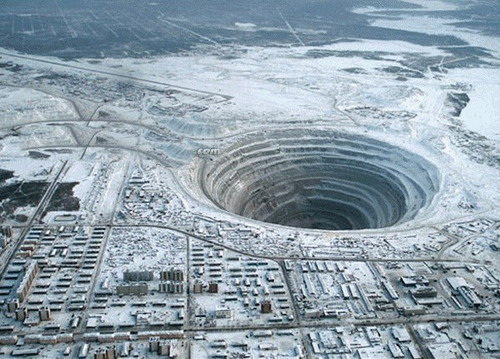
The largest hole in the world is a diamond mine in Mirny, Siberia – just below the Arctic Circle. According to Wikipedia, the mine is 525 meters (1,722 ft) deep (4th in the world) and has a diameter of 1,200 m (3,900 ft).

Photos:

mirna-diamond-mine.jpg

diamond-mine-hole.jpg

mirna-diamond-mine-4.jpg

mirna-diamond_mine_03.jpg

From the BBC:

The town was founded in 1955 when geologists came to exploit the area’s substantial mineral wealth. The town is strictly off limits to outsiders without a special permit and the authorities regard any foreigners with considerable suspicion. The Mir mine was the first and the largest diamond mine in the Soviet Union.Its surface operation lasted 44 years, finally closing in June 2001.

 For more info checkout:

http://en.wikipedia.org/wiki/Mir_mine

Google Images Link


Consumption, Investment Contribution to China’s GDP Growth

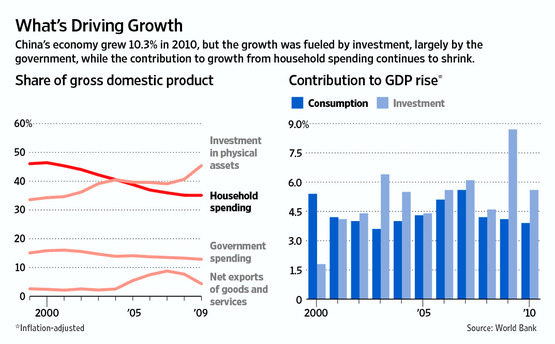
Consumer spending accounts for over 70% of the U.S. economy.China on the other hand is not a consumer-driven economy. Despite the tremendous growth in recent years, consumer spending is relatively less in China. Much of the growth reported by China comes from investment spending rather than consumption spending.

china-gdp-growth-composition.jpg

Source: The Wall Street Journal

The chart above shows that household’s contribution to China’s GDP has been shrinking since 2008. Consumer spending accounts for just 35% of the China’s GDP – about half the level of the U.S. Hence from an investment standpoint the takeaway is that investors must focus on companies that are involved in the infrastructure space instead of firms catering to consumer demands such as retailers, fast-food chains, etc. Some of the foreign firms helping China build its infrastructure include ABB (ABB), General Electric (GE), Siemens (SI), Areva (ARVCY), etc.

Disclosure: No positions

Australia’s Awesome Four Banks

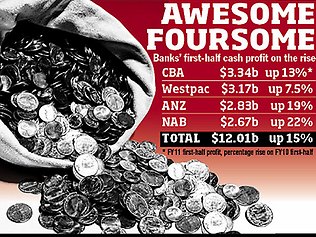
Australia’s four leading banks have reported strong earnings for the six months to March this year. With National Australia Bank’s reported profits of A$2.67 billion for half-year, the four banks’ combined total profits is a record $12 billion as shown in the graphic below:

australia-bank-profits.jpg

Source:News.com.au

In addition to rising profits, NAB and rivals have announced declining charges for bad debts and improving figures for late payments of mortgage payments.

After weathering the great financial crisis well, Australia’s banks are in stronger position to take advantage of the growth in emerging Asian economies due to their close proximity to those economies. The four banks are listed below together with their current dividend yields and stock prices:

1.Bank:National Australia Bank Ltd (OTC:NABZY)
Current Share Price: $28.42
Current Dividend Yield: 5.48%

2.Bank:Australia And New Zealand Banking Group Ltd (OTC:ANZBY)
Current Share Price: $24.69
Current Dividend Yield: 5.82%

3.Bank:Commonwealth Bank Of Australia (OTC:CMWAY)
Current Share Price: $56.23
Current Dividend Yield: 4.83%

4.Bank:Westpac Banking Corp (NYSE:WBK)
Current Share Price: $124.86
Current Dividend Yield: 5.68%

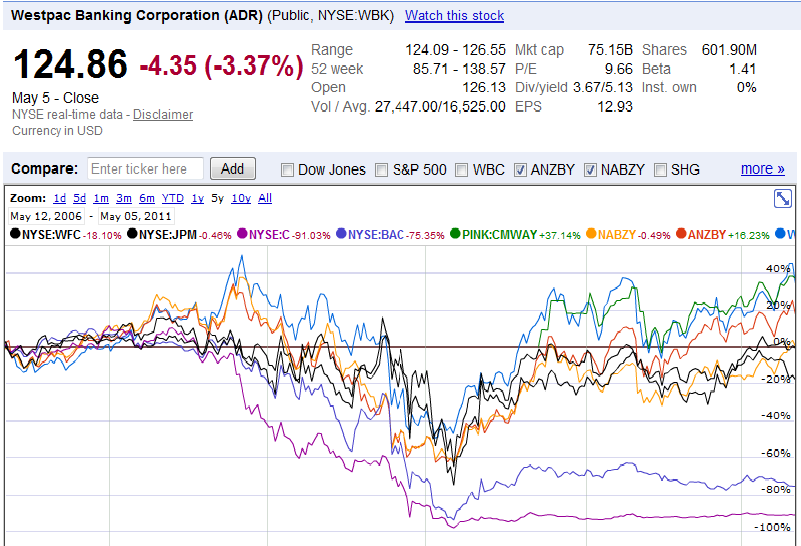
The chart below shows the 5-year performance comparison of the above banks against four large U.S. banks:

Click to enlarge

four-us-aussie-banks-compare.png

Disclosure: No positions