Schroders: Valuations Of European Stocks Are Compelling Now

Schroders, a UK-based Asset Manager, is bullish on European stocks for 2016. In the Outlook 2016: European Equities report published on November 24th, Rory Bateman, Head of UK & European Equities noted:

At the time of writing, the MSCI Europe equity index has delivered a total return of around 10% this year and we believe investors should see further gains in 2016 given the continued earnings recovery in Europe.

After years of under-performing other developed countries, European economies are well positioned to catch up. Already this year, major European market indices are ahead of the benchmark US indices.

From the report:

Scope for profit margins to improve

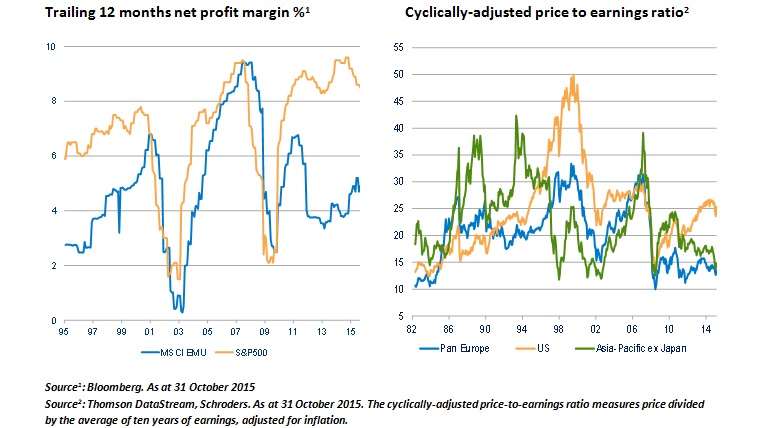
Corporate profit margins within the eurozone particularly remain at depressed levels relative to the US.

This gap has been significant since the global financial crisis and a narrowing of the disparity would support European shares.

At the same time, valuations are compelling versus historical levels and most other equity markets.

Click to enlarge
Stacked containers in a shipping terminal


Source: Outlook 2016: European Equities, Schroders

Based on the P/E ratio shown above, US stocks are expensive now and European stocks are cheaper on a relative basis and historical basis.

So investors looking to gain exposure to Europe can consider adding equities in the cyclical and defensive sectors. Cyclical stocks tend to perform well at the start of the economic recovery phase and growth stocks are good to hold when recovery is well underway. Cyclicals by definition grow and fall with the state of the economy.

Five European stocks are listed below with their current dividend yields for further research:

1.Company: Danone SA (DANOY)
Current Dividend Yield: 2.45%
Sector:Food Products
Country: France

2.Company: BASF SE (BASFY)
Current Dividend Yield: 3.77%
Sector:Chemicals
Country: Germany

3.Company: adidas AG (ADDYY)
Current Dividend Yield: 1.78%
Sector:Textiles, Apparel & Luxury Goods
Country: Germany

4.Company: Safran (SAFRY)
Current Dividend Yield: 1.91%
Sector:Aerospace and Defense
Country: France

5.Company: Edp Energias De Portugal SA (EDPFY)
Current Dividend Yield: 6.17%
Sector:  Electric Utilities
Country: Portugal

Note: Dividend yields noted above are as of Nov 30, 2015. Data is known to be accurate from sources used.Please use your own due diligence before making any investment decisions.

Disclosure: No Positions

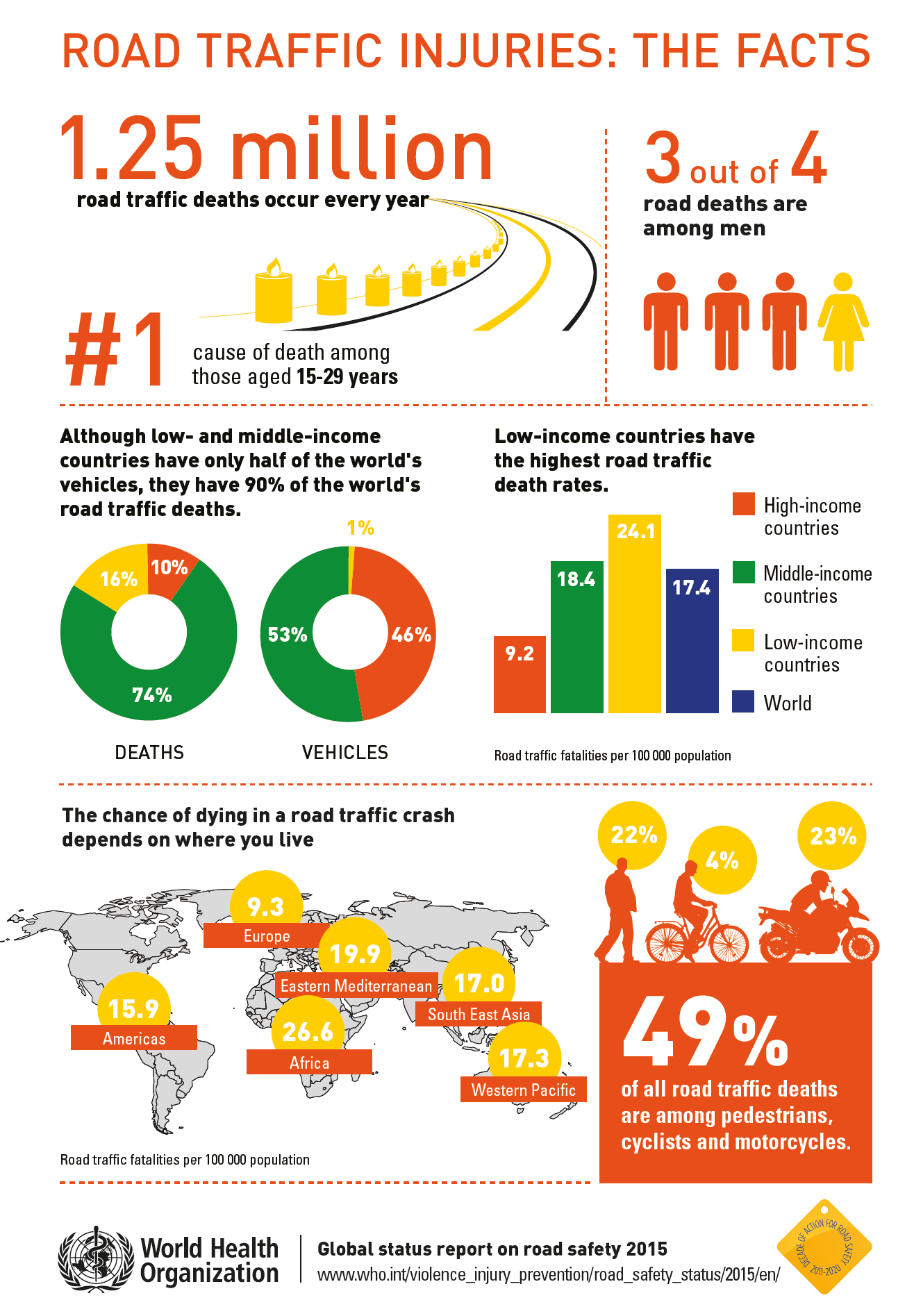
Infographic: Facts on Global Road Traffic Deaths

Some 1.25 million people die in road accidents according to the WHO. Developing and Frontier countries have much higher traffic road death rates than the developed world.  High speed and lack or enforcement of road safety laws are some of the factors that lead to unnecessary death and injuries in those countries.

Click to enlarge

Global Road Traffic Deaths Chart

Source: Global status report on road safety 2015, WHO

Ten British Dividend Stocks To Consider For Next Year And Beyond

U.S. investors looking for foreign dividend stocks can find interesting opportunities in the British equity market. British stocks offer many advantages for American investors especially with respect to dividend withholding taxes. Unlike many other developed and emerging countries, the UK does NOT deduct withholding taxes on dividend payments from UK corporations to US investors. However a 20% tax will be withhold for dividends paid out by UK REITs.

Many large cap British firms in the FTSE 100 index derive high portion of their revenues from overseas markets. For example, mining firms mostly earn most of their revenues from countries outside of the UK. However due to the ongoing chaos in the commodity market mining stocks can be avoided. Some of the sectors that US investors can consider for hunting dividend payers include insurance, utilities, consumer discretionary, telecom, etc. Electric utilities for example are logical to own because they earn most of its revenues from consumers in the UK.

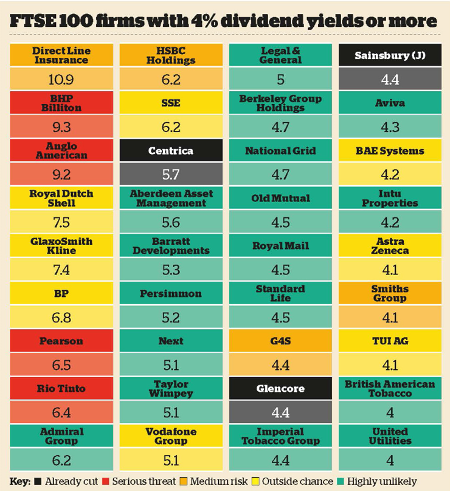
I came across an interesting article by Lee Wild at the UK-based equity trading firm Interactive investor that discussed the safest and riskiest dividend stocks in the FTSE 100. From the article:

Dividend income is still one of the biggest shows in town, and above-inflation increases in the annual payout are highly prized. It’s down to record low interest rates which make generating anything like decent income from other liquid asset classes incredibly difficult. But not all blue chip dividends are safe. In fact, some are downright dangerous.

We’ve put together a colour-coded graphic (see below) which includes every FTSE 100 (UKX) company currently yielding 4% or more. It’s accompanied by some relevant data (bottom of the article), which together give us a pretty good clue whether dividends are sustainable, and who might be next to cut, or even scrap the payout.

Click to enlarge

UK Dividend Stocks

We’ve included dividend cover as a key measure of affordability, of course. It tells us how many times a company can pay its dividend from profits, and is probably the first measure investors look at when judging a company’s ability to return cash to shareholders. Anything less than 1.5 times may cause sleepless nights.

Then there’s the payout ratio – the percentage of earnings paid out to shareholders as dividends. A figure of around 60% would be considered attractive, but a drop in profits may mean some companies pay out 100% or more. That implies they’re borrowing to keep dividend seekers happy, which is not a long-term solution.

It’s worth looking at return on equity (ROE), too. It shows how much a company makes with each pound of shareholders’ equity. But while it can be useful, the measure might not always tell us the whole truth. Either writing down assets, or raising debt would reduce book value, increasing ROE.

That’s why a lot of professional investors use cash return on capital invested (CROCI). It’s a valuation multiple which calculates how much free cash flow per pound is generated by the company from invested capital. It removes non-cash items like depreciation and amortization, and tells us a lot about management performance and how strong the underlying business is. Again, a higher ratio is better.

Color Coding in Chart: Red means dividend is in danger and green means safety.

Source: FTSE 100’s safest and riskiest dividends named, Interactive Investor Ltd, Nov 27, 2015

NOTE: The Dividend Yields noted above are for the common equity traded on the domestic market (i.e. they do not represent the yields on ADRs). 

Some of the British stocks from the above chart that trade on the US markets are listed below with their current dividend yields:

1.Company: British American Tobacco PLC (BTI)
Current Dividend Yield: 3.99%
Sector:Tobacco

2.Company: United Utilities PLC (UUGRY)
Current Dividend Yield: 3.96%
Sector: Water Utilities

3.Company: BAE Systems (BAESY)
Current Dividend Yield: 4.07%
Sector: Aerospace and Defense

4.Company: Aviva PLC (AV)
Current Dividend Yield: 3.82%
Sector: Insurance

5.Company: Imperial Tobacco PLC (ITYBY)
Current Dividend Yield: 1.97%
Sector:Tobacco

6.Company: National Grid PLC (NGG)
Current Dividend Yield: 4.73%
Sector: Multi-Utilities

7.Company: Legal & General PLC (LGGNY)
Current Dividend Yield: 4.36%
Sector: Insurance

8.Company: Vodafone Group PLC (VOD)
Current Dividend Yield: 5.17%
Sector: Wireless Telecom

9.Company: GlaxoSmithKline (GSK)
Current Dividend Yield: 5.96%
Sector: Pharmaceuticals

10.Company: AstraZeneca PLC (AZN)
Current Dividend Yield: 4.11%
Sector: Pharmaceuticals

Note: Dividend yields noted above are as of Nov 27, 2015. Data is known to be accurate from sources used.Please use your own due diligence before making any investment decisions.

Disclosure: No Positions
How Many People Suffer From Diabetes Globally?

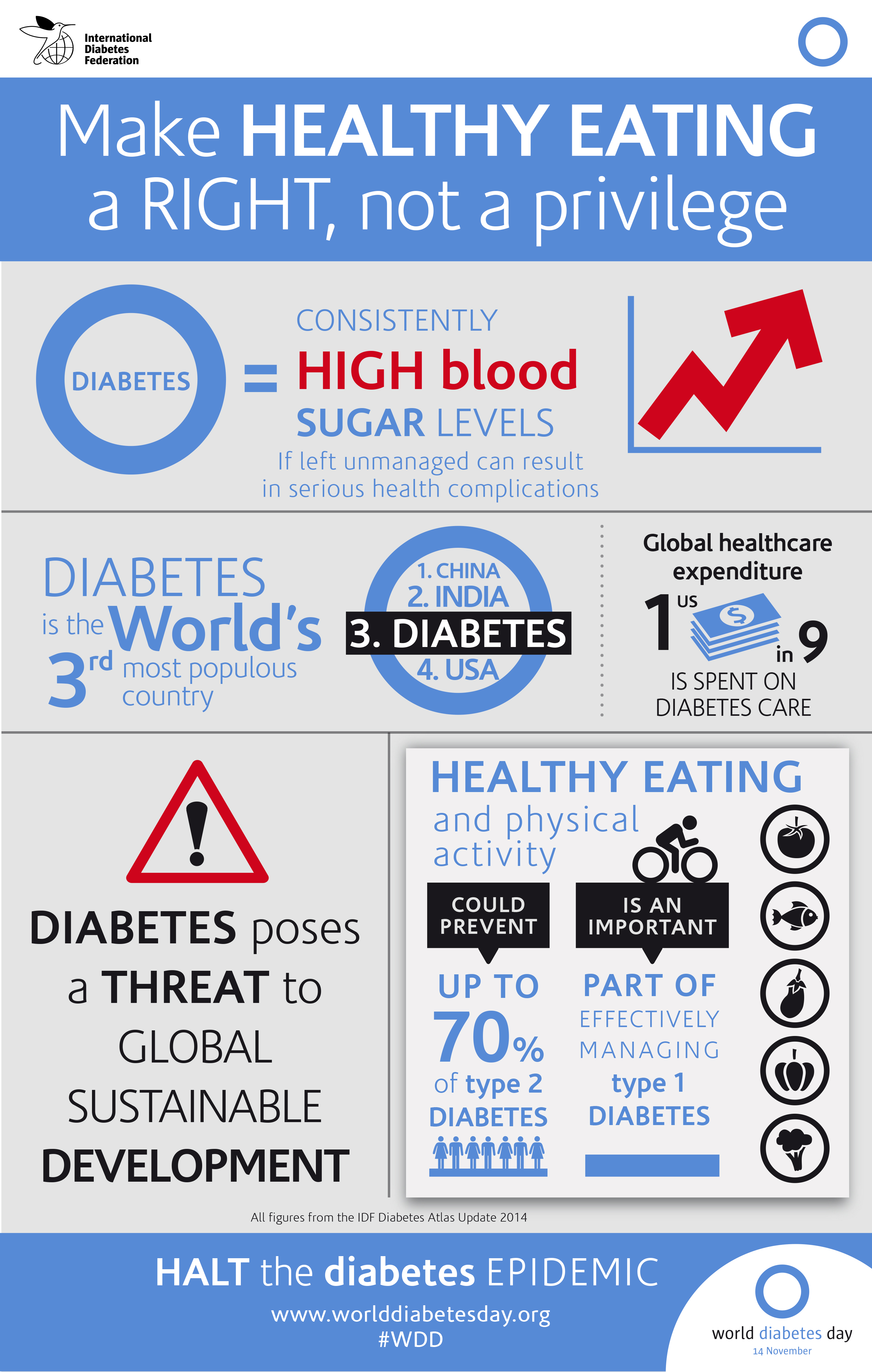
The World Diabetes Day was on November 14.Diabetes affects millions of people worldwide. According to The International Diabetes Association, total population affected by diabetes is high enough to make it the third most populous country behind China and India. This shocking statistic shows the scale of this disease. Diabetes is becoming a growing epidemic in many emerging countries as the food habits and lifestyle of the population change due to rising income levels and standard of living.

The infographic below shows some interesting facts about this disease:

Click to enlarge

infographic_1_081115_VF1

Global health spending to treat diabetes and manage its complications was estimated at 612 billion dollars in 2014. That figure is set to explode if diabetes continues its epidemic growth. There may not be a cure for diabetes right now, but it can be dramatically reduced and even prevented by adopting a healthier lifestyle. However, a nutritional diet filled with fresh fruits and vegetables, whole grains and lean meat is not always financially possible; particularly for people living in middle- and low-income countries.

Source: A sustainable diet, Allianz

It is not surprising that Diabetes is a huge market opportunity for pharmaceutical companies. The top company in terms of 2014 sales for curing diabetes is Denmark-based Novo Nordisk(NVO). The other major players in the global top five companies are: Sanofi(SNY), Merck(MRK), Eli Lilly(LLY) and Astrazeneca(AZN)

Related:

Disclosure: No Positions