Why Invest In New Zealand Dividend Stocks?

Investors looking for dividend stocks should consider companies from New Zealand. Some of the reasons why New Zealand dividend equities are attractive for income are listed below:

New Zealand firms have one of the highest dividend payout ratios in the world. For example, in 2015 the payout ratio was 84% of earnings. This vastly exceeds the 48% payout ratio in the US  and 54% globally.

Click to enlarge
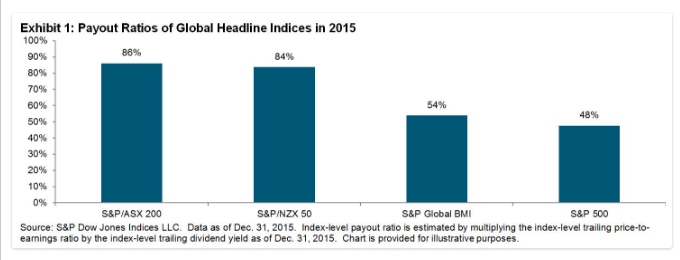
dividend-payout-ratio-of-major-indices

New Zealand tops in the payout ratio across markets for 2014 shown below:
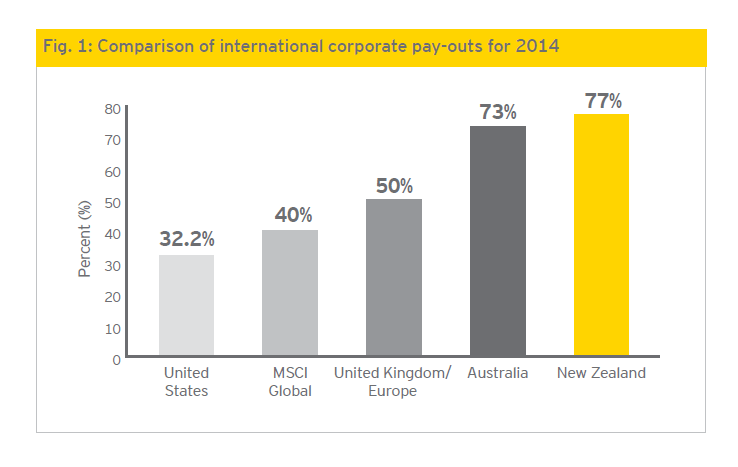
payout-ratio-new-zealand-stocks-2014

One of the main reasons for the high payout ratio is due to a unique tax policy called the dividend imputation. This simply means it prevents double taxation of dividends – once at the company-level and next at the individual level – by giving tax credits to investors on dividends received.

The total long-term return of stocks (which included price appreciation and dividend reinvestment) is boosted greatly due to the investor-friendly dividend policy as shown in the chart below:

Click to enlarge
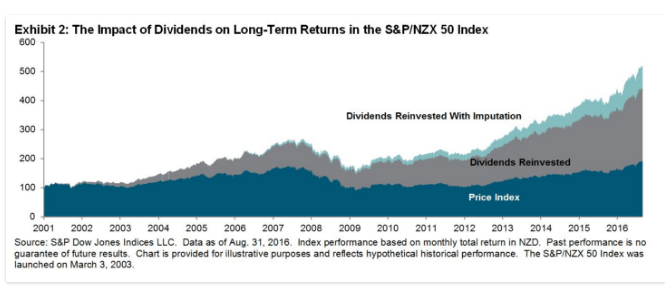
sp-nzx-50-index-long-term-returns-with-dividend-reinvested

Because New Zealand is a small country with opportunities for growth limited for companies, many prefer to distribute their profits to investors. Because investors benefit from the favorable tax regime they are satisfied with companies distributing their earnings as opposed to wasting them on some wasteful projects.

How to invest in New Zealand stocks?

It is a shame that none of the major Kiwi firms trade on the US exchanges. However over 35 stocks trading on the OTC markets some options for US investors to invest directly.

So the simplest and easiest way to gain access to New Zealand is via the iShares MSCI New Zealand Capped ETF (ENZL). It holds 27 companies and the distribution yield is 2.72%.

Sources:

Disclosure: No Positions

40 Key and Emerging Technologies for the Future: Chart

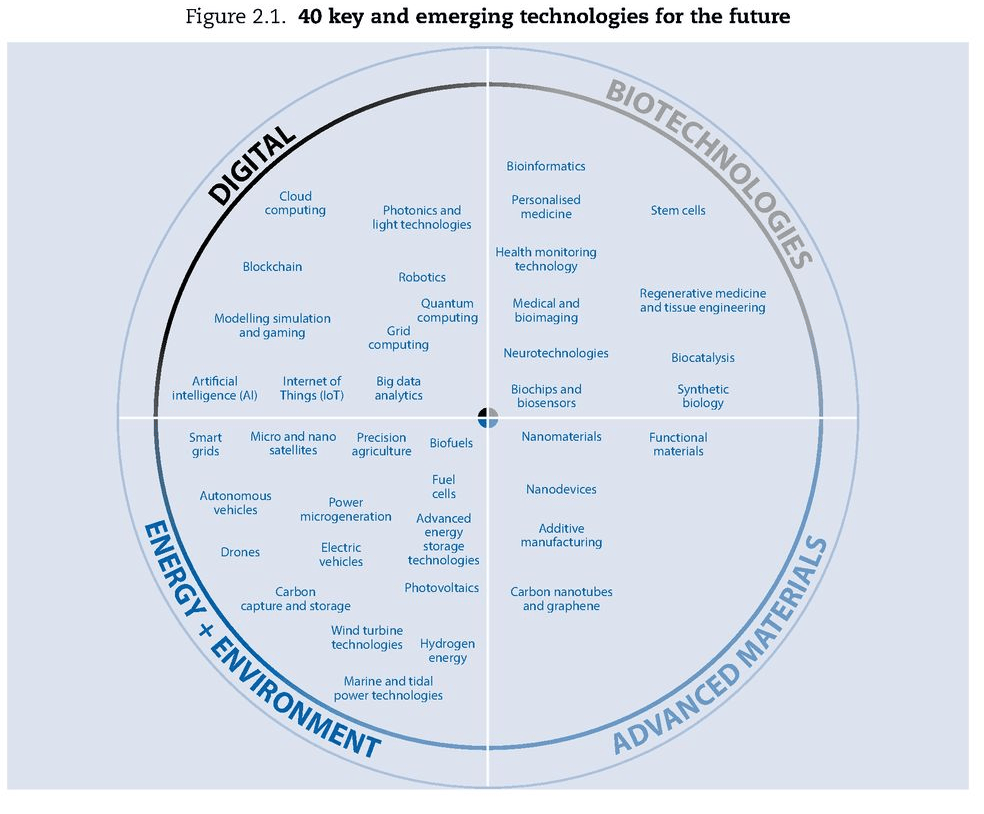
Technologies continue to evolve with new and improved products and processes improving people’s lives every day. Some of the technologies such as bioinformatics and Artificial Intelligence(AI) have been around for years. But some of the new ones are still in earlier phases of growth. These include things like blockchain, big data analytics, drones, stem cells, etc.

The following chart from OECD shows some of the 40 key emerging technologies for the future:

Click to enlarge

40-emerging-technologies

Source: OECD Science, Technology and Innovation Outlook 2016, OECD

Which Companies Would Benefit From Higher Defense Spending?

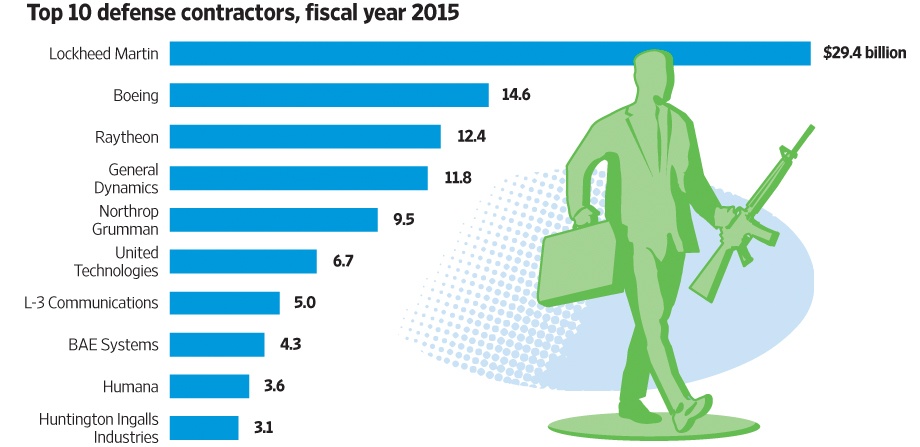
The U.S. expenditures on defense is higher than any other country in the world. The incoming Trump adminstration plans to spend even more to make America great again. Directly and indirectly the weapons and related-industries employs millions of people in the country provoding them high-quality well-paid jobs. Among the top 10 defense contractors, the top five get one-fourth of Defense Department funds according to a recent article in The Wall Street Journal. The top 10 companies that are likely to gain from higher defense spending are shown below:

Click to enlarge

top-10-defense-contractors-2015

Source: Who Would Gain From More Defense Spending?, WSJ

The tickers of the top five companies in the above graphic are shown below:

  1. Lockheed Martin Corporation(LMT)
  2. Boeing Co(BA)
  3. Raytheon Company (RTN)
  4. General Dynamics Corporation (GD)
  5. Northrop Grumman Corporation (NOC)

Disclosure: No positions

A Historical Gold Prices Chart, Events and Results

The chart below shows the price of gold since the end of the gold standard:

Click to enlarge

Devices

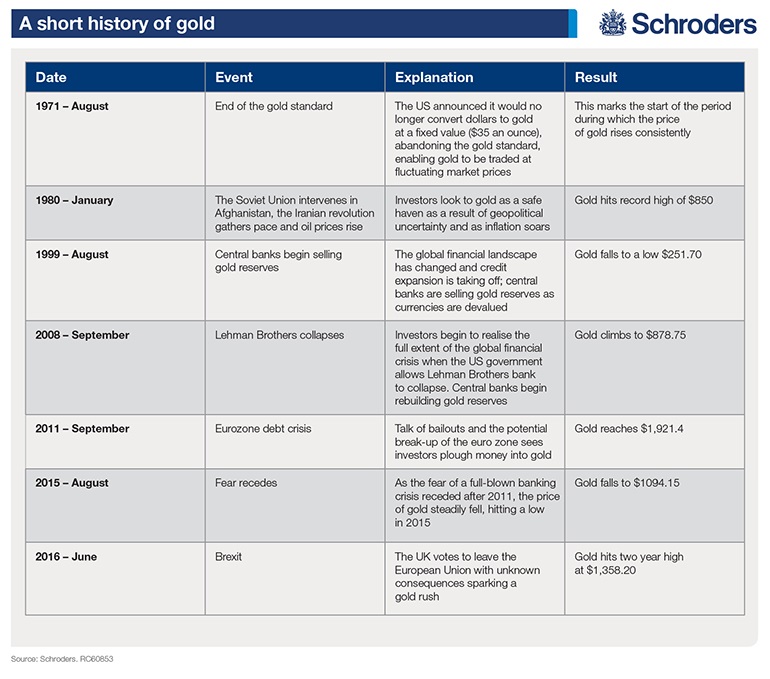
The recent significant events affecting gold prices and the result are displyed in the following table:

Devices

Source: A short history of investing in gold – and what to expect for 2017 by David Brett, Schroders

The above linked article is an interesting quick read for investors interested in gold.

Related ETF:

  • SPDR Gold ETF (GLD)

Disclosure: No positons

Also checkout: