The US Consumer Debt Burden: Infographic

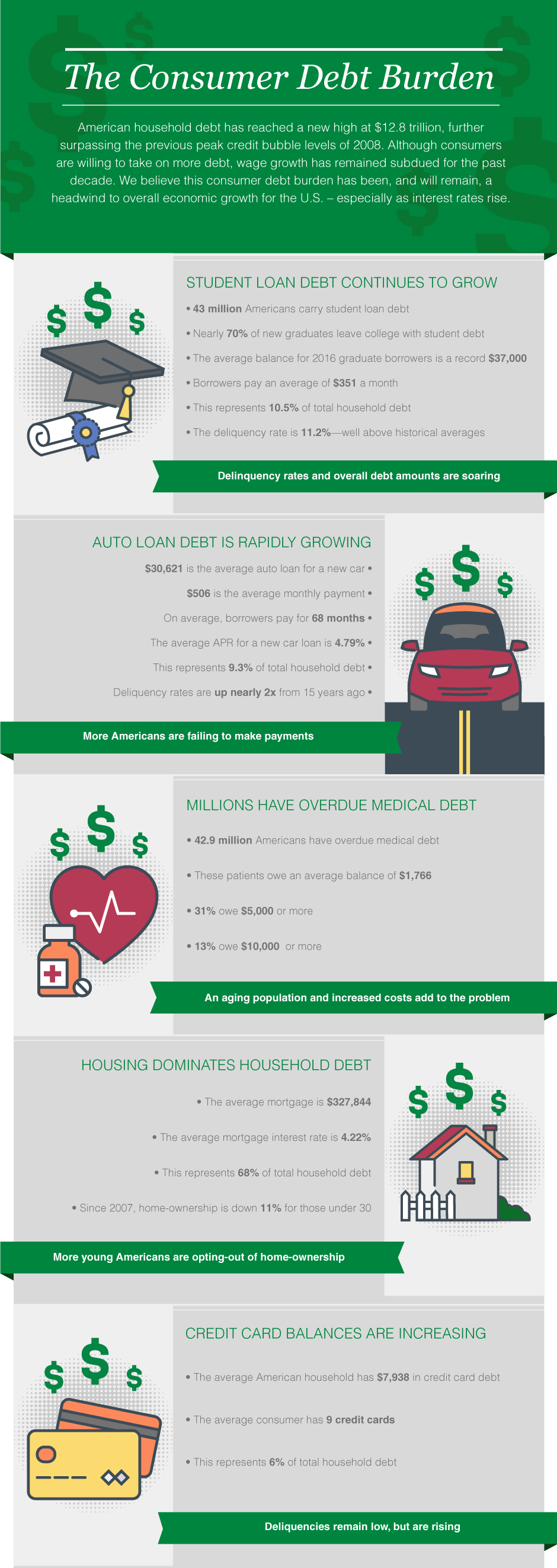
US household debt has reached a new high of $12.8 Trillion. This figure exceeds the debt levels reached in 2008 at the height of the Global Financial Crisis(GFC). A strong economy with low unemployment rates is allowing American consumers to take on more debt. As a results debts of all types from credit cards to auto loans have been increasing.

The following is an inforgraphic showing the various types of debts of American households:

Click to enlarge
 

Source:  The Consumer Debt Burden, Manning & Napier
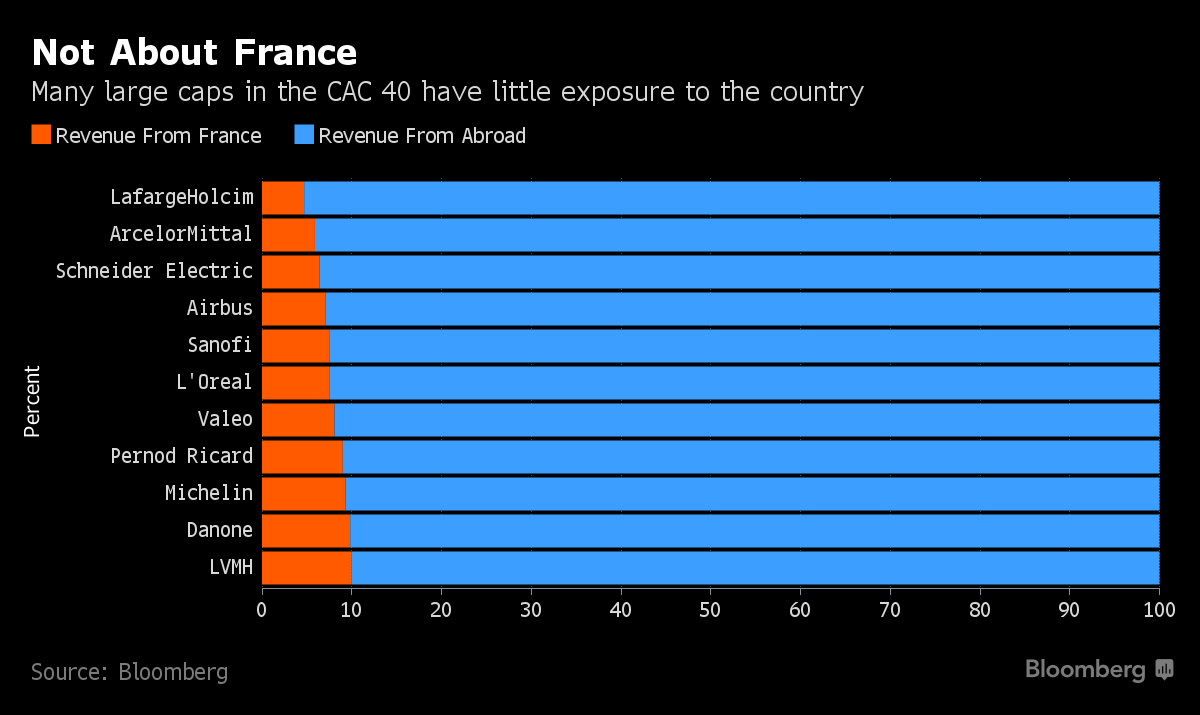
 

Some CAC-40 Companies Have Low Exposure To France

Some of the constiuents of the CAC-40 index have low exposure to the domestic market. Similar to major firms in the FTSE-100, some large French firms derive most of their revenues from markets outside of France. Hence stock performance of these firms is more dependent on overseas economies than France.

The following chart from a Bloomberg article earlier this year shows some of the CAC-40 exposure to the domestic and foreign markets:

Click to enlarge

Source: Déjà Vu as France’s CAC Harks Back to FTSE 100 Before Big Vote, Bloomberg

Disclosure: No positions

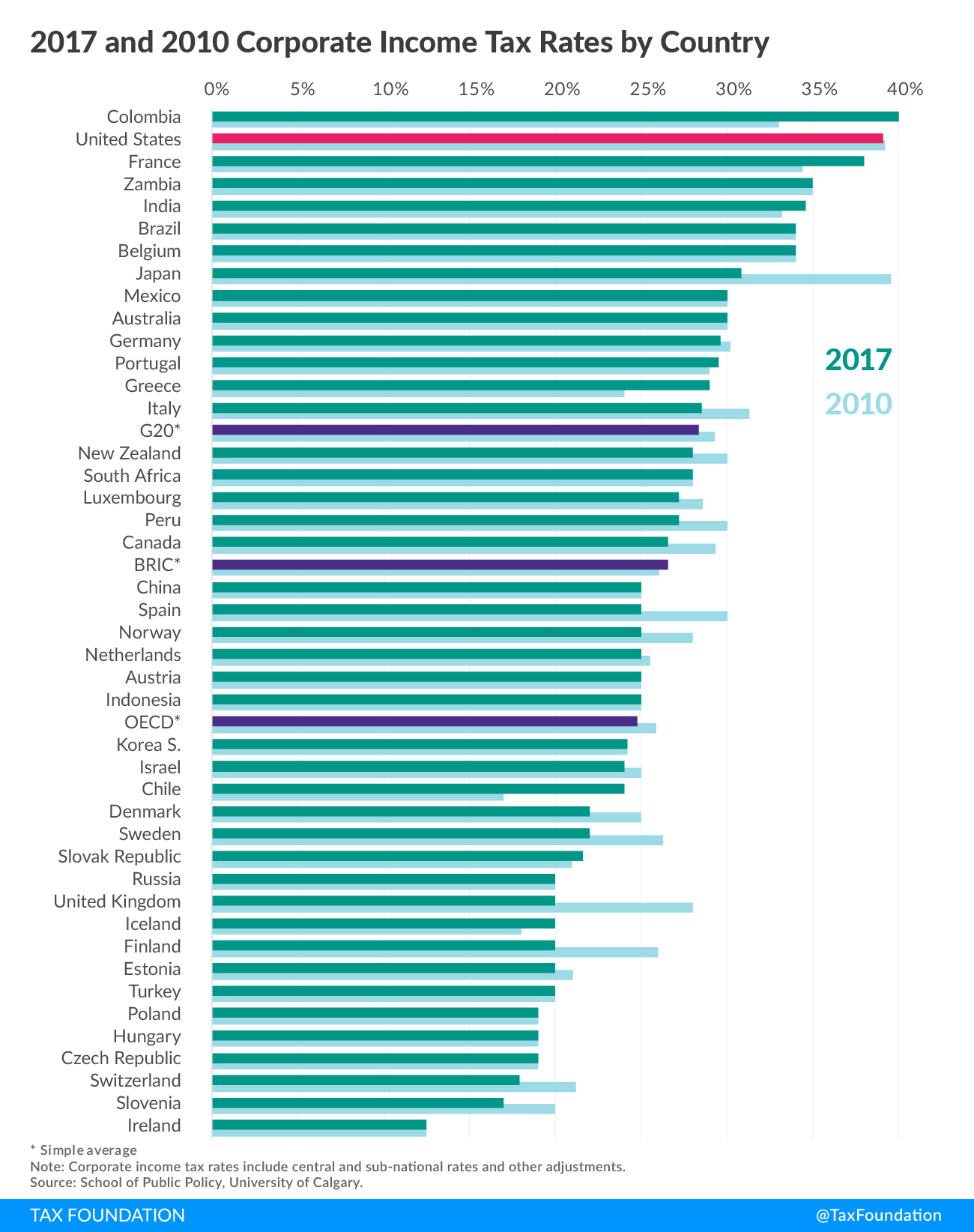
Corporate Income Tax by Country 2017 and 2010

The Corporate Income Tax is the highest in the US among OECD member nations. In 2017 the rate stood at 39.1%. Globally this rate is the second highest after Colombia according to a report by the Tax Foundation.

The chart below shows the Corporate Income Tax by Country 2017 and 2017 for select countries:

Click to enlarge


SourceCompetitiveness Impact of Tax Reform for the United States, Tax Foundation

The US Corporate Income Tax rate barely changed between 2010 and this year.

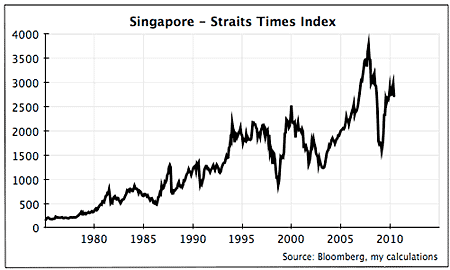
The Straits Times Index (STI) of Singapore Long Term Returns: Charts

The FTSE Straits Times Index (STI) is the benchmark index of the Singapore equity market. The index is a capitalisation-weighted stock market index and tracks the performance of the top 30 companies listed on the Singapore Exchange.

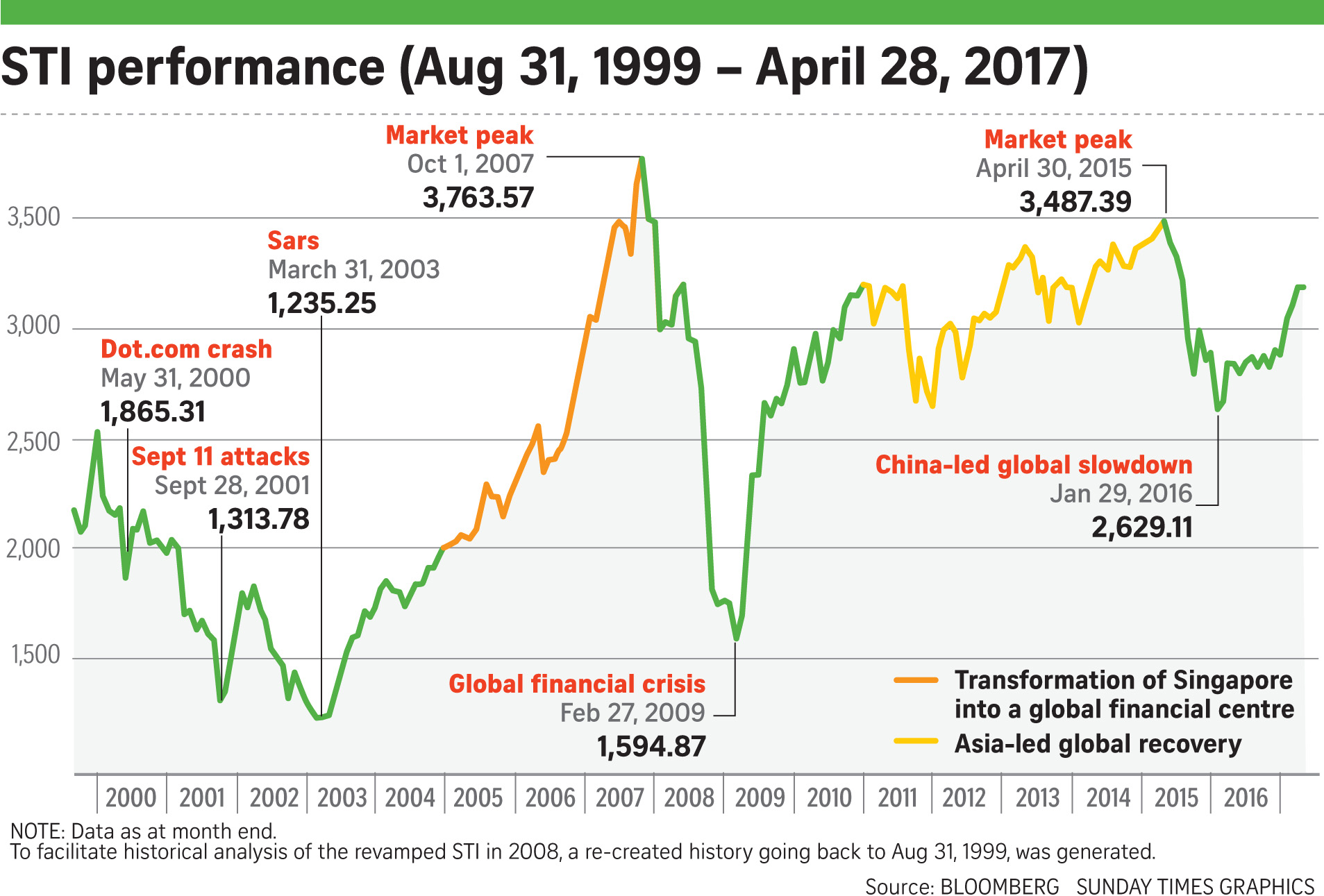
The index is up by over 12% YTD. However it is still down from the peak reached in 2007 before the global financial crisis.

The following chart shows the long-term returns of the Straits Times Index:

Click to enlarge


SourceWhen a bubble is not a bubble, MoneyWeek

The chart below shows the return of the Straits Times Index from 1999 thru April, 2017:


Source:As the Straits Times Index turns 50, three experts weigh in and offer tips for investors, Straits Times

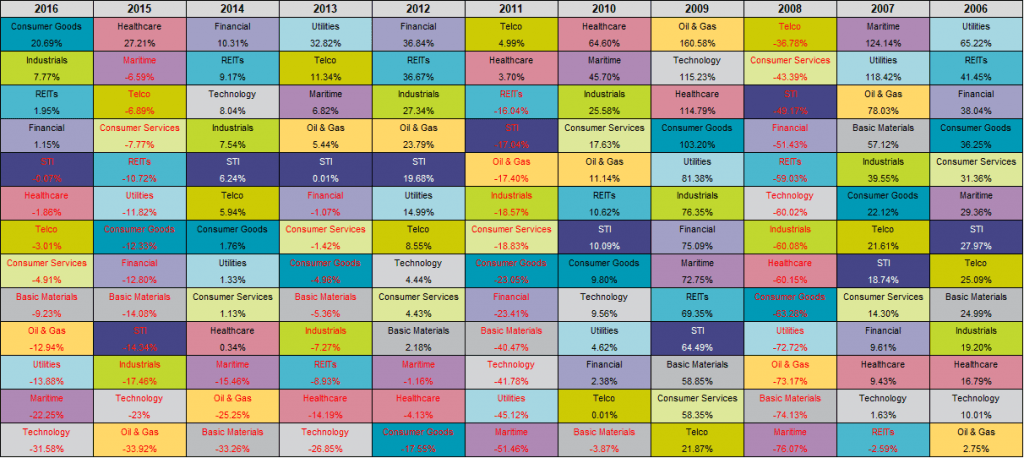
Singapore Stocks Sector Performance 2006 to 2016:

Source: ValueInvestAsia

Related Links:

Related ETF:

  • iShares MSCI Singapore Index Fund (EWS)

Disclosure: No Positions

Established Companies Have Performed Well Compared To Younger Companies: A British Example

Companies with a long history and established in their respective industries tend to perform well in the long run. Though there are few exceptions, established well reputed firms reward shareholders for their loyalty in tems of both stock price appreciation and rising dividends. A study by Credit Suisse in the UK market showed that established firms outperformed younger companies.

From a recent article by 

A study presented in the 2015 Credit Suisse Global Investment Returns Yearbook highlights the benefit of investing in seasoned companies. The Credit Suisse study looked at the impact of seasoning on United Kingdom stock returns. Seasoning was defined as “the time that had elapsed from the date of a firm’s initial public offering.”

The study broke U.K. companies into four groups: Companies at the start of the year with three years or less of seasoning, those with four to seven years of seasoning, those with eight to twenty years, and those with more than twenty. Portfolios were rebalanced annually. The study was for the 35-year period ending at year-end 2014.

The following chart from the study shows that, aside from a short period of time around the dot-com boom, the greater the seasoning, the higher the returns. At the end of the 35 years, $1 invested in the group of companies with the greatest seasoning was worth more than three times as much as the same $1 invested in companies with the least amount of seasoning.

SourceClient Letter – August 2017,  Richard C Young & Co

The key takeaway is that though some investors may be more attracted to the latest fast growing companies or the hottest IPO hitting the market, for most retail long-term investors the simplest way to success in equity investing is to stick with well established firms.