Price inflation for goods and services in the US vary widely over the long term. Some items such as healthcare, higher education, childcare, etc. continues to go up year after year like clockwork. Housing is back on the rise after the crash during the global financial crisis of 2008-09. In major metropolitan areas decent housing is unafforable for most working people.
On the other hand, prices for consumer goods like tvs, software, toys, cars, etc. have decreased in the past few years.
The char below shows the price changes in select US goods and services from 1997 thru this year:
Click to enlarge
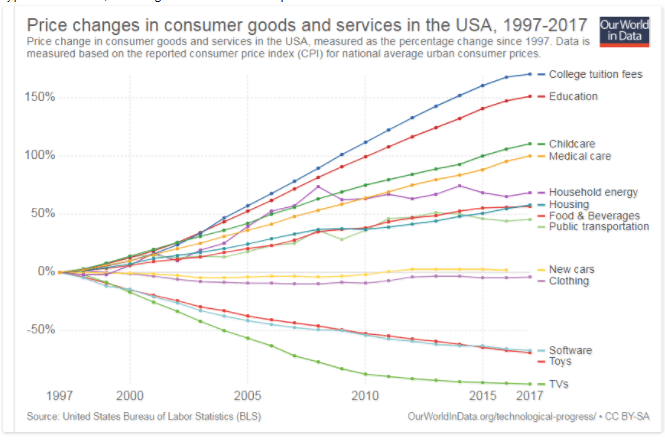
Source: TIPS Improve Income Stability For Lifestyle Goals by Jodie Gunzberg, S&P Indexology Blog
The worst item in the above chart is college tuition. We have discussed many times before why college tuition are soaring every year.
The key point is that despite the the stagnation in wage growth some items increase yearly.
In summary, many of the important things for human beings to live such as an education, medical care, child care for families with children, shelter, etc. are expensive in this country. But useless consumer goods that are “wants” for most humans like TVs, cars, etc. are cheap. Most people would agree that it should be the other way around in any country.