An Update on US Personal Saving Rate

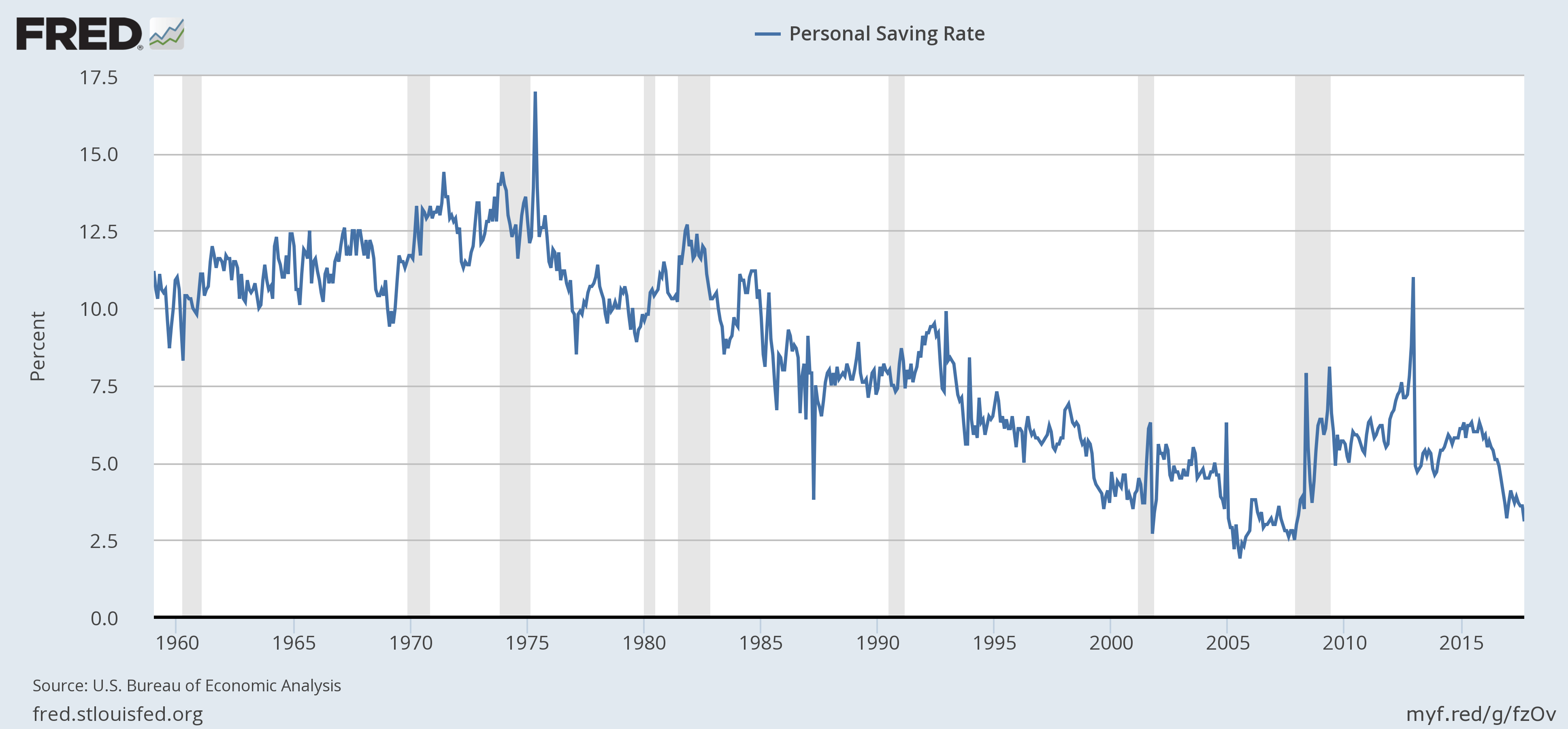
The US economy is a consumption-driven economy. Hence American consumers traditionally tend to spend than save. The personal saving rate grew after the global financial crisis of 2008-09 and reached a peak of 11% in Dec, 2012. But since then a growing economing and falling unemployemnt have led to a decrease in the saving rate again. According to a journal article today the persoanl saving rate has reached a 10-year low of 3.1% in September according to date by the St.Louis Federal Reserve.

The chart below shows the long-term US Personal Saving Rate:

Click to enlarge
Source: St.Louis Fed

Wages for workers have remained mostly stagnant for many years now but consumer debt of all types have shot up as consumers take advantage of cheap credit available. Declining saving rate is a cause of worry for investors as consumers do not have a cushion to survive should the economy turn South again.
Stock Performance of PetroChina vs. Oil Supermajors

On Friday Brent Crude reached the $60 per barrel mark for the first time since July, 2015. Global oil prices have been slowly recovering after years after of declines that followed prices reaching nearly $150 many years ago. Though oil majors are reporting strong earnings recently their stock prices are not yet getting investors’ love fo far.

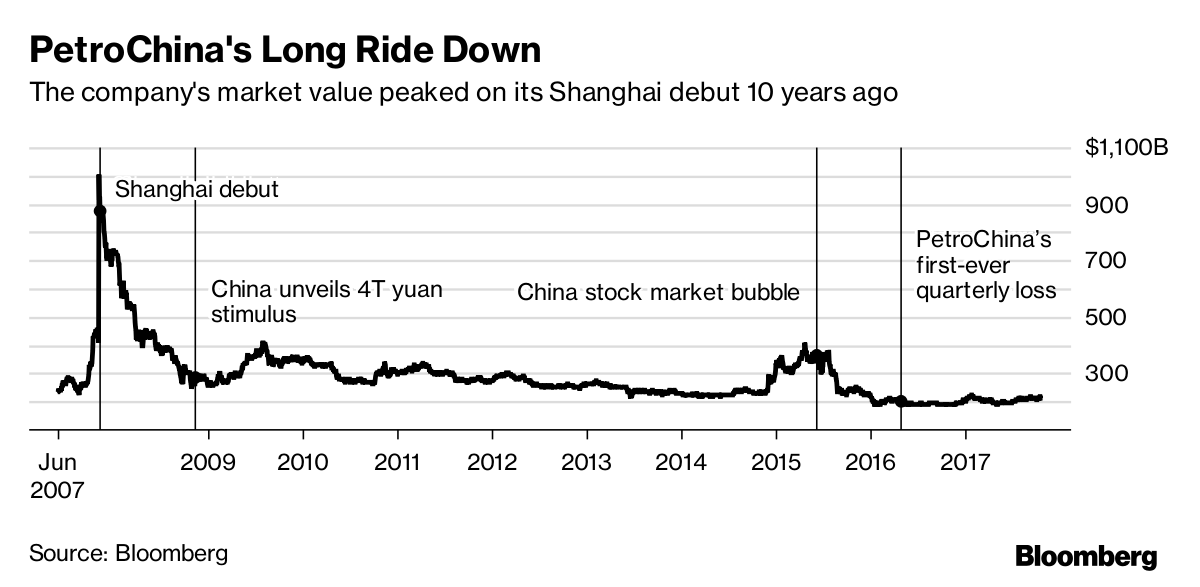
Of all the major oil companies in the world. PetroChina has plunged the most in terms of stock price return since reaching the peak in 2007. According to a Bloomberg article PetroChina(PTR) was the first company in the world to cross a market capitalization of over $1.0 Trillion. Since the peal PetroChina has wiped out over $800 billion in market capitalization. The chart below shows the dramatic decline in PTR share prices:

Click to enlarge

Source: The Biggest Stock Collapse in World History Has No End in Sight, Bloomberg, Oct 29, 2017

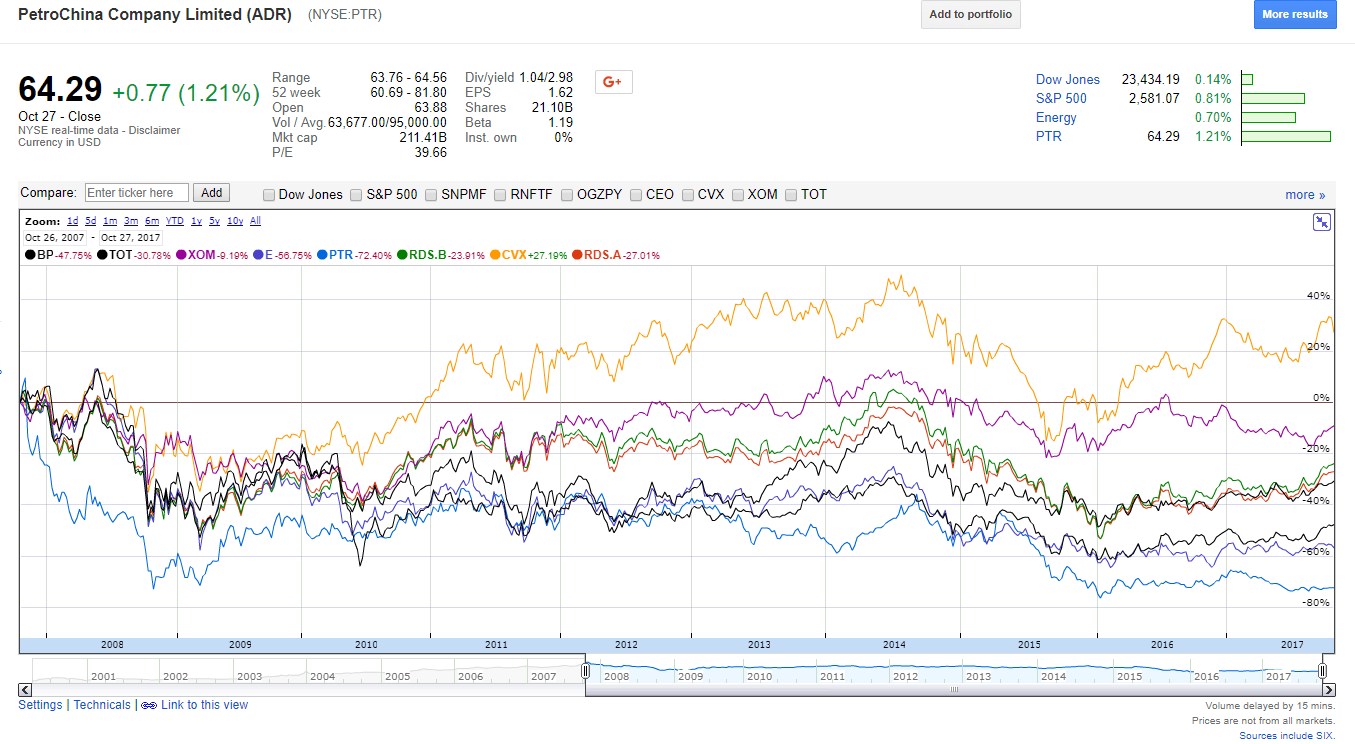
The following chart shows the performance of PetroChina against the oil supermajors – : Royal Dutch Shell PLC (RDS.A), Royal Dutch Shell PLC *(RDS.B), Chevron Corp (CVX), Exxon Mobil Corp (XOM), BP PLC (BP), Total SA (TOT) and Eni SpA (E) in the past 10 years:

Click to enlarge

Source: Google Finance

The full Bloomberg article is worth a read. The key takeaway is that even if the state is the largest shareholder a company’s stock can decline by astronomical levels wiping out shareholder’s wealth in the billions.

Disclosure: No Positions