The Dividend Yields of the World’s Largest Economies: Chart

Dividend yields vary by country. Some countries such as those in developed Europe, Australia, New Zealand, etc. are traditionally high dividend payers. Most emerging markets are stingy in terms of rewarding shareholders with dividends. Countries like Japan and South Korea are also not great for dividends.

The following chart shows the dividend yields by country for the largest global economies as of the end of 2017:

Click to enlarge

Data Source:  Siblis Research

Australian firms have more than double the dividend yield of US firms.

Comparing High-Speed Rail Networks between China and USA

China is a communist country with a market economy. Other than the communist party no other political parties are allowed and anyone trying to start one is jailed or worse. The state maintains a centrally planned economy where everything is determined by the state and funds allocated according to bureaucrats sitting in government offices.

The US on the other hand, is a democratic country with a capitalist country where anyone can run for office or start a party. The economy is not centrally planned like China and is run by private entities. The state acts a regulator ensuring competition thrives and no one company or individual tries to game the system and monopolize an industry. Private investors such as venture capitalists exist to identify markets where there is a demand for a product or service and invest capital to profit. So the theory goes that the need for earning a profit will lead investors to take care of public demand for a product service. In most industries this arrangement for running the country works fine.

However there are some industries where the US fails miserably compared to other developed countries and even poor countries such as communist China. Public transportation is one industry where the the US lags relative to other countries. While the major cities in the East and West coasts have decent public transportation, the vast majority of Americans depend on cars to go from one place to another or by air. Passenger train network is mostly non-existent. Especially high-speed rail network is a joke to say the least. Despite having the largest top-class engineering firms and venture capitalists, high-speed rail is one area where other countries including China are a million years ahead of USA.

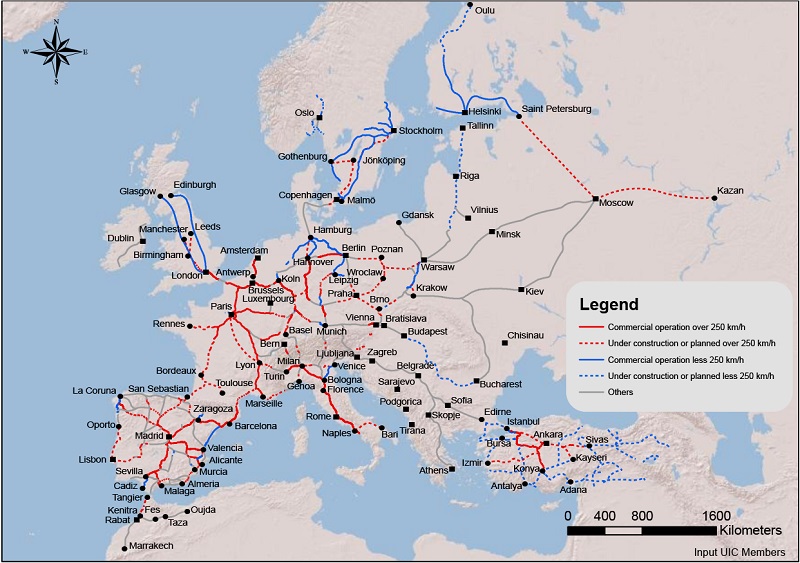
A comparison of the high-speed rail networks in China and the US shows the glaring failure of the US market economy. The chart below shows the latest high-speed network in China:

Click to enlarge

Source: UIC

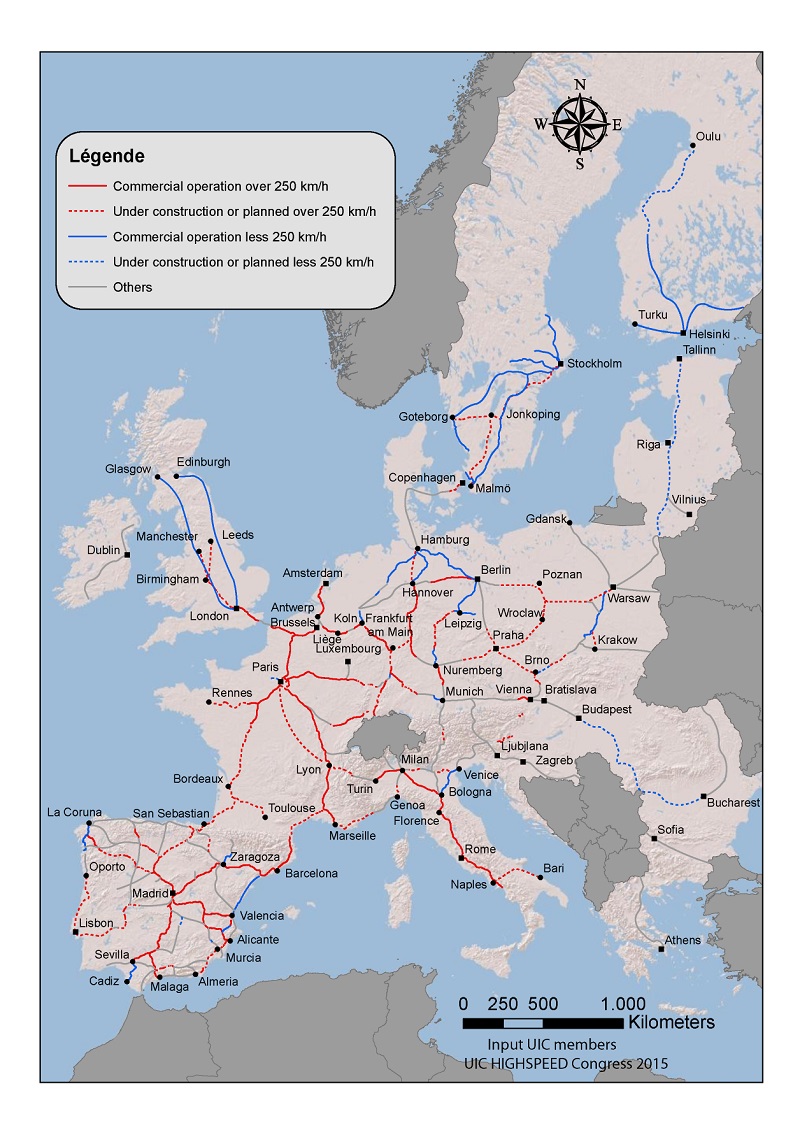
Compared to the above Chinese high-speed network map, the following map of the US high-speed network is mostly blank.

Click to enlarge

Source: UIC

The Acela Express, the only high-speed rail in the US runs between Washington DC and Boston and the top speed is 150 mph. In contrast China’s high-speed rail have a maximum speed of 217 mph. The size of the networks are not even comparable as the above maps show. The same goes for passenger traffic volume.

S&P 500 Revenue Exposure by Country

The S&P 500 Index is the benchmark index of the US equity market. Billions of dollars are invested in various products tracking the index.

The sector breakdown of the S&P 500 is shown below:

Click to enlarge

Source: S&P Indices

The tech sector dominates the US equity market. No other country in the world can match the technical innovation and power of the Silicon Valley. From Alphabet(GOOG) to Facebook(FB) to Amazon(AMZN) and other firms in between all the top tech firms are located in the US. Even developed European are unable to compete against American firms in the tech sector. That is why there is no European Google or European Facebook for example.

Many of the large-cap US firms are multi-national firms with huge operations in foreign countries. Hence the revenue exposure of S&P 500 firms to overseas markets is high.

The following chart shows the revenue exposure of S&P Revenue Exposure by Country:

Source: The Impact of the Global Economy on the S&P 500 by Phillip Brzenk, S&P Global

The US is the main market for S&P 500 firms accounting for 71% of their revenues. The remaining revenue come from foreign countries. China, Japan and the UK are top three countries in terms of revenue exposure. Though Mexico has large trade ties to the US, it does not appear in the top revenue exposure countries.

Which S&P 500 sectors have the most and least exposure to foreign countries?

The tech and materials sector have the highest revenue to overseas markets. Companies such as Intel(INTC), Alphabet(GOOG), etc. dominate in the global tech space. Similarly material firms such as miners and oil producers have large operations overseas.

The sectors with the least revenue exposure to foreign markets are the real estate, telecom and utilities. So the performance of companies in these sectors mostly depend on the health of the US economy than the economy of other countries.

Related ETF:

  • SPDR S&P 500 ETF (SPY)

Disclosure: No Positions

See also:

Exports to the US as a Percentage of Each Trade Partner’s GDP: Chart

The top five trading partners of the US are China, Canada, Mexico, Japan and Mexico in the order noted. Canada and Mexico are top trade partners due to their proximity to the US and also being members of the NAFTA.

China tops all countries in trading goods with the US. However the US runs a trade deficit with the country – meaning the US imports more from China than it exports to China. The year-to-date trade deficit with China is 65% according to the Census Bureau.

Click to enlarge

Source: Emerging Markets Experience a Volatile First Quarter, Franklin Templeton Investments

Though the US runs a trade deficit with China, from a Chinese perspective the large amount of goods exported to the US still has a small impact on the GDP. Or to put it another way, the total exports to the US account for only 4% of China’s GDP. So the Chinese economy is more dependent on the domestic market and other countries. Hence the trade tariff that Trump slapped on China will not have a major impact on the Chinese economy.

However Mexico’s economy is highly dependent on the US. Exports to the US account for 27% of Mexico’s GDP. Similarly the Canadian economy is also dependent on the health of the American economy.

Revenue Exposure Of Australia S&P/ASX 200 Index

The S&P/ASX 200 is one of the main benchmark index of the Australian equity market. The index is comprised of 200 largest firms by float-adjusted market capitalization.

From a sector allocation perspective, over half of the index is made up of financials and materials as shown in the chart below:

Click to enlarge

Source: S&P Indices

The following table shows the revenue exposure breakdown of the S&P/ASX 200 companies:

Click to enlarge

Source: Revenue Exposure of the S&P/ASX 200 by Utkarsh Agrawal, Indexology Blog

A few observations:

  • About 40% of the index’s revenue come from foreign markets.
  • The highest revenue exposure is to the US, China and New Zealand.
  • Not surprisingly the material sector has the most exposure to foreign countries (18%). For example, most of the coal and iron ore mined in the country are exported to China and other countries.

The key takeaway for investors in Australian stocks is that economic conditions of foreign countries will have an impact of the performance of Australian firms. This is especially true with companies in the material sector where a booming demand for commodities overseas will determine the earnings of Aussie mining firms than the economy of the domestic market.

Related ETF:

  • iShares MSCI Australia Index Fund (EWA)

Disclosure: No Positions

Also seeThe Components of the S&P/ASX 200 Index