US Economic Expansions Since World War II

The cyclical bull market in US equities continue. Benchmark indices like the NASDAQ are establishing record highs and investors can’t get enough of some of the big tech names. Naturally some investors are wondering if the current euphoria in the stock market will come crashing down and the bull market will suddenly come to a dead stop. The current bull market that started in the depths of financial crisis in March 2007 is 112 months old.

The bull market has followed a strong economic expansion. In fact, the current expansion at 109 months is one of the largest economic expansions since World War II as shown in the chart below:

Click to enlarge


Source: The US economy – does the flattening yield curve indicate recession is imminent? by Dr Shane Oliver, Head of Investment Strategy and Economics and Chief Economist, AMP Capital

August Is The Worst Month For Emerging Market Equities

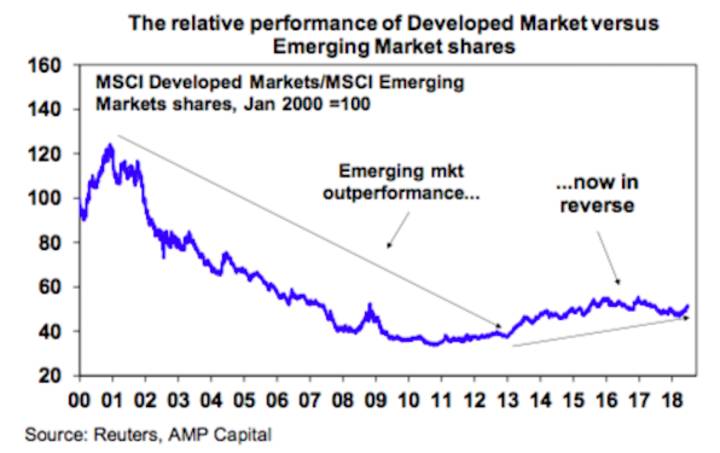
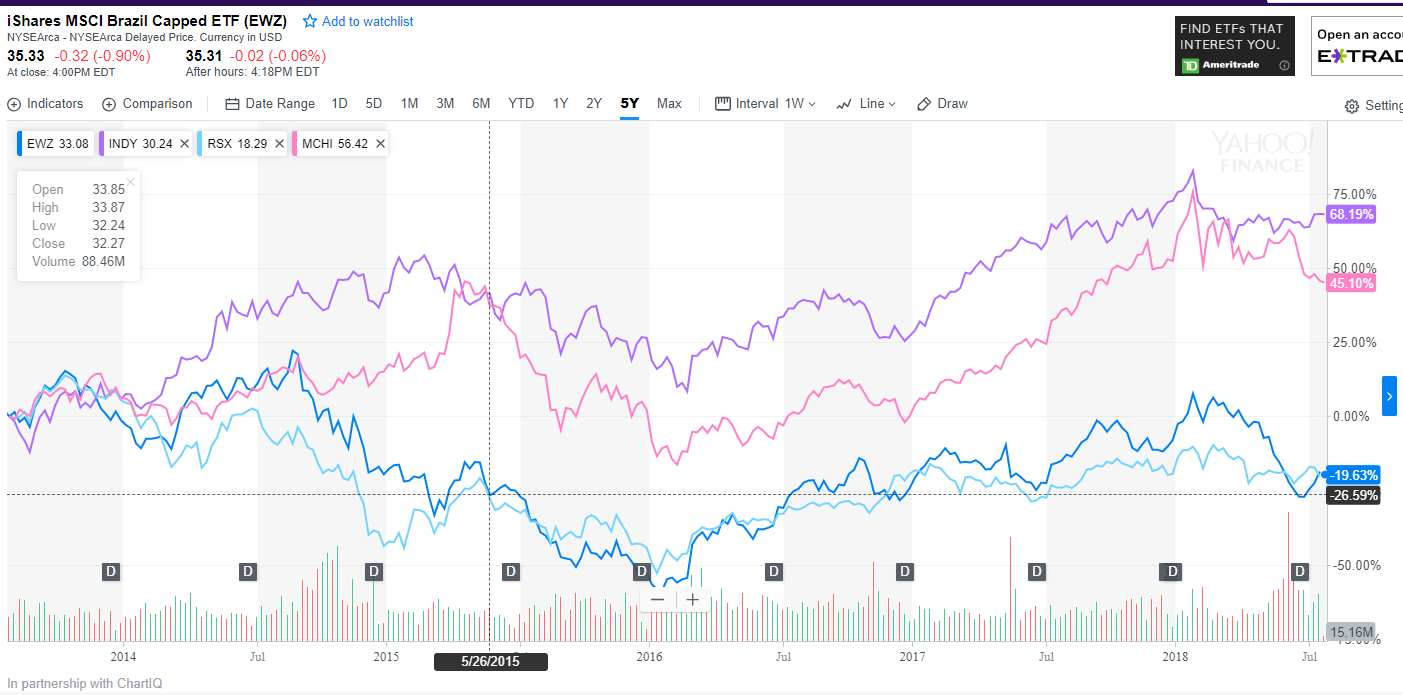
Many emerging market stocks have performed poorly so far this year. After a strong run until last year, emerging markets have declined this year due to a multitude of factors including rising oil prices, impact of trade war initiated by the US, rising US dollar, etc. Hence some of the major markets of the developing world are down. For example, Mexico’s IPC Index is off by 1.9%, Chile’s IPSA is down by 6.7%, China’s Shanghai Composite is down by over 14%, etc. The benchmark MSCI Emerging Markets Index has declined by 7.15% in USD terms.

Given the under-performance of these markets, Lilian Karunungan of Bloomberg notes in an article that August has been historically the worst month for emerging market stocks.

Click to enlarge

Source: Emerging-Market Investors May Want to Skip Next Month, Bloomberg

The Long Term Net Return for the MSCI Emerging Markets Index against two other major MSCI indices are shown in the chart below:

Click to enlarge

Source: MSCI

Related ETFs:

  • iShares MSCI Emerging Markets ETF (EEM)
  • Vanguard MSCI Emerging Markets ETF (VWO)

Disclosure: No Positions

S&P 500 Intra-Year Declines and Annual Price Returns 1948 to 2017: Chart

One of the biggest factors that impact investor returns with equity investing is selling out when markets correct.  Patience and not panicking is the key to long-term success with stocks. Just as stocks can go up they go down as well. For instance, the S&P 500 has seen annual average declines of 13.8% since 1948. Yet the annual returns in terms of price changes only have been positive in 51 of those 70 years as shown in the chart below.

Click to enlarge

Source: Capital Group

So the key takeaway for investors is that when markets declines staying put and not selling out is important. As we have discussed many times on this blog, trying to time the market is a foolish idea.

Related ETF:

  • SPDR S&P 500 ETF Trust (SPY)

Disclosure: No Positions

Central Bank Balance Sheets as a Percentage of GDP For Major Economies

The Balance Sheets of Central Bank of major economies have been increasing for many years now as a result of the many Quantitative Easing(QE) programs implements. The following chart shows the Central Bank Balance Sheets as a Percentage of GDP For Major Economies:

Click to enlarge

Source: The Long Unwinding Road—Navigating Regime Shift, T.Rowe Price