The Many Ways Of Touchless Greetings: Infographic

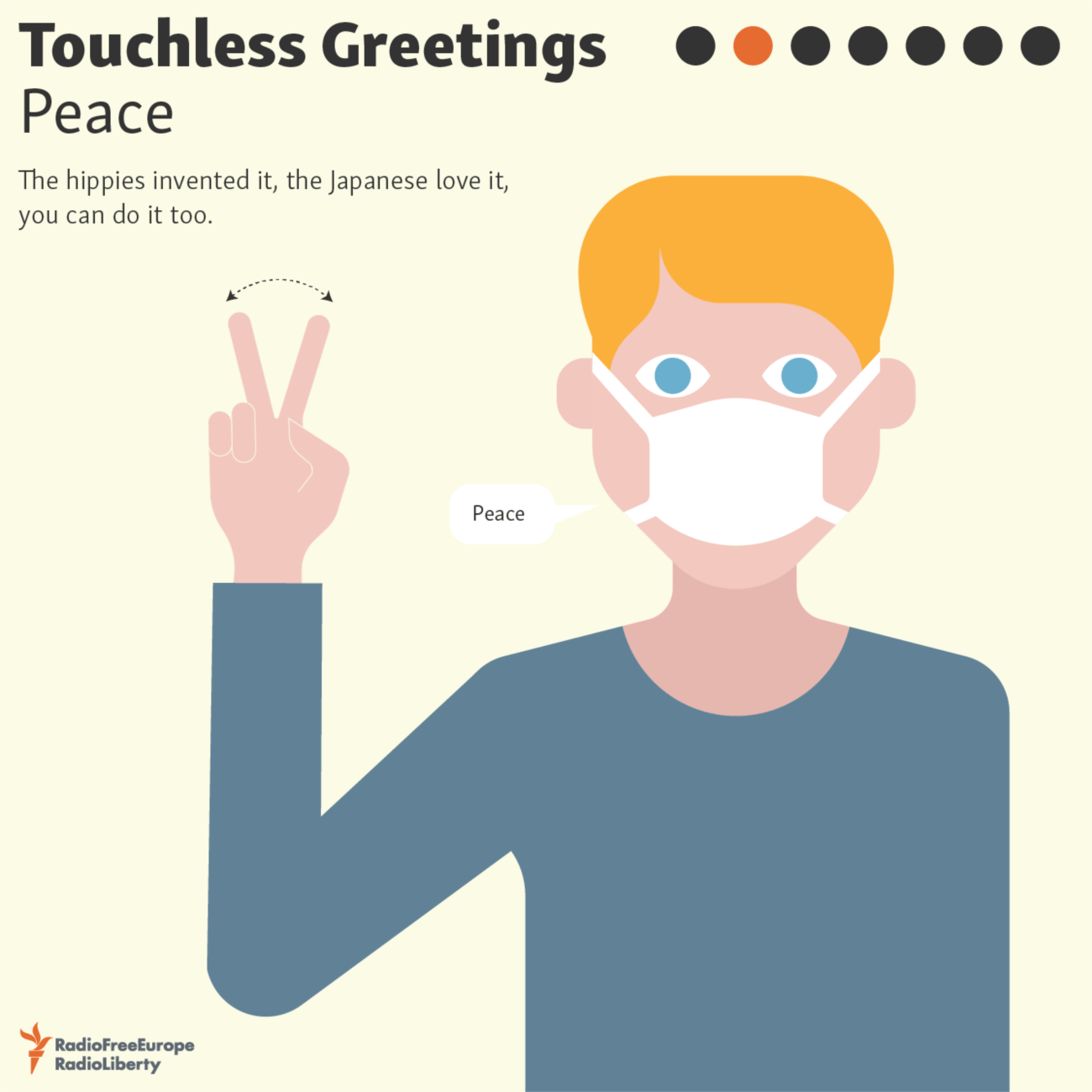
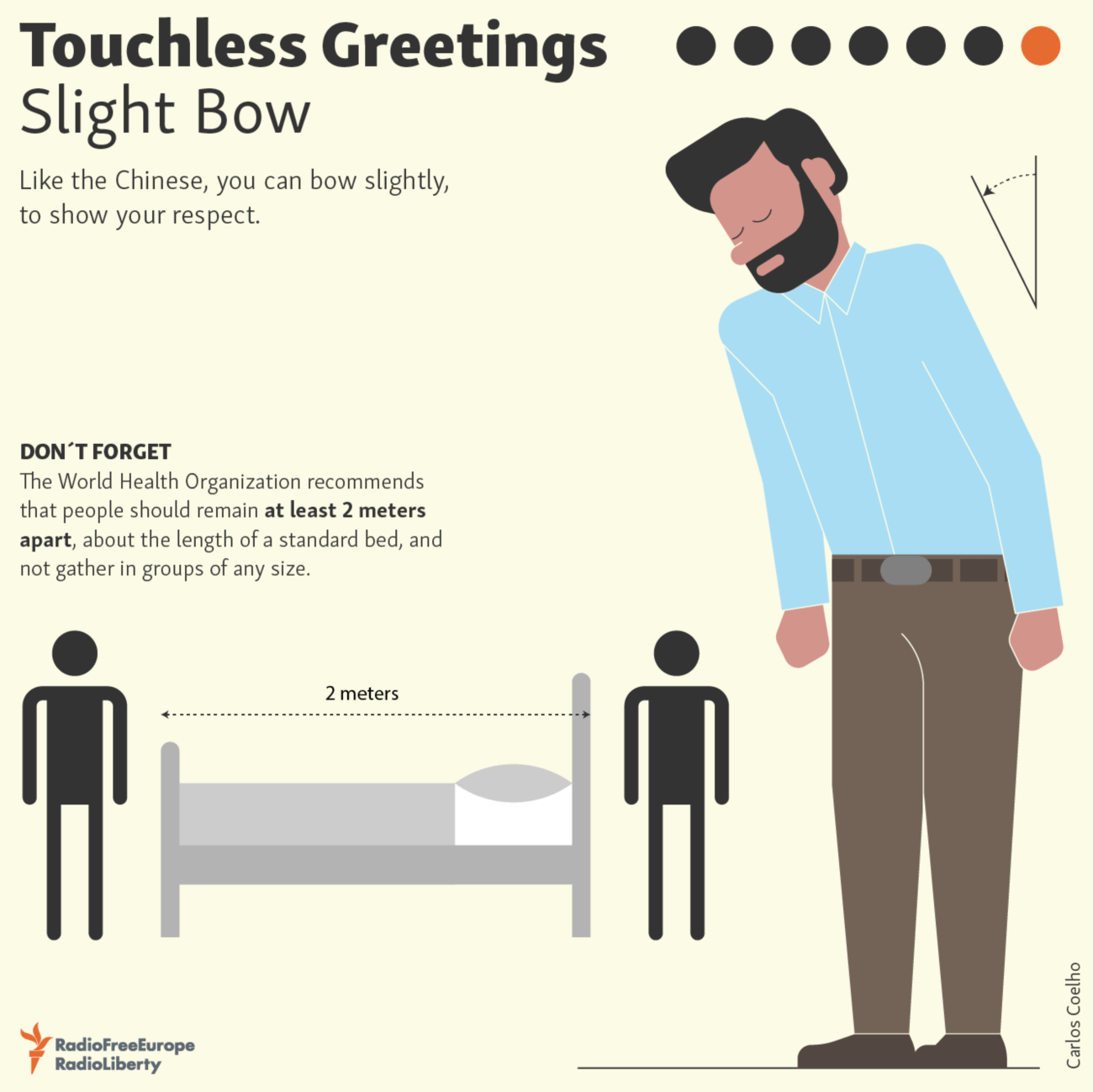
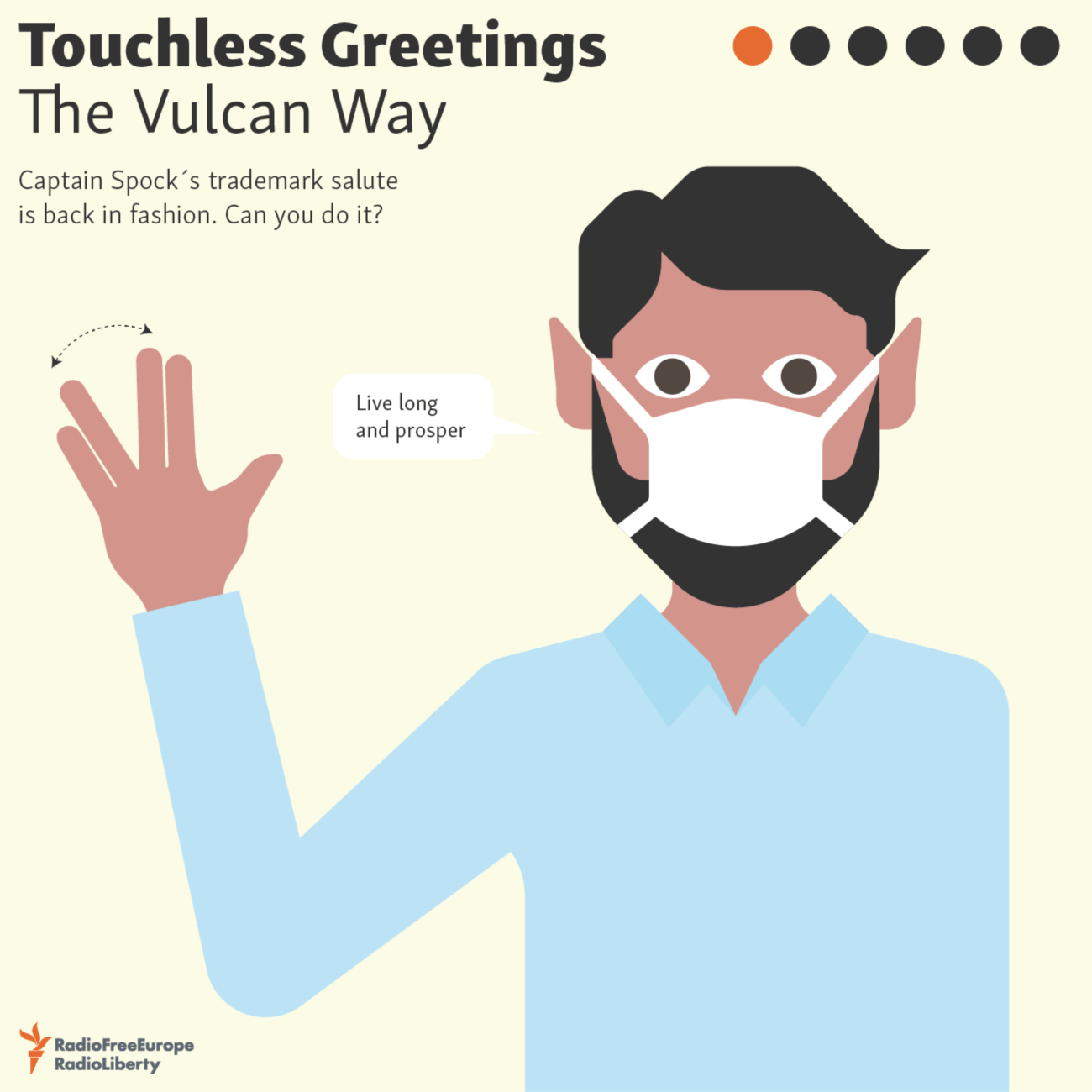
COVID-19 has made the traditional custom of handshakes a big no-no. Handshakes will not be practiced by the general population for the foreseeable future. That does not mean people can’t greet each other. In addition, European ways of hugging and kissing is also out of fashion as well.

Some of the many different ways of greeting each other are shown in the cool infographic below:

Click to enlarge


Source: RFE/RL Infographic

Related:

Knowledge is Power: Bottom Calling, Depression Lessons, Angry Americans Edition

The US equity market is down just 11% as represented by the S&P 500 year-to-date. Despite the violent crash into bear market in March, stocks have recovered equally strongly in the past few weeks. Nobody knows if this recovery will continue to hold. With the death toll still rising and mass unemployment further increasing it is highly unlikely stocks can pretend to avoid the bad stories. The tech sector is holding up pretty well with investors still attracted to the high-flying stocks of the times. Biotech stocks are beginning to bounce on hopes of a breakthrough with a vaccine for COVID-19. Banks have declined heavily and are facing strong headwinds as the effects of high unemployment rates reverberates across the economy.

Overseas European stocks indices are down on an average 20%. Emerging markets have been hit even worse.

In general here are sectors to avoid and consider:

Avoid – Airlines, Hospitality, Cruise Companies, Credit Card Issuers, Auto Makers, REITs, etc.

Consider – Consumer Staples, Utilities, Railroads, Pharma, etc.

With that brief summary, below are some interesting reads to start off the week:

In The Roman Forum, Rome, Italy


China’s Major Oil Producers Are The Top Performing Foreign Oil Stocks Year-to-Date

China’s three major oil majors are the top performing stocks year-to-date among the exchange-listed ADRs trading in the US markets. These stocks have fared relatively well compared to other foreign oil firms.

Before we get to the performance list, crude oil decline dramatically since the start of the year even before COVID-19 started raging the western world. The collapse in oil prices was due to the fight between Saudi Arabia and Russia, two of the big producers in the world. Then the arrival of the deadly Coronavirus pretty much put the final nail in the crude oil coffin or more aptly the crude oil barrel. Oil supply was  still high and the demand crashed as billions of the people are in lockdowns around the world. Fearing further declines would certainly lead to global dislocation and cost thousands of jobs and possibly his re-election changes, President Trump initiated negotiations between the warring countries. This led has led to yesterday’s OPEC+ deal which reduce production by around 10 million barrels per day from next month to push prices higher.

From a Guardian article:

The world’s largest oil producers have agreed a historic deal to cut global oil production by almost 10% to protect the market against the impact of the coronavirus pandemic.

Members of the Opec oil cartel and its allies have agreed to withhold almost 10m barrels a day from next month after the outbreak of Covid-19 wiped out demand for fossil fuels and triggered a collapse in global oil prices.

The biggest oil production deal in history is double the size of the cuts agreed following the global financial crisis and marks a truce in the oil price war brewing between Saudi Arabia, Opec’s de facto leader, and Russia.

The alliance, known as Opec+, agreed to the production cuts after more than a week of tense talks between the world’s biggest oil-producing nations to shore up the battered global oil market.

Opec+ has also called in help from major oil producers outside the alliance – including Brazil, Canada, Norway and the US – which could double the size of the unprecedented deal to 20m barrels a day.

Source: Major oil-producing nations agree historic 10% cut in output, The Guardian, April 12, 2020

Some experts are already stating this cut is still too little and too late. It remains to be seen how much oil prices benefit from this deal moving forward.

The following table shows the year-to-date performance of exchange-listed oil stocks:

S.No.CompanyTickerPrice as of April 10, 2020 CloseYear-to-date Change (%)Country
1China Petroleum & ChemicalSNP$51.00-15.21%China
2PetroChinaPTR$38.01-24.48%China
3China National Offshore Oil-CNOOCCEO$111.56-33.07%China
4EquinorEQNR$13.25-33.45%Norway
5TOTALTOT$36.74-33.56%France
6BPBP$24.90-34.02%United Kingdom
7EniE$20.20-34.75%Italy
8Transportadora de Gas del SurTGS$4.62-35.56%Argentina
9Royal Dutch Shell - ARDS.A$37.91-35.72%United Kingdom
10Royal Dutch Shell - BRDS.B$36.55-39.05%United Kingdom
11EcopetrolEC$11.92-40.28%Colombia
12Petroleo Brasileiro-PetrobrasPBR$6.72-57.84%Brazil
13YPFYPF$4.20-63.73%Argentina
14Vista Oil & GasVIST$2.60-66.88%Argentina
15SasolSSL$3.88-82.05%South Africa

Source: BNY Mellon

A few observations:

  • China’s Sinopec(SNP) is down 15% YTD, the lowest in this list.
  • The worst performer is Sasol(SSL) of South Africa.
  • Already beaten down Petrobras(PBR) declined another 58% YTD.
  • All the major western oil majors – BP(BP), Royal Dutch Shell(RDS-A) & (RDS-B), TOTAL (TOT) and Eni(E) are all down 33% or more in sync with the price of oil.

From an investment standpoint it may be too early to jump into oil stocks at the current time. It wise to wait and monitor the sector for attractive entry points.

Disclosure: Long PBR and EC

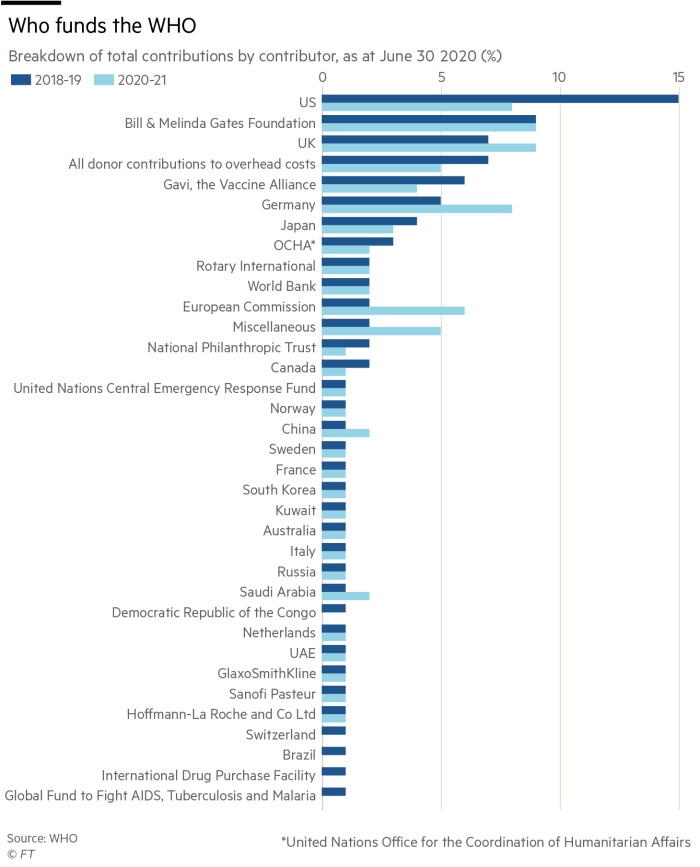
The Top 10 Contributors of WHO

The World Health Organization(WHO) is based in Geneva,Switzerland and is an agency of the United Nations. WHO is responsible for international public health. The agency tracks global public health crises from epidemics to pandemics and everything in between. It also acts a conduit for sharing critical information between countries with regards to health. For example, the WHO is tracking the COVID-19 crisis and has created a dashboard to track cases across the world.

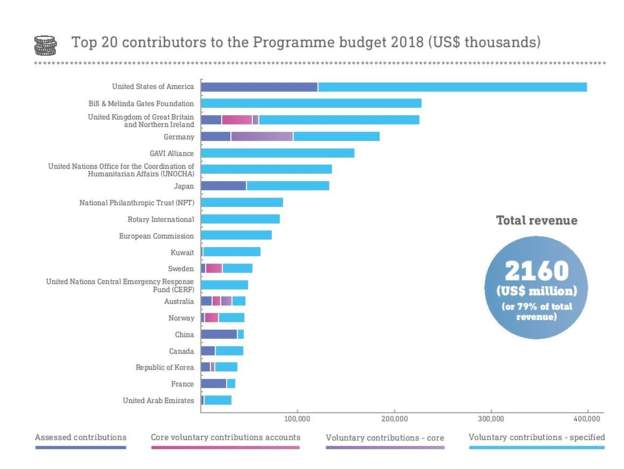
The WHO is under increased scrutiny these days with the US threatening to cut funding. The US is the top contributor to the WHO. So any reduction in contributions would have an adverse effect on the operations of WHO. Whether the US is trying to truly shift its failings and disastrous management of the current crisis on some other organization such as the WHO or if the WHO failed to perform its duties is a question of debate.

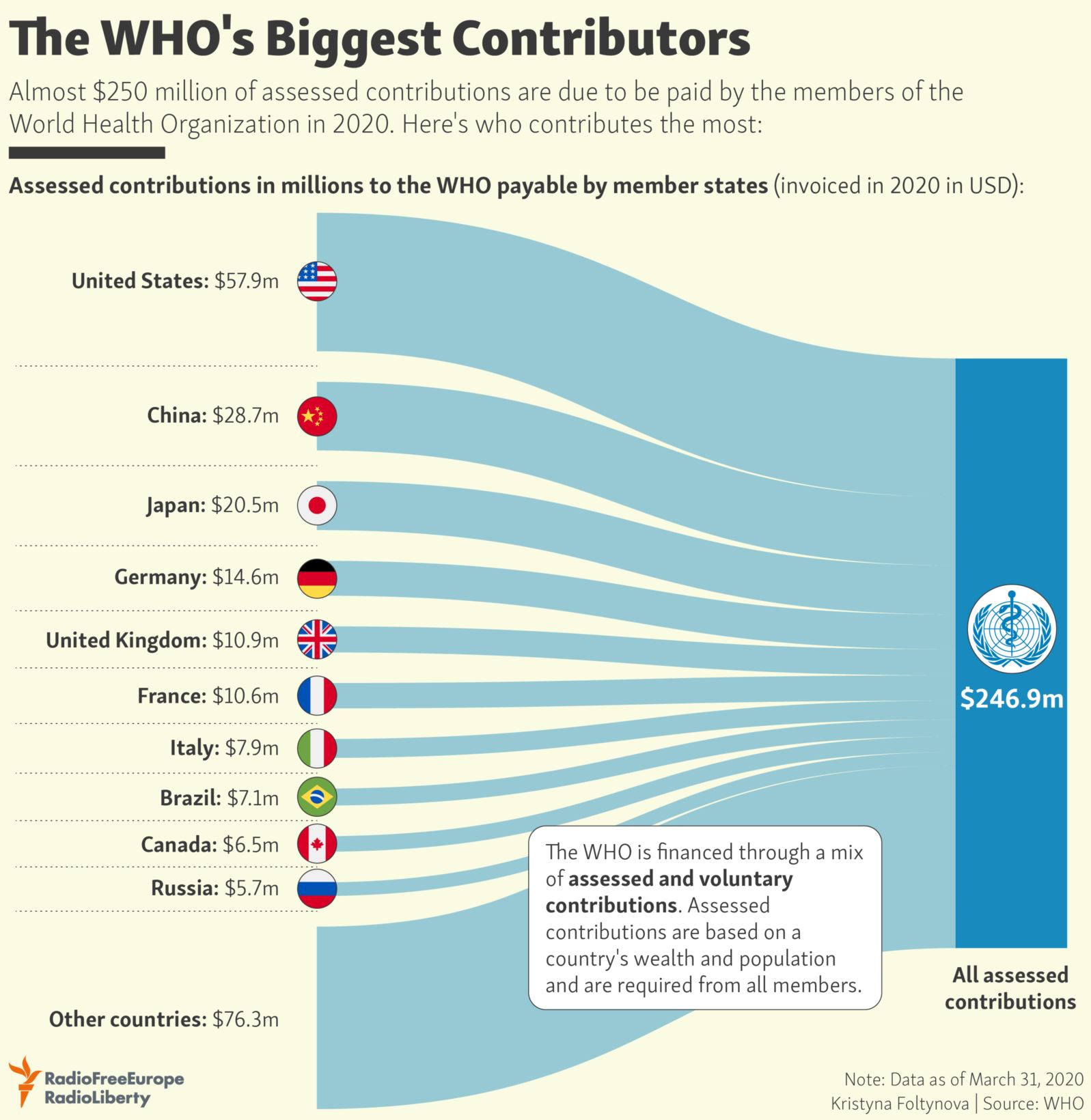
To add some perspective on the sources of funding for WHO it is important to look at the top contributing countries. The US was the top contributor last year and it was also assesses about $58 million this year. The assessed amount must be paid by each country in addition to any voluntary contribution. China is the second top contributor followed at about half the US amount and Japan is the third as shown in the chart below:

Click to enlarge


Source: RFE/RL Infographics

Update (6/6):

Click to enlarge

Source: The BBC

Update (7/14/20):

Source: WHO struggles to prove itself in the face of Covid-19, FT, July 12, 2020

Railroad Stocks: How Much Have They Fallen Year-to-Date?

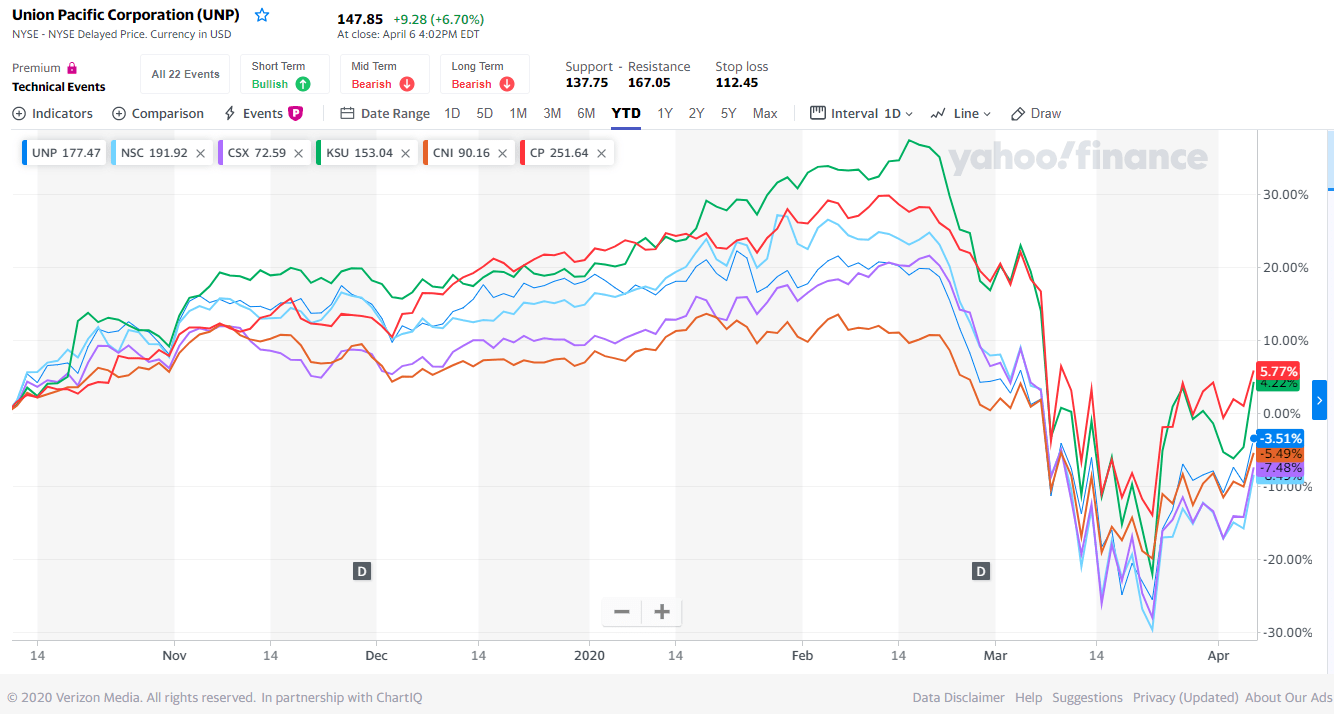
Railroad stocks have relatively held up well so far thus year compared to the overall market. While stocks in the airlines, hospitality, cruise line sectors have been decimated major North American railroad stocks have also declined but not much. In fact Canadian Pacific(CP) and Kansas State Southern (KSU) are in the positive territory compared to others.

The following chart shows the year-to-date return of major North American railroads:

Click to enlarge

Source: Yahoo Finance

Related Stocks:

  1. Company: Canadian National Railway Co (CNI)
  2. Company: Canadian Pacific Railway Ltd(CP)
  3. Company: CSX Corp (CSX)
  4. Company: Kansas City Southern (KSU)
  5. Company: Union Pacific(UNP)
  6. Company: Norfolk Southern Corp(NSC)

Disclosure: Long CSX, NSC, UNP and CNI