Which Foreign Bank Stocks Are Down Year-to-Date?

Most US bank stocks are up by double digit percentage points so far this year. The benchmark KBW Bank Index for example has soared by about 34% YTD. With economic recovery forecast to accelerate this year, investors are betting banks stand to gain the most from the upsurge in economic activity.

Many of the foreign banks are also performing very well this year. For instance, the majority of European lenders are in the positive. However some of the foreign banks are in the red as shown in the table below:

S.No.Bank NameTickerStock Price (as of Mar 25, 2021)Year-to-date Change(%)Country
1Banco BBVA Argentina S.A.BBAR$2.95-8.10%Argentina
2Banco BradescoBBD$4.77-9.32%Brazil
3Banco de ChileBCH$18.70-8.24%Chile
4Banco MacroBMA$14.58-6.36%Argentina
5Banco Santander BrasilBSBR$7.59-12.15%Brazil
6BancolombiaCIB$29.16-27.43%Colombia
7Credit SuisseCS$10.78-15.78%Switzerland
8Grupo Financiero GaliciaGGAL$8.10-7.32%Argentina
9Itau CorpbancaITCB$4.36-11.92%Chile
10Itau UnibancoITUB$5.37-11.82%Brazil

Source: BNY Mellon

Political issues in Chile and Colombia have hit the equity markets in those countries hard. Chileans strongly rejected conservatives led by President Sebastian and favored a leftist progressive coalition that plans to erase the neo-liberal economic policies first put forth by the late military dictator Augusto Pinochet. The ongoing protests against the government of Iván Duque has led to credit downgrades and has also adversely impacted equities.

Except Credit Suisse(CS), all the stocks listed above are from Latin America. Long-term investors with the ability to withstand strong volatility can consider some of these stocks at current levels. Banks from Argentina such as Banco Macro(BMA) can be avoided.

Disclosure: Long NCH, BBD, ITUB and ITCB
40 Years of Unequal Wage Growth in the US: Chart

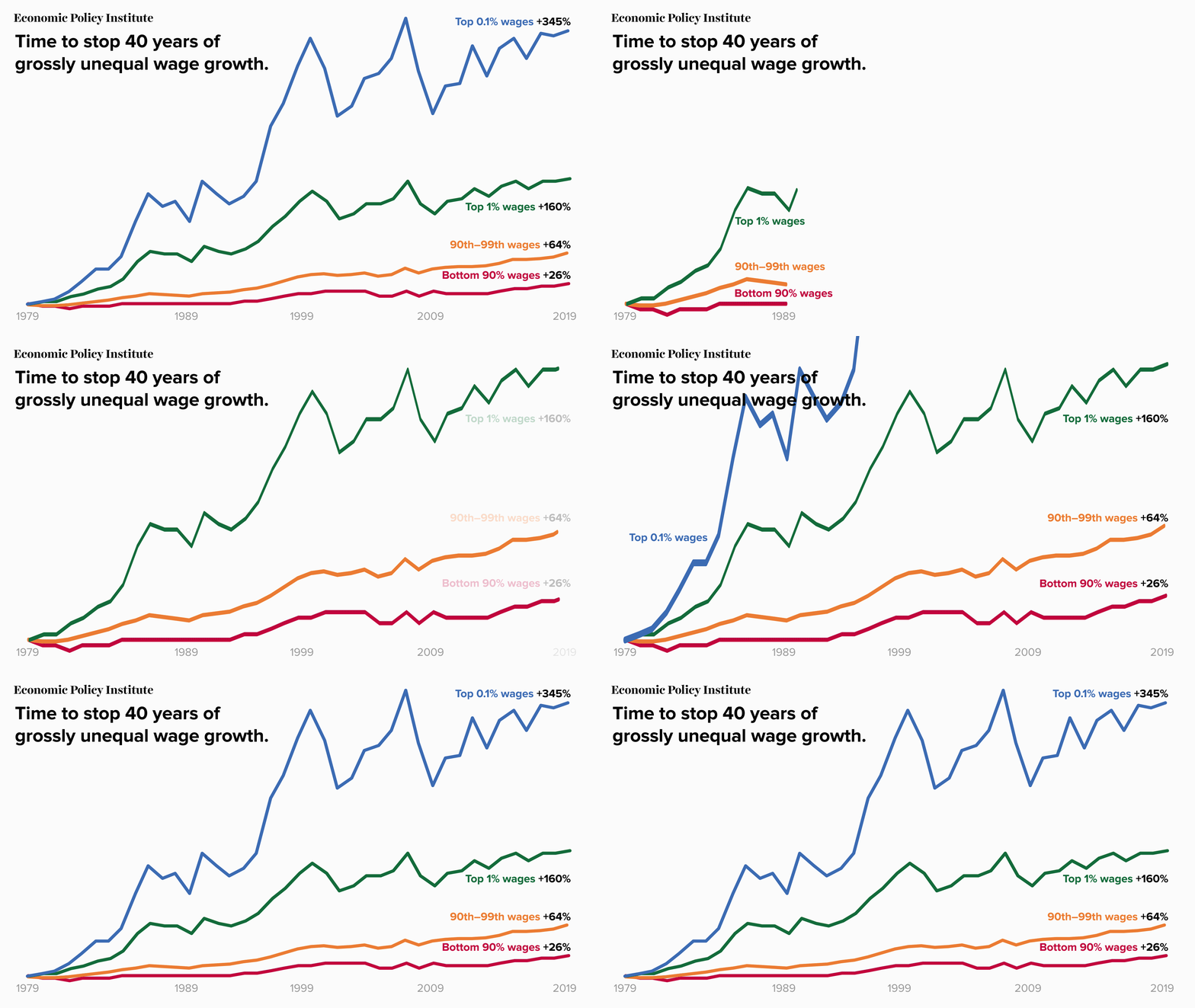
Wage growth for the average workers in the US has been artificially suppressed over the past few decades due to a variety of reasons. However worker productivity has continued to rise year after year. According to EPI, the average worker would be earning $10 more per hour if wage growth kept up with productivity. Since the late 1970s, the wage growth has been unequal between worker categories thru 2019.

For the bottom workforce category wages have increased 26%. But for the top 1% wages have increased by 160% during the same period as shown in the chart below.

Click to enlarge


Source: EPI

Canadian Bank Stocks May Have Further Room To Run

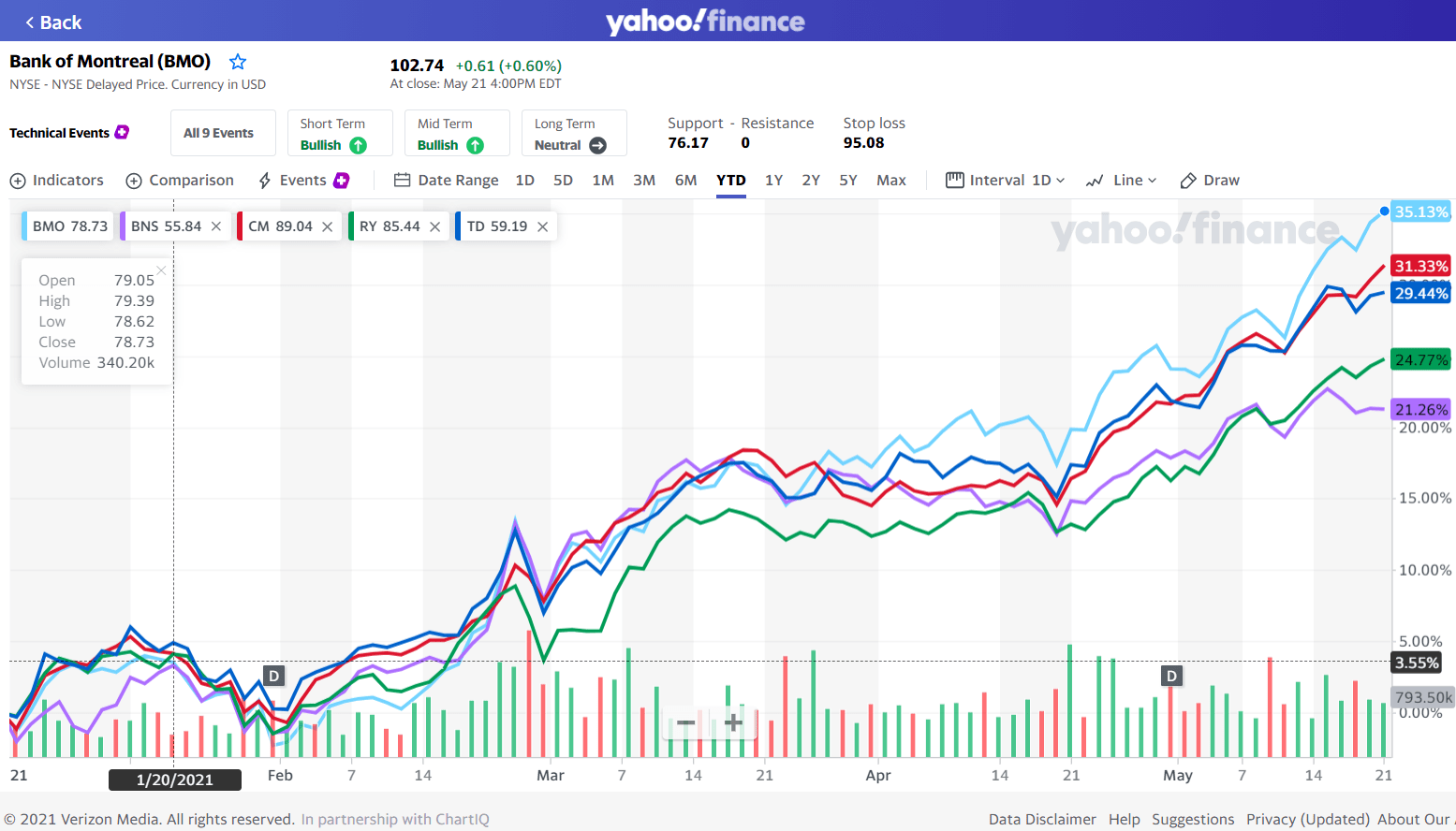
Canadian bank stocks have performed very well so far this year with all increasing by double digit percentages. NYSE-traded shares of Bank of Montreal(BMO), The Canadian Imperial Bank of Commerce (CM) and Royal Bank of Canada(RY) reached their 52-weeks on last Friday. These banks are slated their announced their second quarter earnings this week. Analysts are forecasting most of them beating the estimates. The major Canadian lenders’ stocks may run  further as they are trading at 11.5 times forward earnings relative to 12.65 for their US peers. In addition, reserve releases could also boost their stock prices according to an article at Financial Post.

The following chart shows the year-to-date return of the five major banks of Canada:

Click to enlarge


Source: Yahoo Finance

From an opinion piece at Financial Post:

In the next three to four quarters, the Canadian banks could release between $6 and $8 billion in reserves ((also known as “allowance for loan losses”), which would have a material impact on share prices, both indirect and direct.

While all credit cycles are unique, they have distinct stages for the banks and this COVID credit cycle has been no different. The first stage was three quarters in duration, starting in Q2 2020, and characterized by rising loan losses (to build reserves), depressed earnings, downward pressure on capital and economic uncertainty.

The Canadian banks are now in the recovery stage of the credit cycle, which should offer three catalysts for bank shares in 2021:

  • normalization of profitability and forward estimates — already in evidence in first-quarter earnings reports
  • reserve releases (or reversing credit losses previously booked, back into earnings)
  • higher margins from steeper yield curve pricing in the potential outsized GDP growth quarters, and higher long-term inflation expectations.

In the coming quarters, reserve releases, the most visible confirmation of the recovery, could be the next catalyst for bank stocks.

Source: Opinion: Canadian bank stocks to get a boost with release of $6 to $8 billion in reserves, Financial Post

Related:

Referenced Stocks:

1.Company: Bank of Nova Scotia (BNS)
2.Company: Bank of Montreal (BMO)
3.Company: Canadian Imperial Bank of Commerce (CM)
4.Company: Royal Bank of Canada (RY)
5.Company: Toronto-Dominion Bank (TD)

Disclosure: Long all five banks

Comparing Manufacturing Labor Costs in China and Mexico

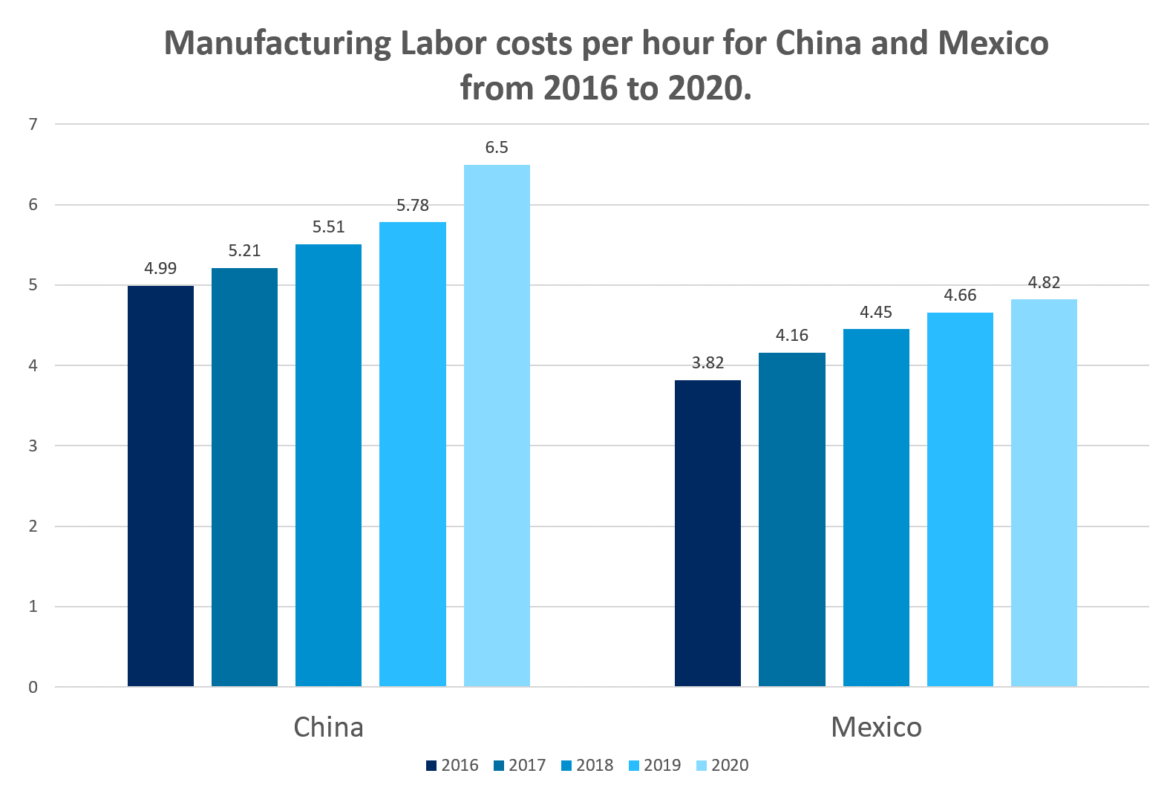
One of the critical factors that companies consider when offshoring manufacturing to China or Mexico is the cost of labor. Labor costs used to be very low a few years ago when China was emerging as the factory floor of the world. That is no longer the case as labor costs there have been increasing consistently year after year. As a result, cost of labor is cheaper in Mexico than in China. The following chart shows the manufacturing labor costs in China and Mexico from 2016 to 2020:

Click to enlarge

Source: Manufacturing in Mexico vs China, Mexcentrix Strategic Solutions

An excerpt from the above article:

Within the most important factors taken into account when performing analysis for expansion of operations is the labor cost. One of the main competitive advantages of Mexico and China is their low labor cost. Which according to Statista the average manufacturing labor cost per hour in China is 6.5 USD per hour with an increase of 13% from the previous year. While in Mexico it is 4.82 USD per hour, with an increase of only 4% from 2019 (Statista, 2020). Which shows a trend of a higher increase in wages in China compared to Mexico.

The above mentioned year per year increase has also been impacted by the MXN – USD exchange rate, the devaluation of the MXN peso against the USD in the last years have reduced the effective labor rate inflation.

It is important to take into account that the manufacturing labor costs for both countries are just an average as a means of providing insight, as labor costs will vary per region, workforce skills, and level requirements, among others.

Furthermore, the minimum wage in Mexico is $123.22 MXN per day in almost all regions of the country, except in the Northern Border which is $185.56  MXN per day with an average minimum wage per month of $220.9 USD compared to $368.5 USD in China.

Lastly, Mexico is considered to have greater productivity with 48 hours work week compared to a generally 40-hour workweek, in which after this overtime must be paid.

Earlier:

India’s Sensex Back Above 50,000 Level

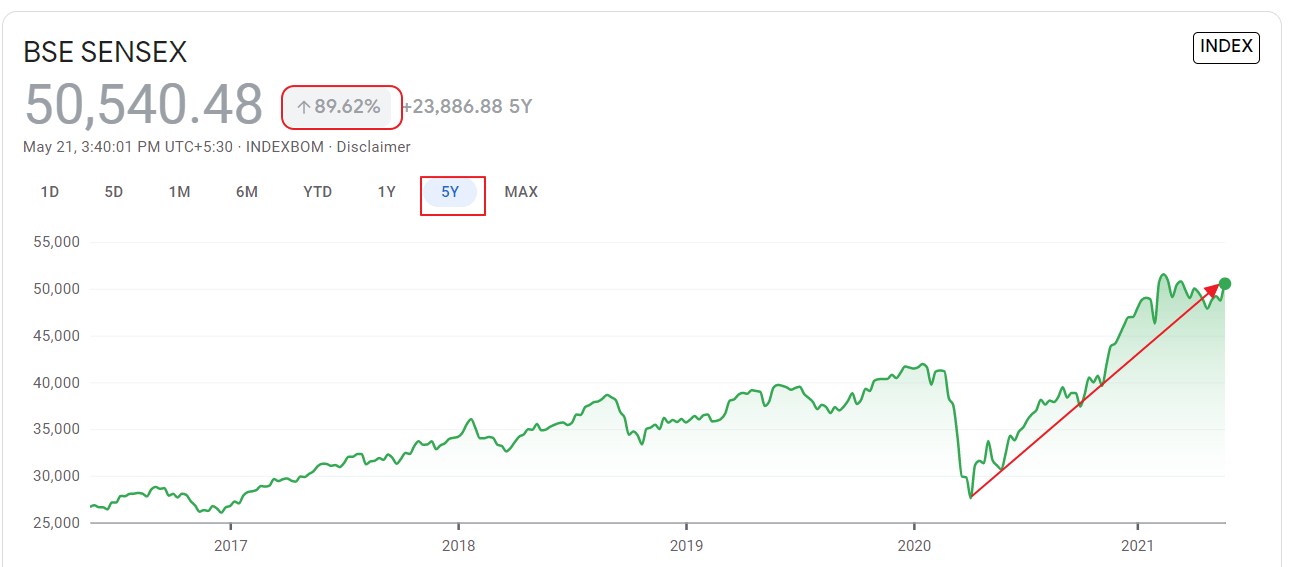
India’s benchmark Sensex index has made a strong recovery since the March lows of 2020.But earlier this year the index wobbled as rising covid cases and restrictions made investors jittery. Recently though the Sensex has been rising and has crossed the 50,000 level again. In the past 5 years the index has shot up nearly 90% and reached its all-time record high in February of this year before the second wave of the pandemic ravaged the country. It remains to be seen if Indian equities can continue their upward momentum from current levels.

Click to enlarge

Source: Google Finance

Related: