Review: The Financial System in Mongolia

The financial system in Mongolia is dominated by commercial banks. As of September 2010, the 14 registered commercial banks accounted for 96 percent of total financial system assets.The Mongolia Stock Exchange(MSE) was established in 1991, following the privatization of 475 state-owned enterprises. About 337 companies are now listed on the MSE. The size of the whole Mongolian equity market is tiny. As a country rich in many untapped mineral resources, some of the top mineral exports of Mongolia are gold, copper and coal.
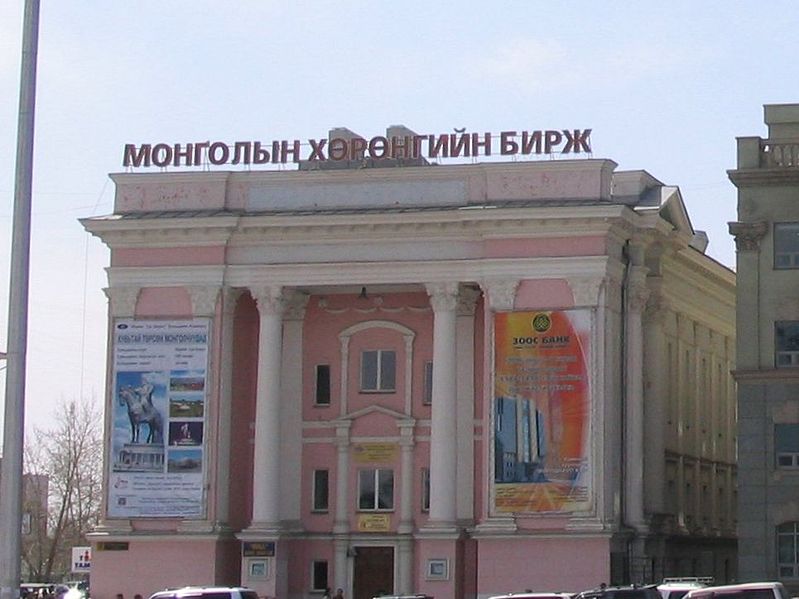
stock_exchange_mongolia.jpg

Mongolia Stock Exchange, Ulan Bator, Mongolia

The graphic below shows the largest Mongolian banks based on assets:
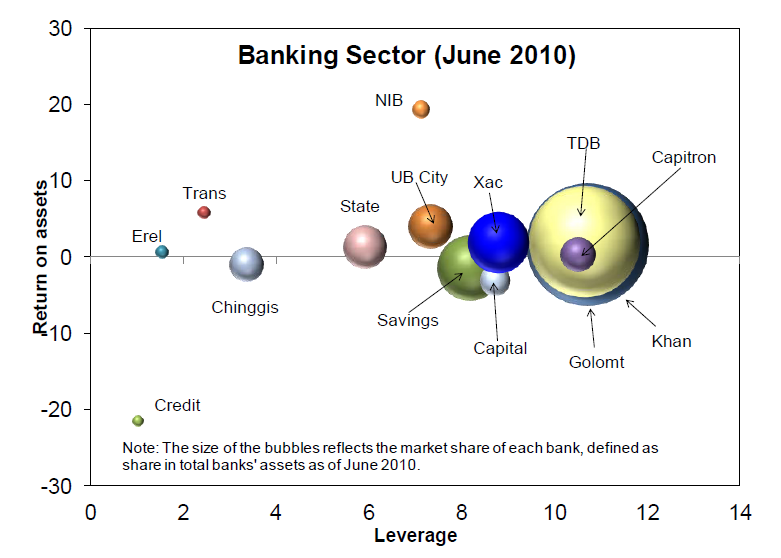
top-mongolia-banks.png

Source: Mongolia: Financial System Stability Assessment, May 2011, IMF

Additional resources:
Companies listed on the Mongolia Stock Exchange

Mongolia Stock Exchange

Investing with Emotions

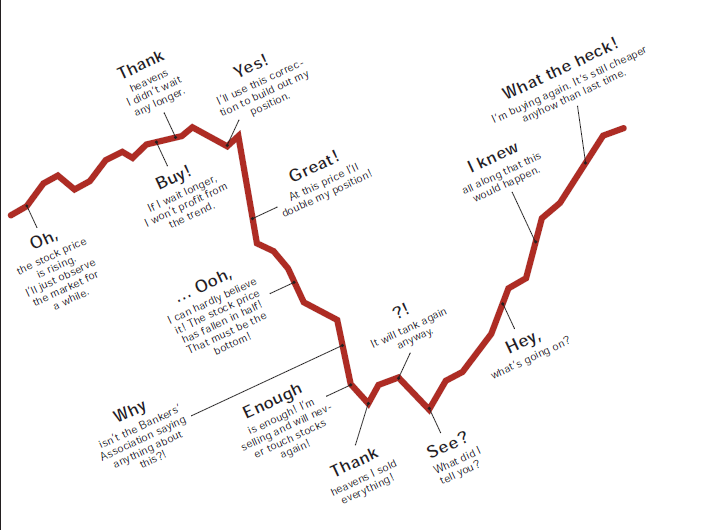
Investing in the markets is not suitable for everyone.One should have a strong stomach when markets dive and not get carried away with greed when markets soar.The following chart shows the various stages of emotions that most investors experience with investing in equities:

Click to enlarge

investing-with-emotions.png

Source: Emotions and markets, Global Investor, Credit Suisse

A classic example of the above scenario occurred in 2009. After declining heavily in 2008, stocks bottomed out in March 2009. Seeing their portfolios crushed, some investors sold out in March and then regretted that decision when markets around the world staged a powerful rally.

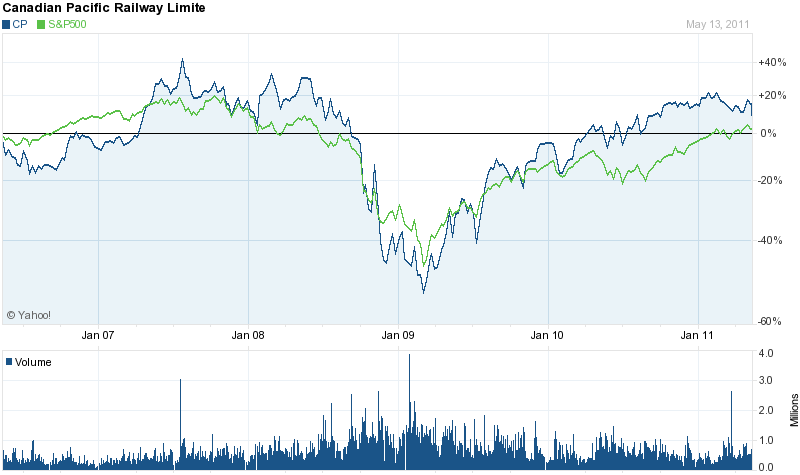
The following chart shows the 5-year performance of Canadian Pacific (CP), a railroad in Canada and the S&P 500:

sp-cp-5-year-chart.png

Disclosure: No Positions

A Review of Foreign Medical Device Makers and Healthcare Companies

Very few foreign medical device makers and healthcare providers are listed on the organized exchanges in the U.S. market. The following is a list of these companies a brief overview of them:

1.Company:Fresenius Medical Care (FMS)
Current Dividend Yield: 1.33%
Country: Germany

2.Company:China Kanghui (KH)
Current Dividend Yield: N/A
Country: China

3.Company:Mindray Medical International (MR)
Current Dividend Yield: 0.67%
Country: China

4.Company:ICON (ICLR)
Current Dividend Yield: N/A
Country: Ireland

5.Company:Trinity Biotech (TRIB)
Current Dividend Yield:
Country: Ireland

6.Company:Smith & Nephew (SNN)
Current Dividend Yield: N/A
Country:

7.Company:China Medical Technologies (CMED)
Current Dividend Yield: N/A
Country: China

8.Company:Edap (EDAP)
Current Dividend Yield:
Country: N/A

9.Company:Concord Medical Services (CCM)
Current Dividend Yield: N/A
Country: China

Brief Overview:

Germany-based Fresenius Medical Care is kidney dialysis company, operating in both the field of dialysis products and the field of dialysis services. Its dialysis business provides dialysis treatment at its own dialysis clinics and supplying these clinics with a range of products. FMS has operations in over 100 countries.

Of the four Chinese companies noted above, China Kanghui is a domestic developer, manufacturer and marketer of orthopedic implants in China. Mindray Medical International is engaged in the manufacture and marketing of medical devices. And China Medical Technologies develops, manufactures and markets advanced immunodiagnostic and molecular diagnostic products utilizing ECLIA technology, FISH technology and SPR technology. Concord Medical Services is engaged in the operation of radiotherapy and diagnostic imaging centers and offers management services to hospitals. The company maintains a network of more than 88 centers spanning more than 36 cities and 21 provinces.

Of the two Irish companies, ICON is a contract research organization (CRO), providing outsourced development services on a global basis to the pharmaceutical, biotechnology and medical device industries. And Trinity Biotech is engaged in developing and marketing medical diagnostic products for the clinical laboratory and point-of-care segments of the diagnostic market.

France-based EDAP is engaged in the development, production and marketing of medical devices, mainly for urological diseases. The British company Smith & Nephew  operates in the market for Orthopaedic reconstruction and trauma, endoscopy and advanced wound management.

Disclosure: No positions

Germany Set For A “Golden Decade”

The German economy is showing strengths of a robust recovery. German exports and imports in March reached record levels. From a press release by the Federal Statistics Office:

Germany exported commodities to the value of Euro 98.3 billion and imported commodities to the value of Euro 79.4 billion in March 2011. As further reported by the Federal Statistical Office (Destatis) on the basis of provisional data, German exports increased by 15.8% and imports by 16.9% in March 2011 on March 2010. That was the highest monthly figure recorded for both exports and imports since the collection of foreign trade statistics had started in the Federal Republic of Germany in 1950. The former all-time high of exports, which amounted to Euro 88.8 billion, was observed in April 2008, that of imports in November 2010 (Euro 74.1 billion).

In addition to strong trade figures, the unemployment rate in Germany is also relatively less at 7.3% in April. With a stable democratic political system, high savings rate and home to world-class companies Germany has the potential for high economic growth in the next few years. Germany is also able to cater to the needs of the growing Chinese economy and hence take advantage of the high growth there. As a result of rising trade between China and Germany, China replaced the U.S. as the largest trade partner of Germany at the end of last year.

Hence it is not surprising to see many experts raising their projections for German economic growth. Christian Schulz, an economist at Berenberg Bank, the country’s oldest private bank commented that “Germany is on the verge of a golden decade”.

Ten large-size German companies are listed below for further research and consideration:

1.Company: Continental AG (CTTAY)
Dividend Yield: N/A
Sector: Tires

2.Company:BASF SE (BASFY)
Dividend Yield: 3.24%
Sector: Chemical Manufacturing

3.Company:Linde AG (LNEGY)
Dividend Yield: 1.33%
Sector: Chemical Manufacturing

4.Company:Siemens AG (SI)
Dividend Yield: 2.69%
Sector:Electronic Instrumentation & Controls

5.Company:Deutsche Bank AG (DB)
Dividend Yield:1.77%
Sector: Financial Services

6.Company:Fresenius Medical Care AG (FMS)
Dividend Yield: 1.29%
Sector: Healthcare

7.Company:Adidas AG (ADDYY)
Dividend Yield: 0.58%
Sector:Footwear

8.Company:K+S AG (KPLUY)
Dividend Yield: 1.90%
Sector: Chemical Manufacturing

9.Company: Volkswagen AG (VLKAY)
Dividend Yield: 1.78%
Sector:Auto & Truck Manufacturers

10.Company:Allianz (AZSEY)
Dividend Yield: 4.60%
Sector:Nonlife Insurance

Disclosure:  No Positions

Related:

Regional focus: Germany

Canada creates High-Paying Jobs, USA creates McJobs ?

The unemployment rate in Canada stood at 7.6% in April compared to 9.0% in the U.S. According to Bureau of Labor Statistics, 244,000 jobs were created in April. But how many high-paying, full-time jobs created in the U.S.?.

Recently McDonald’s hired 62,000 people  in the U.S.after receiving more than a million applications. These jobs will be counted technically as jobs created but these jobs do not pay a “living wage” let alone high wages.

From a Bloomberg news report last month:

McDonald’s Corp. (MCD), the world’s biggest restaurant chain, said it hired 24 percent more people than planned during an employment event this month.

McDonald’s and its franchisees hired 62,000 people in the U.S. after receiving more than one million applications, the Oak Brook, Illinois-based company said today in an e-mailed statement. Previously, it said it planned to hire 50,000.

The April 19 national hiring day was the company’s first, said Danya Proud, a McDonald’s spokeswoman. She declined to disclose how many of the jobs were full- versus part-time. McDonald’s employed 400,000 workers worldwide at company-owned stores at the end of 2010, according to a company filing.

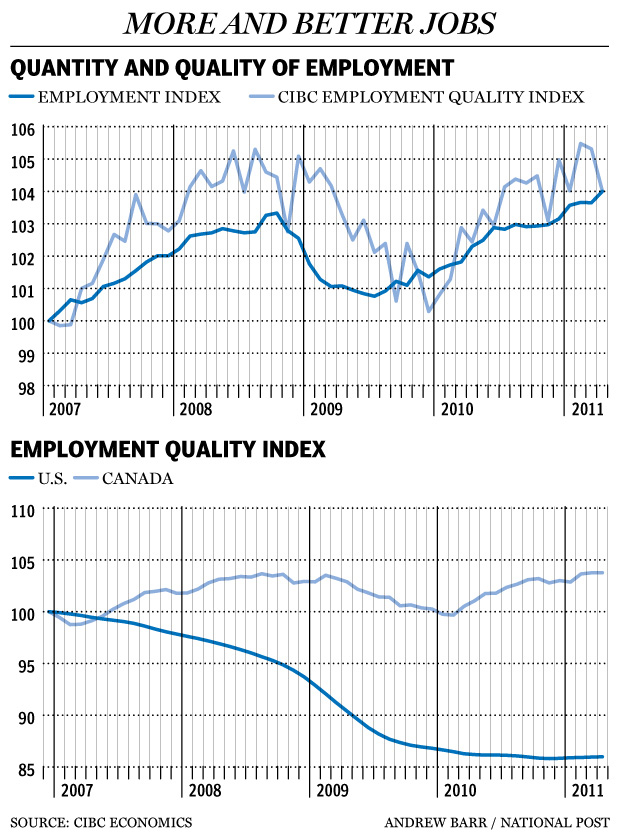
Meanwhile in Canada high-paying, full-time jobs are being created according to a report by  CIBC Economics released yesterday. From “Not only more jobs, better jobs in Canada“:

ed by an increase in high-paying, full-time jobs, the quality of employment in Canada is roughly back to pre-recession levels, according to a report from CIBC Economics released Monday.

The study found that along with the 283,000 jobs created over the 12 months ending April 2011, the bank’s employment quality index also enjoyed a 2.7% lift.
A key factor in this improvement – according to CIBC World Markets deputy chief economist Benjamin Tal, the report’s author – was growth in full-time jobs, which increased by close to 2%, more than double the growth in part-time employment. Furthermore, of those full-time jobs, the number of high-paying positions increased almost three times faster than low-paying employment.

The quality of employment indicator is significant, according to the report, because it suggests on average that every job now created generates more buying power than a year ago. This boosts spending power and gives the Bank of Canada something to consider in making a decision on interest rates.

us-canada-employment.jpg

The above chart shows the high divergence in employment quality index between U.S. and Canada. CIBC measures employment quality index using factors like full-time versus part-time employment, self-employment versus paid, and the compensation ranking of full-time paid jobs in more than 100 industry groups.