The following is a handy tax reference chart for this year for US investors:
Click to enlarge
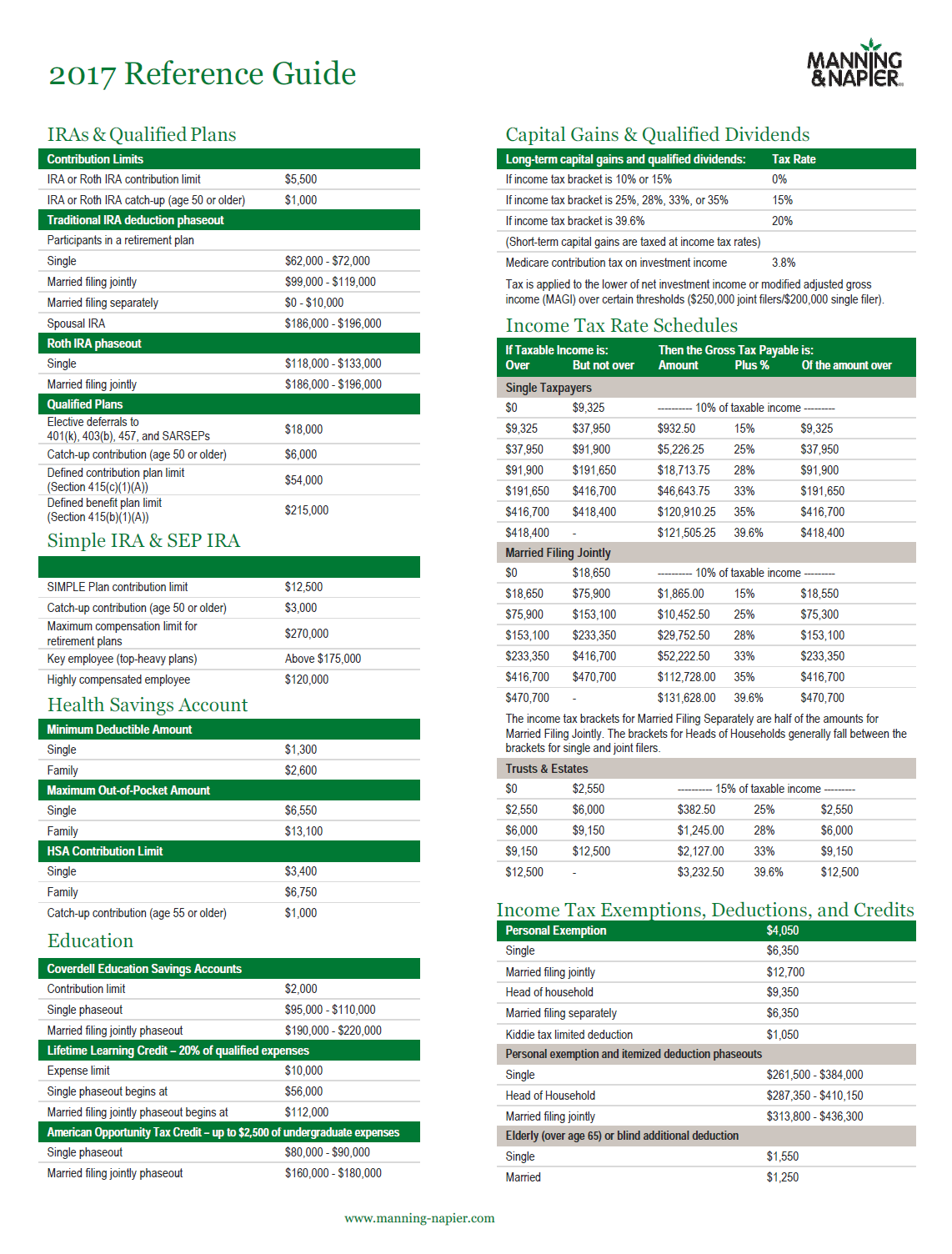
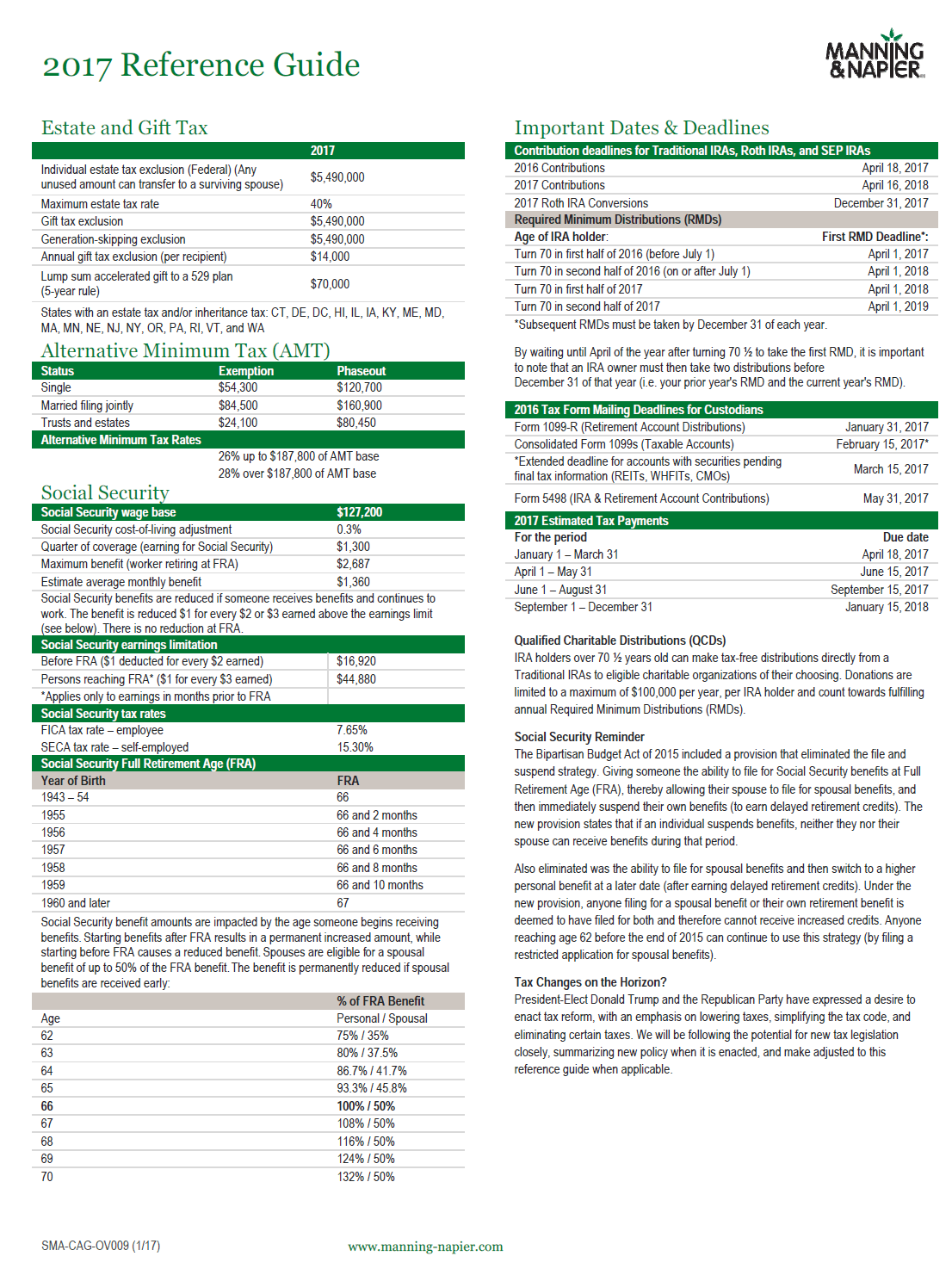
Source: Manning & Napier
Download: US Tax Reference Guide For 2017 (in pdf)
The following is a handy tax reference chart for this year for US investors:
Click to enlarge
Source: Manning & Napier
Download: US Tax Reference Guide For 2017 (in pdf)
The Second Avenue subway line opened as part of the New York subway system recently. Though the New York Subway network is vast, it is not the longest in the world. The following is a neat graphic showing the top 10 longest metro networks and also ridership figures:
Click to enlarge
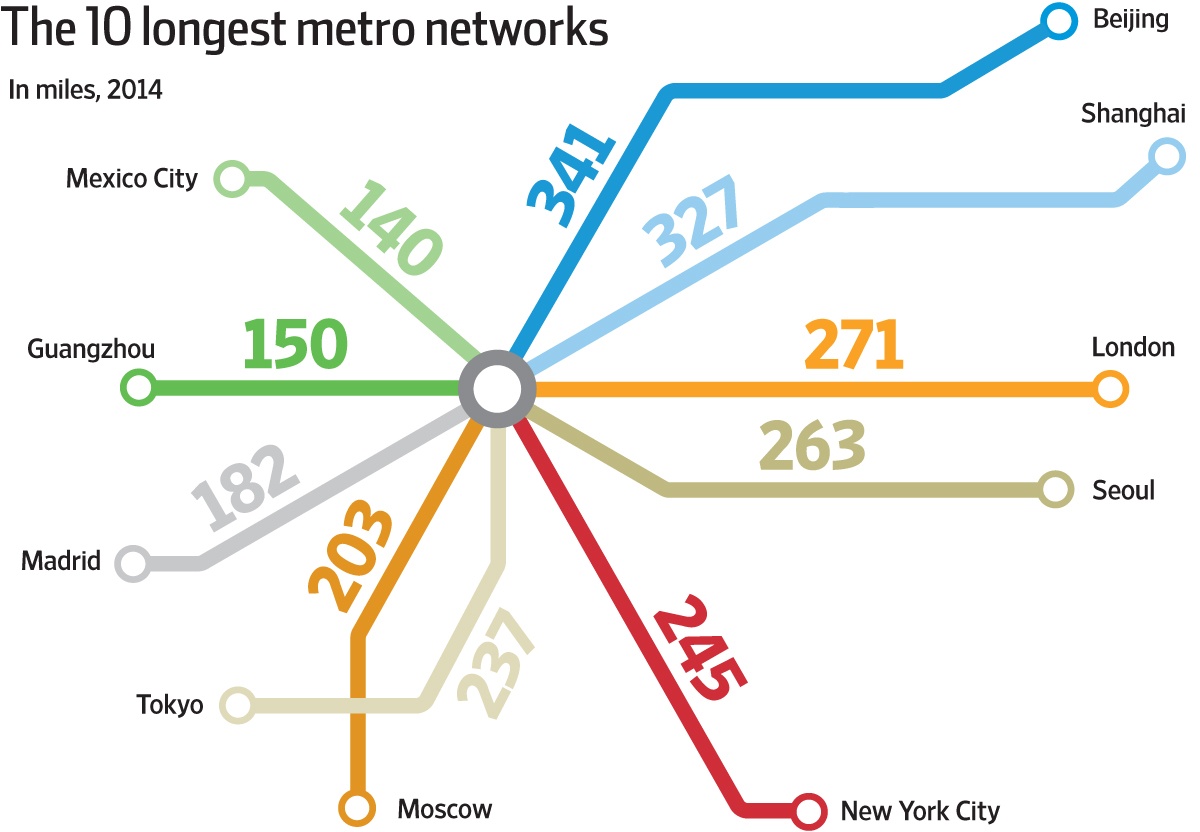
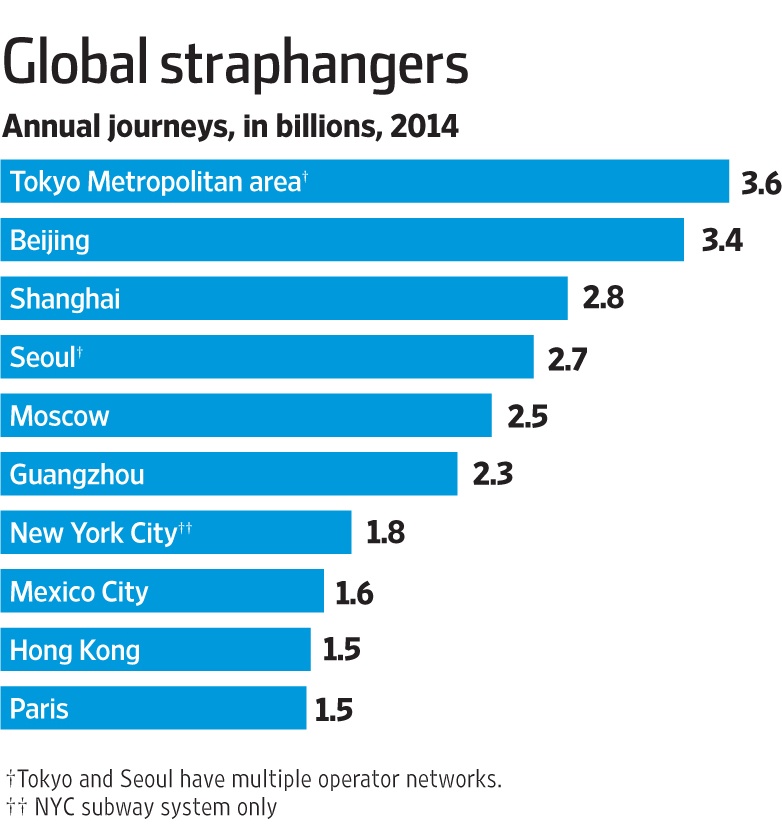
Source: What’s the Nearest Subway Stop?, WSJ, Jan 19, 2017
Three of the top 10 networks shown above are in China.
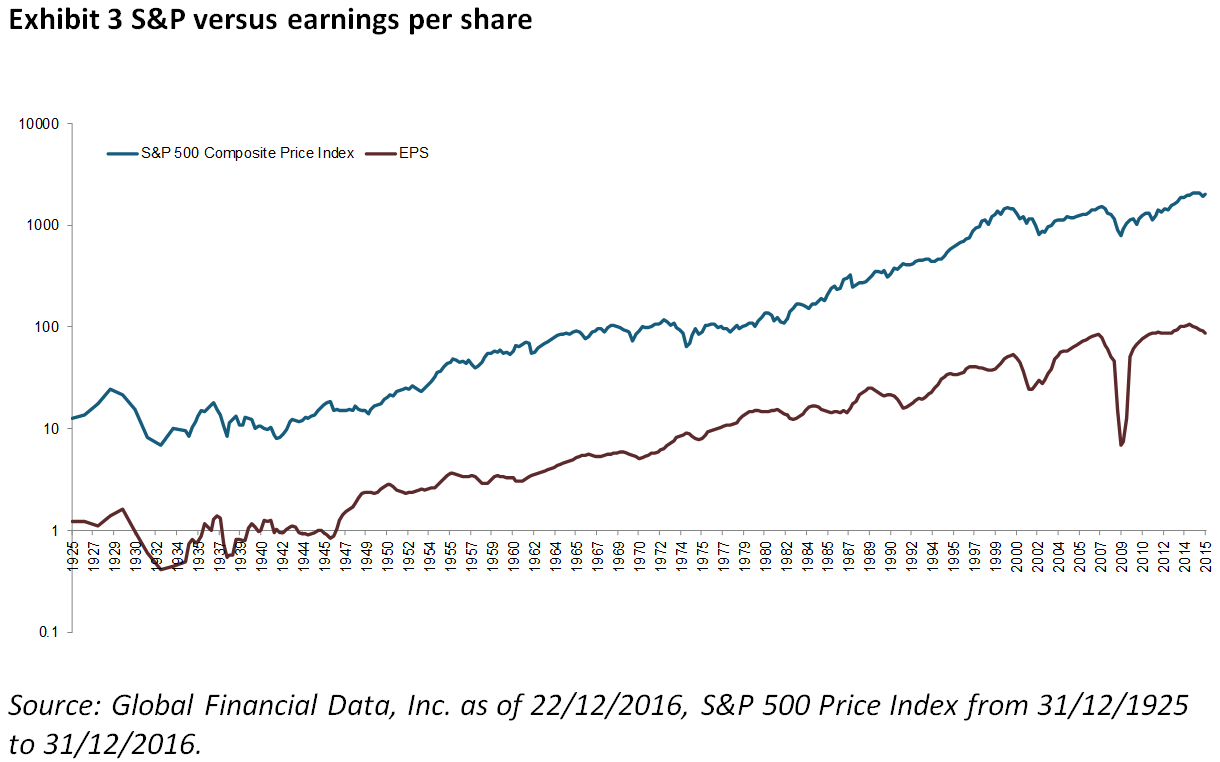
Equity prices follow earnings. While in the short-term a company’s stock may fluctuate wildly due to any number of reasons, the stock price will follow earnings. So if earnings per share continue to grow year after year the stock price will also go higher.
The following chart shows the relationship between S&P 500 price returns and earnings per share from 1925 thru 2016:
Click to enlarge
Source: Equities must crash because they outpace GDP: Fisher’s financial mythbusters by Ken Fisher, Money Observer
Other than a few blimps, the price returns has followed EPS over the many decades since the 1920s.
So the takeaway for investors is that rising earnings is more important for stock prices to move higher.
Related ETF:
Disclosure: No Positions
Investors looking for growth stocks can consider the oilfield service sector and the auto-parts sector.In this post, let us look at some of the reasons why these sectors look attractive now and how to gain from the potential growth offered by these sectors.
After years of stagnant to no-growth companies operating in the oilfield service industry are finally seeing the daylight. As the price of oil rose dramatically in recent months, companies in this industry have also grown in terms of new projects and higher sales.Big oil producers have started spending on projects that were put on hold when crude oil prices crashed. From an article on this topic from yesterday’s journal:
U.S. shale drillers that proved resilient during the oil downturn face a new test in 2017: Can they make money producing more now that prices have stabilized?
The price of crude is hovering just below $55 a barrel—the level many energy companies said they needed to make a profit—and that is setting off a race to drill again. Producers boosted U.S. oil output to nearly 9 million barrels a day, pumping an extra 500,000 barrels a day in the past three months. The additional American production is more than the volume that Saudi Arabia committed to stop producing to help shore up global crude prices.
But the cost middlemen charge companies to help them tap new wells is rising along with the new activity. That is threatening to wipe out some of the savings the industry gained by belt-tightening during the bust.
Shale companies have put more than 90 additional rigs back into the field in recent weeks, after a November agreement by Russia and the Organization of the Petroleum Exporting Countries to curb global output boosted oil prices.
However, the cost to hire an experienced drilling crew and source critical oil-field supplies, including the sand used in hydraulic fracturing, has surged between 10% and 20% this winter, experts say. Shale companies could face even higher prices if crude keeps climbing to $60 a barrel, they add.
Much of the cost savings that U.S. producers realized during the downturn came at the expense of oil-field-services companies, which have made it clear they intend to raise prices when demand for their help rises.
Source: For Shale Drillers, Rising Oil Prices Also Come With Rising Costs, WSJ, Jan 17, 2017
Below is an excerpt from a post I wrote back in 2013:
“Here are five reasons why investing in oil well services and equipment providers is a sound idea:
Some of the oilfield service firms that investors can consider include: Petroleum Geo-Services ASA (PGSVY), CGG (CGG), TechnipFMC (FTI) , Subsea 7 SA (SUBCY), Baker Hughes Inc (BHI),Diamond Offshore Drilling Inc (DO), Nabors Industries Ltd (NBR), Halliburton Co (HAL), Schlumberger NV (SLB),etc.
Another sector that has great growth potential is the auto-parts supplier sector. While the automakers are burdened with many issues such as legacy costs for healthcare, pensions, etc. auto parts makers are in a sweet spot. In addition, the inclusion of more and mode gadgets and technologies in new automobiles provides ample areas for growth. Electrical and hybrids vehicles also need more electronic components. As the prices of an average continues to rise, one of the direct beneficiaries are the auto-parts makers. Auto sales should also get a boost should the overall economy expand with the arrival of the new administration in the US.
Some of the auto-parts companies to consider for further research are: Valeo SA (VLEEY), Magna International Inc (MGA), Denso (DNZOY), Continental AG (CTTAY), Autoliv Inc (ALV), Johnson Controls, Inc.(JCI), Genuine Parts Company (GPC), AutoZone, Inc.(AZO), Lear Corp (LEA), Visteon Corp (VC), etc.
Related articles:
Disclosure: Long FTI, DNZOY, CTTAY, ALV
The World Economic Forum 2017 holds it annual meeting of the global elite in Davos, Switzerland. This meeting is for the wealthy and powerful to get together in a beautiful country to talk about all the world’s problems among themselves and with the media.
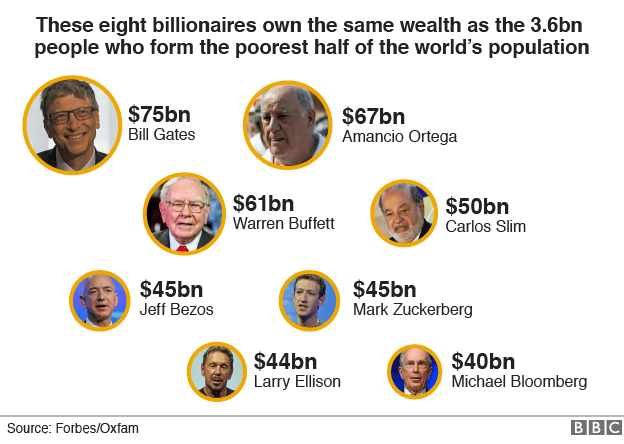
To coincide with this pow pow, British charity Oxfam released a report showing global inequality. According to this report, the world’s 8 billionaires own the same wealth as the bottom 3,600,000,000 of humanity (or 3.6 Billion people).
Click to enlarge
Source: Eight billionaires ‘as rich as world’s poorest half’, The BBC, Jan 16, 2017