Australian vs. Global Share Returns in 30 Years: Chart

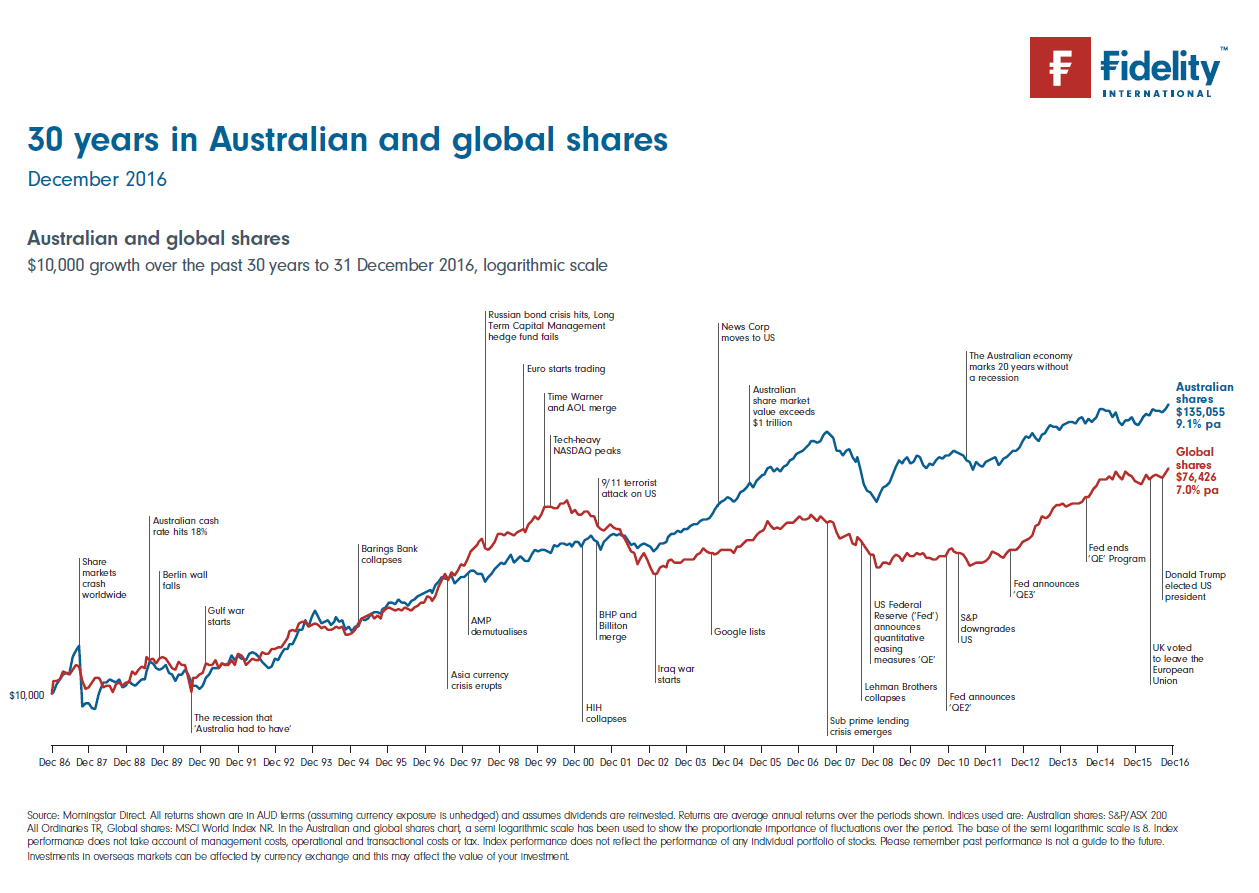
Australian stocks have outperformed global shares in the past 30 years thru December 2016. The average annual return for Aussie stocks was 9.1% compared to 7.1% for global shares according to the following chart:

Click to enlarge
 

Source: Fidelity Australia

Download: Australian vs. Global Share Returns in 30 Years (in pdf)

Related ETFs:

  • iShares MSCI ACWI Index Fund (ACWI)
  • iShares MSCI Australia Index Fund (EWA)

Disclosure: No positions

Why it is Important to Stay Invested During Adverse Market Conditions

Patience is one of the key factors that determines success in equity investing. Patience is especially important when markets are in a downward spiral due to any number of reasons. During bear markets it is extremely tempting for most investors to cut down the losses and sell out everything and move to cash. However it is one of the worst possible moves an investor can make. This is because they can miss out a violent rally when markets turn.

A recent article at Fidelity showed why it us important to remain invested during volatile markets. From the article:

It makes sense to own more stocks, but if market drops still make you nervous, remember this: It may be painful for a time, but if the stock market behaves as it has over long periods, you should be able to ride it out. This is why stocks should be owned for the long term. It has taken many years, even multiple decades, to recover from the worst historical declines in the stock market. But, overall, stocks still offer the most growth potential, by far—as long as you can stay the course over the long term.

Thinking of it this way may help, too: Losses are just on paper unless you sell your investments. If you are tempted to sell investments when they are down, remind yourself that you are investing for a time far in the future. So why lock in losses when you have time to ride the market back up? Also, if you save regularly and continue to invest during down markets (and the market demonstrates the kind of long-term growth that it has historically), you will be adding to your savings during those market dips, or “buying low.” When the market recovers, you may be even better positioned for growth.

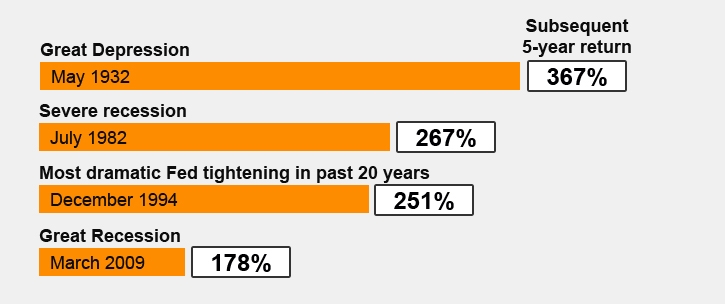
In fact, as the chart shows, what looked like some of the worst times to be in the stock market turned out to be the best times. The best five-year return in the U.S. stock market began in May 1932—in the midst of the Great Depression. The next best five-year period began in July 1982, when the U.S. economy was in one of its worst recessions.

Click to enlarge


Source: 3 reasons to invest in stocks, Fidelity

The key takeaway is to simply remain calm and be patient during market crashes. Selling out in panic is never a wise idea.

On the Performance of North American Railroad Stocks

The transportation sector is lagging so far this year relative to the performance of utilities and healthcare. Railroads form a big portion of the transportation sector.

The year-to-date returns of major North American Class I railroad stocks is shown below:

Click to enlarge

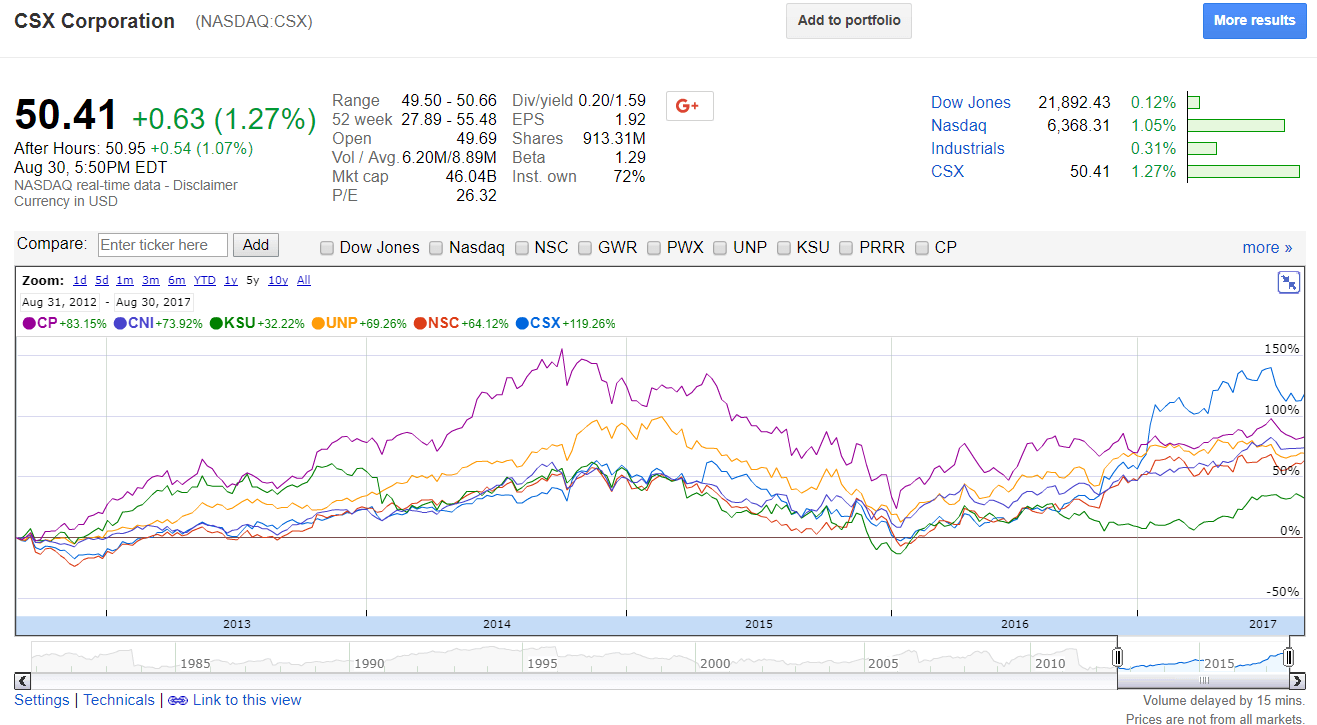
The 5-year returns of major North American Class I railroad stocks is shown below:

Source: Google Finance

The major railroads are Canadian National Railway Co (CNI), Canadian Pacific Railway Ltd(CP), CSX Corp (CSX), Kansas City Southern (KSU), Norfolk Southern Corp(NSC) and Union Pacific Corp (UNP).

In the 5-year period most of these stocks have performed very well with CSX more than doubling in price. Overall railroad stocks are excellent for long-term holding.

Disclosure: Long CSX, CNI, UNP and NSC